


We’d dreamed of a Lofoten road trip for years – and in summer 2022 it finally happened. The Lofoten Islands in northern Norway are one of the most spectacular destinations in the country. As much as we loved southern Norway on our Norway road trip, a Lofoten Islands itinerary is a completely different level. The natural highlights around every corner are the last thing you’d expect above the Arctic Circle.
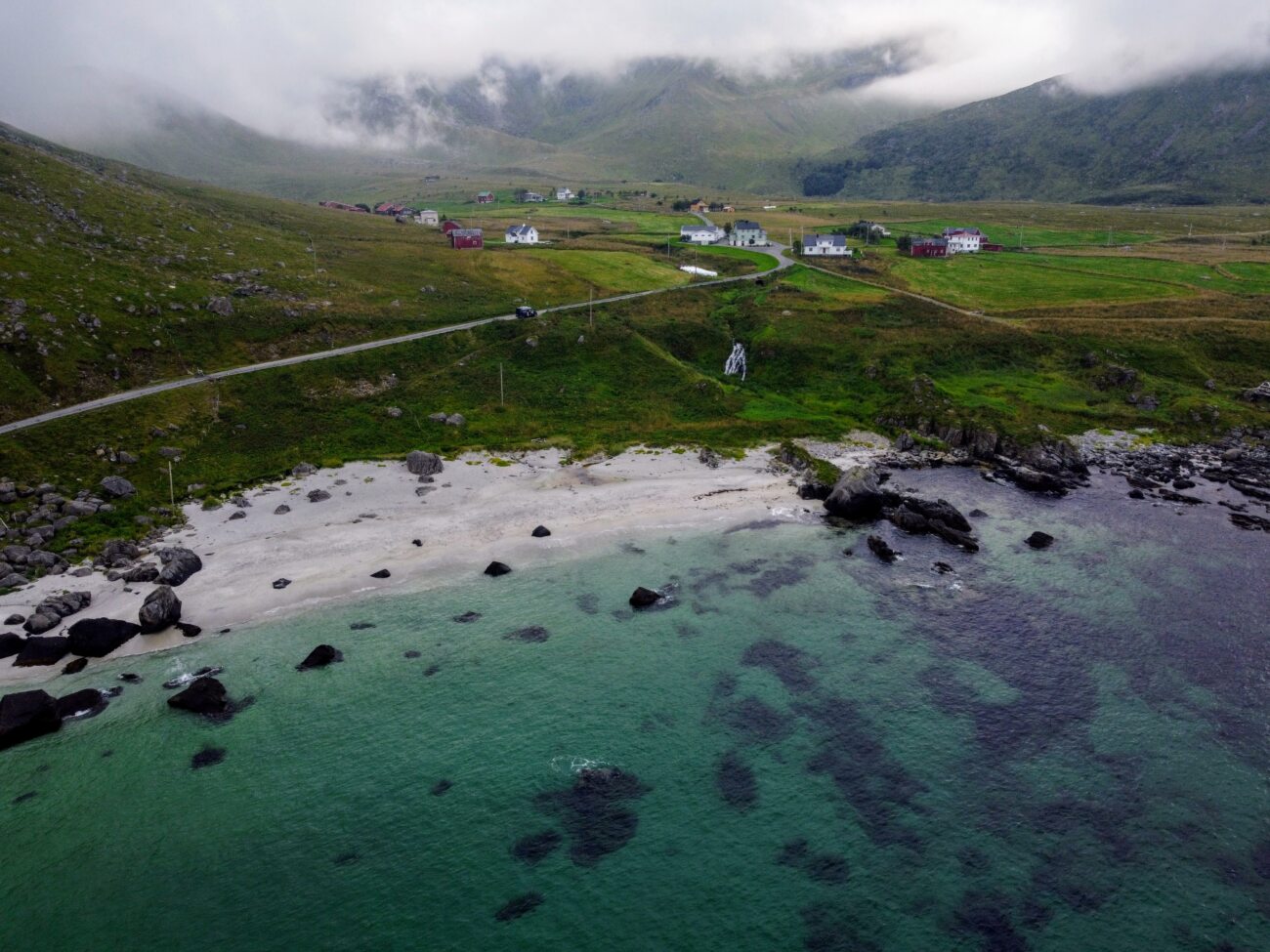
Towering mountains, challenging hikes, picturesque wooden cabins and powder-white beaches that look straight out of the Caribbean – with water so clear you can see the seabed metres below. The Lofoten Islands are simply stunning and unlike anywhere else in Norway.
If you’re driving from Germany with your own vehicle, plan for at least 3 (ideally 4) weeks to make the journey worthwhile. But if you’re flying and renting a car or campervan locally, 7 days is perfect for a first Lofoten experience.
Last updated: May 2026

Lofoten Islands Itinerary – Route Overview
Getting to Lofoten with a Campervan or Motorhome
If you’re driving from Germany with your own campervan or motorhome, we’ve put together all the best routes in our dedicated article:
With the Campervan in Lofoten – Renting Locally
If you’re not bringing your own vehicle from home, renting a campervan locally is a great option. The best base for this is Tromsø, which has a large airport. From Tromsø it’s about 5 hours to the Lofoten Islands, so plan one day for the drive. If you want to rent a camper directly on the islands, check out Arctic Campers.
Flying and Renting a Car
Alternatively, you can fly into Bodø and pick up a rental car at the airport, spending your nights in cabin accommodation or hotels. Since there are only a handful of hotels on the islands, book well in advance – especially in peak season.
Wild Camping in Lofoten
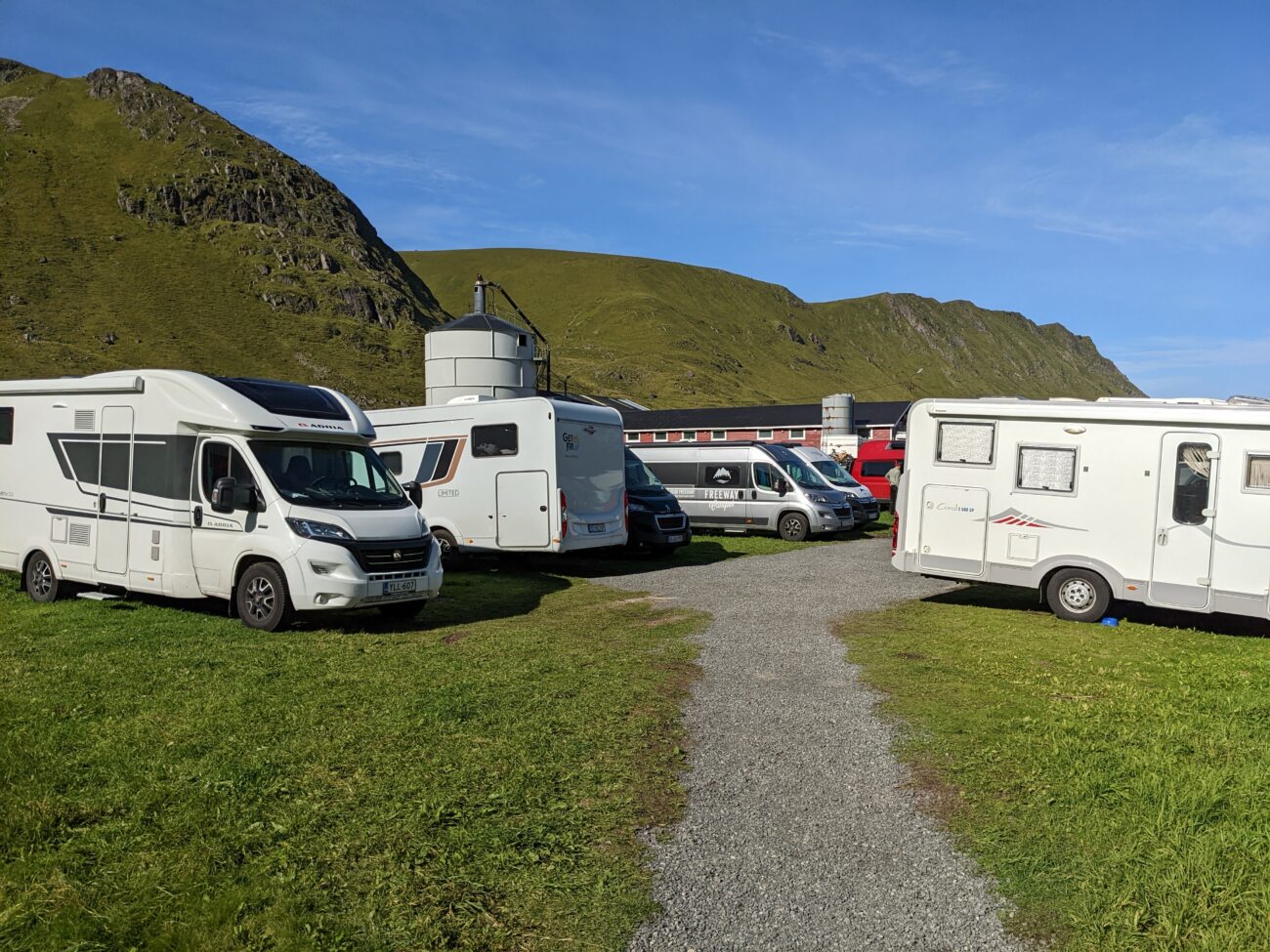
One of the highlights of any Lofoten campervan trip is the freedom to wild camp. Thanks to Norway’s Allemannsretten (right to roam), you can park up and sleep almost anywhere in nature.
You don’t need to stay on a campsite – you can find a beautiful isolated spot by a fjord or right on the coast. Just follow a few basic rules:
- No camping on private land
- Stay at least 150 metres from residential buildings
- No more than 2 consecutive nights in the same spot
- Leave no trace
Wild camping in Norway is generally tolerated quite freely, even though the right to roam technically doesn’t cover motorhomes and campervans. As long as you follow these rules, locals tend to be accepting.

There are plenty of free camping spots in Lofoten, but in peak season – especially in the southern islands – competition for spots can be fierce. In summer, start looking for your pitch before 5pm or you risk being left without one.
We used the Park4Night app throughout our Lofoten road trip. It’s a huge database of camping spots with reviews and photos, making it easy to find the best wild camping locations in Lofoten.
How Many Days Do You Need for a Lofoten Road Trip?
Recommendation: At least 7 days – ideally 10–14. In 7 days (given good weather) you can cover the most important Lofoten highlights. With 2 weeks, you can explore at a much more relaxed pace and tick off all the major Lofoten hikes and beaches.
If you’re driving from Germany with your own car, you’ll realistically have about a week on the islands themselves. That’s fine – the Lofoten archipelago is relatively compact.
From Lødingen in the east to the village of Å in the south, the total distance is only 240 km – about 5 hours of driving. You could theoretically cross the islands in a single day, but you’d miss everything.
We spent just under a week on the islands and managed almost every hike we’d planned, even with a few rainy days.
Best Time to Visit the Lofoten Islands
June to August is peak season – midnight sun, long days and the best conditions for hiking and beaches. It’s also the busiest period, so arrive early to secure your camping spot.
September and October are arguably even better: far fewer tourists, dramatic autumn light and still pleasant enough for hiking. Northern lights chances increase significantly from mid-September. Some accommodation and services operate on reduced hours.
Winter (November–March): Spectacular but demanding – many campsites are closed, days are short and hikes can be icy. Northern lights are almost guaranteed though, and the snow-covered landscape is breathtaking.
The Norwegian Scenic Route through Lofoten
There aren’t many roads on the Lofoten Islands, which actually makes planning your itinerary quite straightforward. The key is exploring the side roads and dead-end lanes – that’s where the real magic is.
The backbone of any Lofoten road trip is the E10, which largely follows the Norwegian Scenic Route through Lofoten. Norwegian Scenic Routes are designated roads of outstanding natural beauty, perfect as a framework for road trip planning.
The Lofoten Scenic Route follows the E10 from Å to Raftsund with detours to Nusfjord, Utakleiv and Eggum. Stick to this route and you’ll naturally pass all the major highlights.
Loop or One-Way?
If you want to do a proper loop and leave from the same ferry port you arrived at, take the E10 in one direction and return via the smaller side roads. This gives you the most well-rounded experience.
Alternatively, enter via the northern ferry terminal at Lødingen and exit in the south at Moskenes – no road twice.
Our recommendation: do the loop. The quiet side roads on the Lofoten Islands are one of the best parts of the whole trip – and all the main highlights sit along the E10, so you won’t miss anything on the outward leg.
Where Are the Lofoten Islands Most Beautiful?
The answer is clear: the further south you go, the more spectacular it gets. The northern section (from the Lødingen ferry port to Raftsund) looks similar to mainland northern Norway – pleasant but not yet distinctly Lofoten.
The Scenic Route officially begins at Raftsund, and from here the landscape gradually becomes more dramatic until it reaches its peak in the far south around Reine, Hamnøy and Å.
If your time is very limited, spend it in the south.
The Best Hikes on the Lofoten Islands
| Aktivitäten | Preis p.P. | Ticket |
|---|---|---|
| Epische Trollfjord Katamaran Tour bei der Seeadler bestaunt werden können | ab 85 € | Ticket buchen* |
| Südliche Lofoten - Foto-Tour bei der die einzigartige, wilde Natur mit einem professionellen Fotografie Guide entdeckt wird | ab 115 € | Ticket buchen* |
| Schneeschuh-Wanderung im Winter durch die atemberaubende Wildnis | ab 110 € | Ticket buchen* |
Our Lofoten Road Trip Itinerary
This route takes you through the islands from north to south, entering at the small ferry terminal in Lødingen. You can also do it in reverse. If you have more than a week, we’ve included optional extra days at the end.
Note: Campsite prices were updated for 2026 but may change. Check current rates on Park4Night or directly with the sites.
Day 1 | Ferry Terminal Lødingen to Laukvika
📍 ~80 km | approx. 1.5 hrs driving | Overnight: Laukvika
Coming off the ferry at Lødingen, turn straight onto the E10, which runs the full length of the islands. After about 30 minutes, you’ll quietly cross into the official start of the Lofoten Scenic Route at Raftsund.
Continue on the E10 and turn off at Arnøya onto Road 82, following the Midnattsolveien (Midnight Sun Road). It’s narrower and far less busy than the E10, but full of beautiful scenery and photo opportunities.
If you’d like to see the islands from the water early on, you can join a boat tour to the Trollfjord* from here. With luck you’ll spot white-tailed eagles.
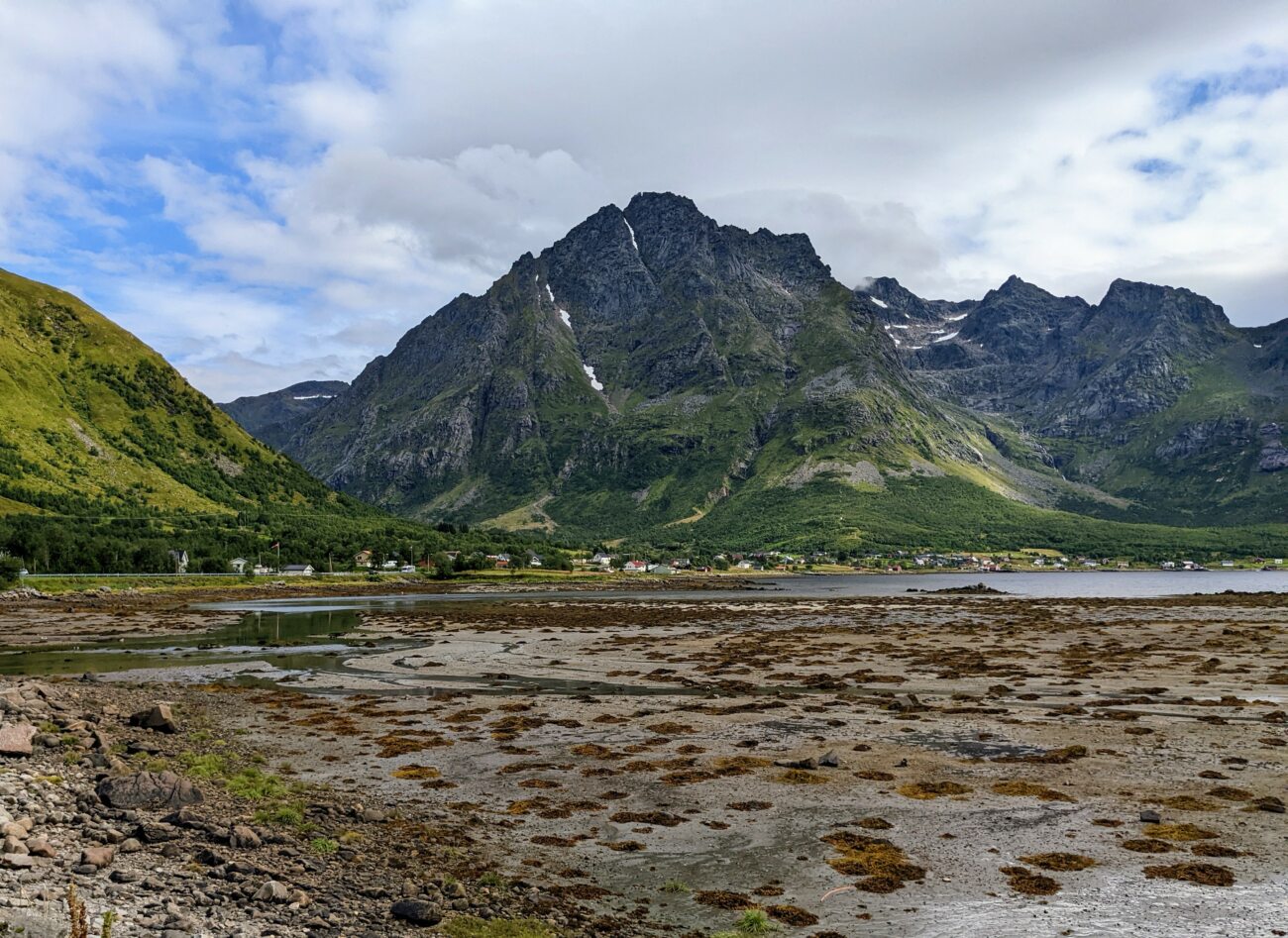
You’ll pass the beautiful Hessand Beach – very few parking spaces, but worth a stop if you find one.
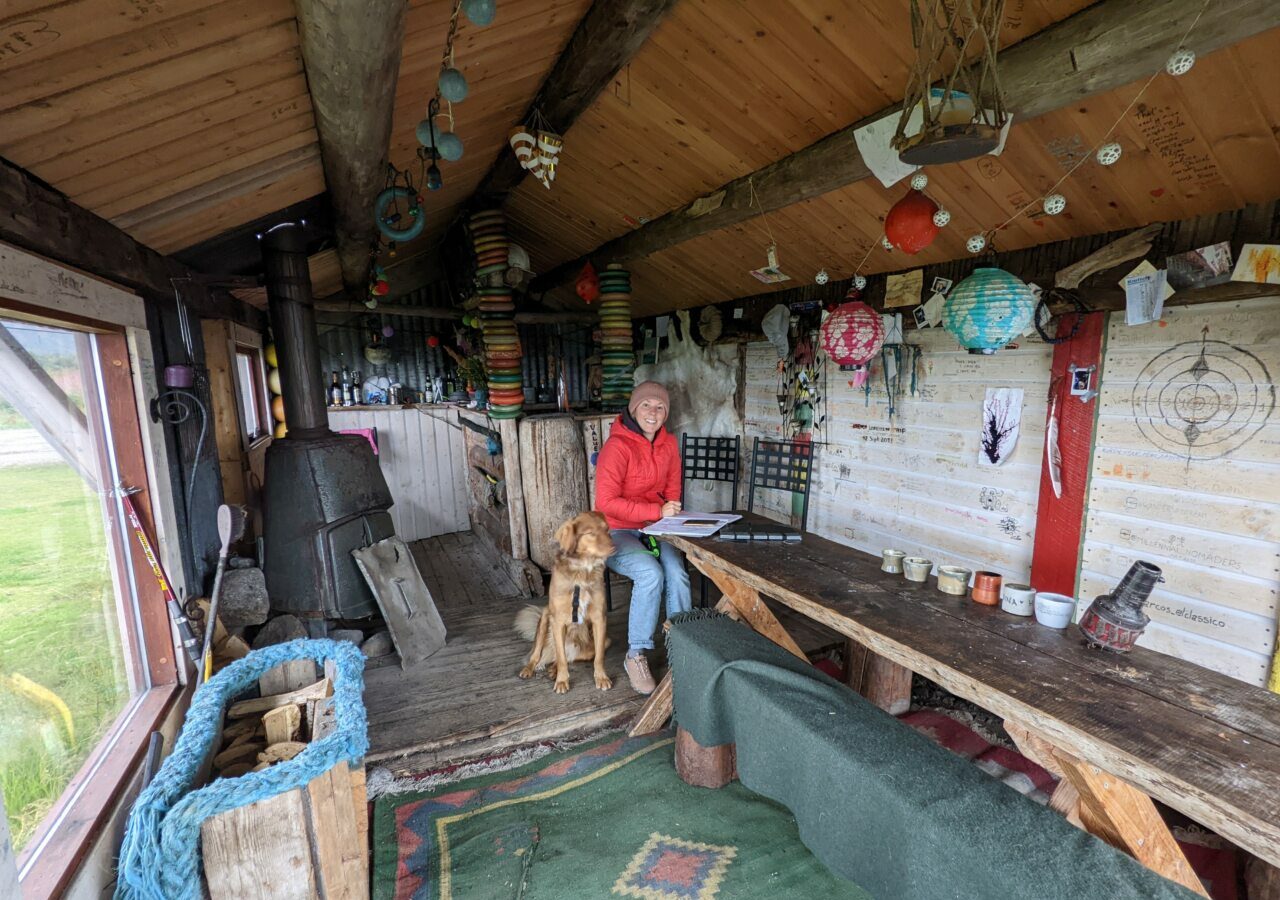
Rolfs Bar
Further along the coastal road you’ll pass one of Lofoten’s more unusual sights: Rolfs Bar. It sits next to the Grunnfør Bicycle Shelter, where you can also park.
Rolfs Bar isn’t actually a bar – it just looks like one. A rickety old wooden hut right by the sea, where visitors have left spirit bottles and signed a guestbook over the years.
A little further on, you’ll pass the trailhead for the Matmora summit hike (Google Maps) – a serious 1,000m / 17km challenge. Alternatively, the 377m Delpen is a gentler option.
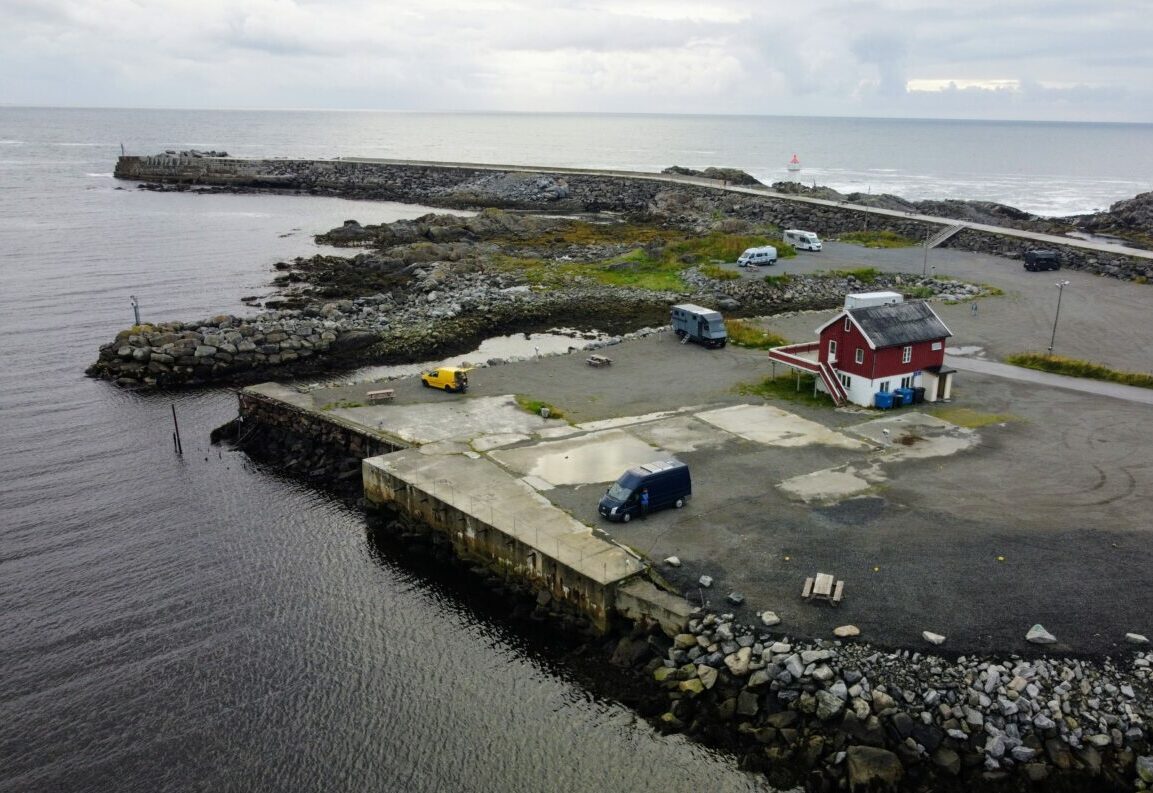
Your destination for today is the Laukvika Bobilcamp.

Day 2 | Drive to Henningsvær
📍 ~60 km | approx. 1 hr driving | Overnight: Kabelvåg / Henningsvær
Head back to the E10 and stop briefly at the Austnesfjorden rest area (Google Maps). It sounds odd to recommend a motorway rest stop, but a short path leads to a hilltop with a genuinely beautiful view over the fjord and surrounding mountains.

Continuing on the E10 you’ll pass through Svolvær – the main town of the Lofoten Islands. It’s not a major highlight in itself, but use it as a chance to fill up and do a grocery shop. If you have time, a Trollfjord boat tour* from Svolvær is well worth it.
Henningsvær
A few kilometres further comes the first real highlight: the tiny village of Henningsvær. With just 500 residents spread across several small islands, even the drive in is spectacular – bridges over crystal-clear water with visibility straight to the seabed.
Drive past the outer car parks and head to the centre to find a space. We parked on a small paid lot (Google Maps) easily paid via the EasyPark app.
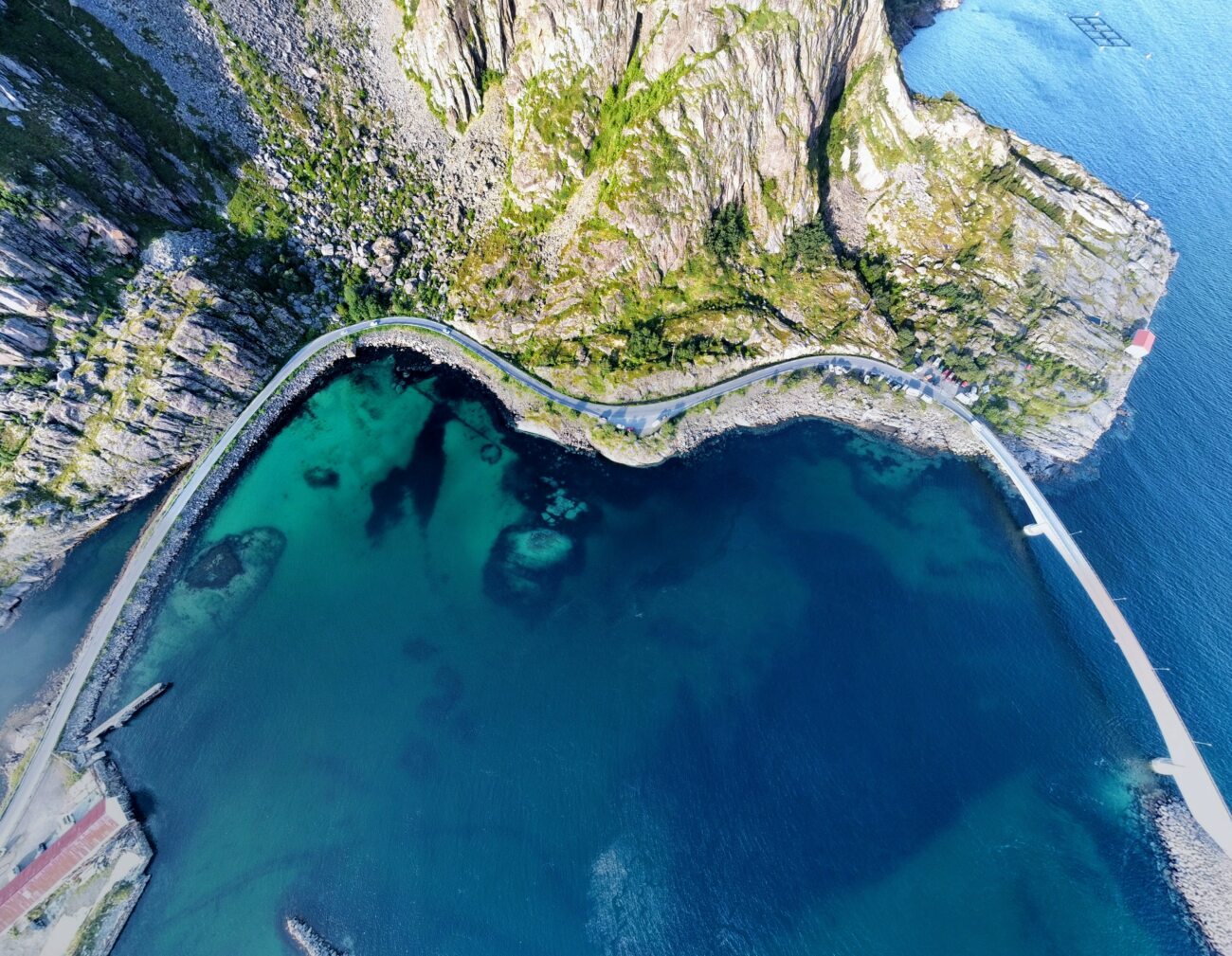
Henningsvær is a charming little place with a nice pedestrian area, a large harbour and independent shops. Park up and wander around.
The Football Pitch
The real reason most people come here – and one of Lofoten’s most photographed spots – is the football pitch. It’s a completely ordinary pitch where local kids play football, but it sits so dramatically on a rocky outcrop in the sea that some call it the most beautiful football pitch in the world.
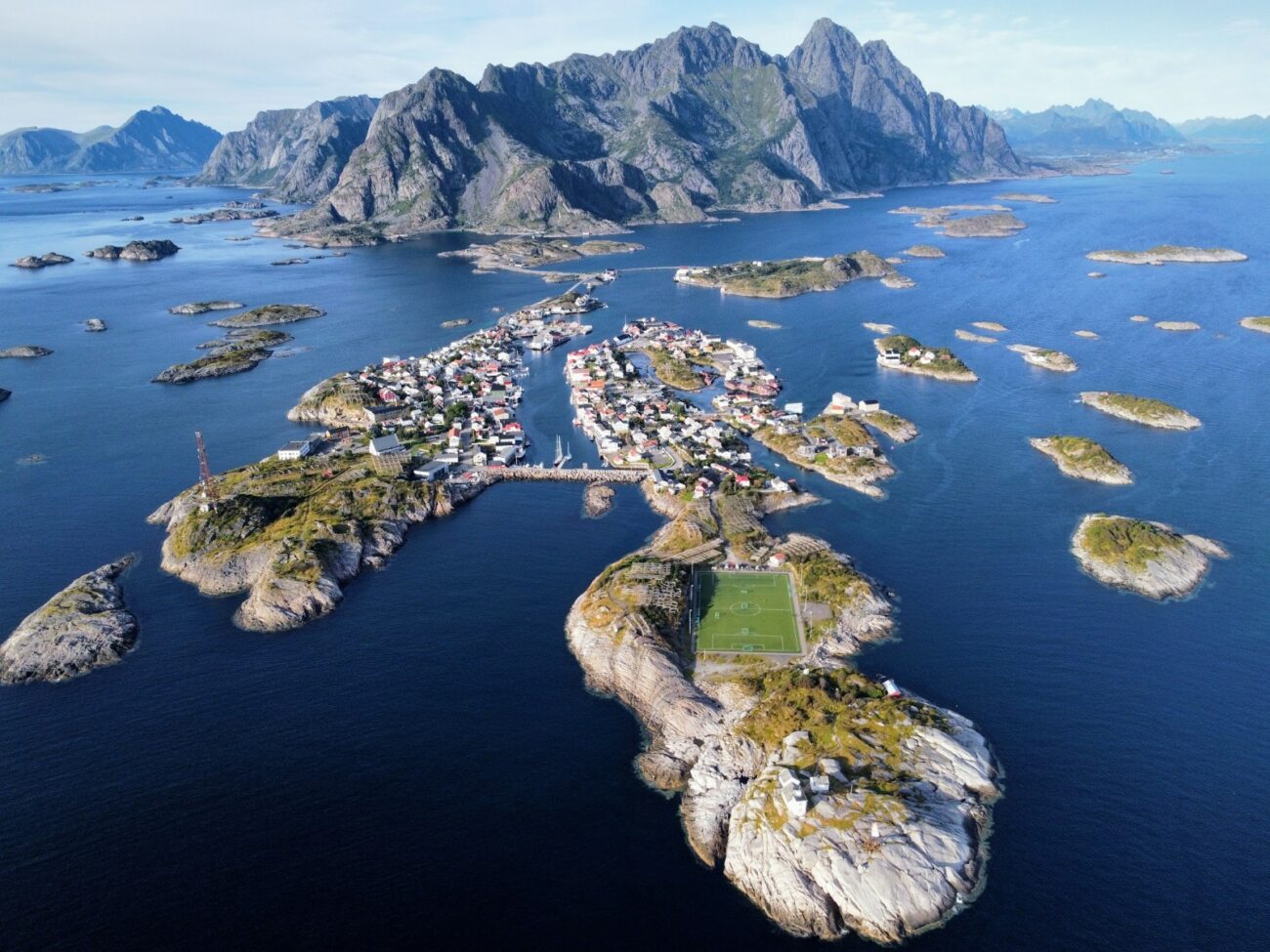
It looks even more spectacular from a drone*, but it’s worth seeing from ground level too.
Day 3 | Eggum, Haukland & Uttakleiv Beach
📍 ~45 km | approx. 1 hr driving | Overnight: Uttakleiv Beach
Today is a beach day, starting with the remote Eggum beach. Eggum is a tiny village just off the E10 Scenic Route. To reach the beach (Eggum Picnic), you’ll drive along a private road and pay 40 NOK into a box – cash only, no card payment.
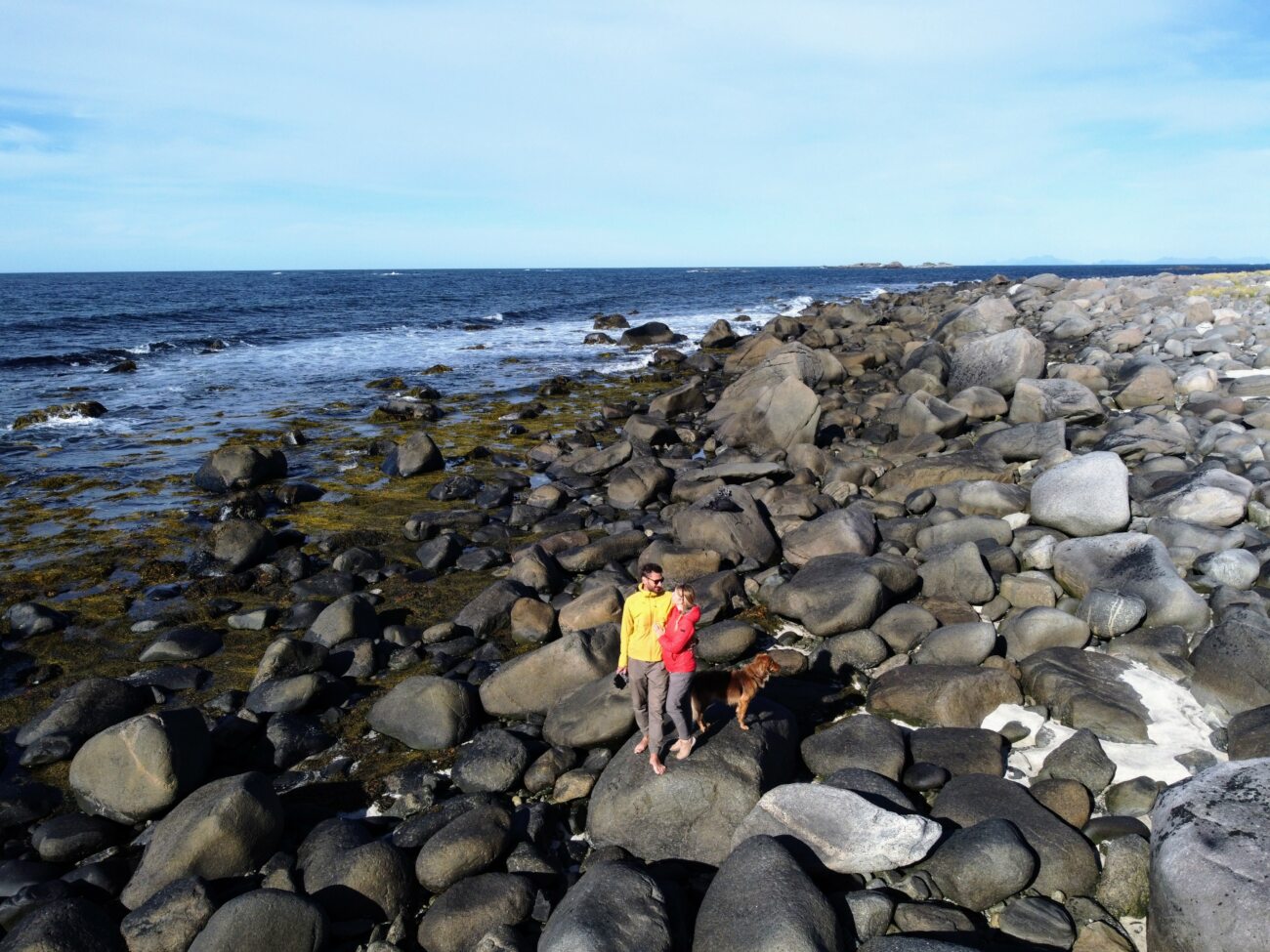
From the car park it’s just a few steps to the beach. Unlike most Lofoten beaches, this one is made up of thousands of huge rounded boulders rather than sand – brilliant for scrambling around on.
Haukland & Uttakleiv Beach
From here, head to the famous Haukland Beach – one of the most well-known beaches on the Lofoten Islands. A classic postcard scene: powder-white sand with a towering mountain backdrop.
The 400m Mannen mountain looms over the beach, with a relatively easy hiking trail to the top.


From Haukland, walk the trail over to Uttakleiv Beach (behind the Mannen). It’s a pleasant coastal walk of about 4 km that takes roughly 1 hour – completely flat and suitable for everyone.
Uttakleiv is the full Caribbean experience: fine golden sand and turquoise water. You can also park your campervan here overnight.
Day 4 | Offersøykammen Hike
📍 ~20 km | Hike: 4 hrs / 436m elevation | Overnight: Myrland Beach
Today’s first hike – the Offersøykammen – is relatively under the radar but delivers a stunning 360° panorama over the Lofoten peaks and yesterday’s Haukland Beach.
The summit is 436m and can be reached and returned within 4 hours – rated moderate in difficulty. The main challenge: the trail is completely unmarked, so follow the GPX route in our Offersøykammen guide carefully.
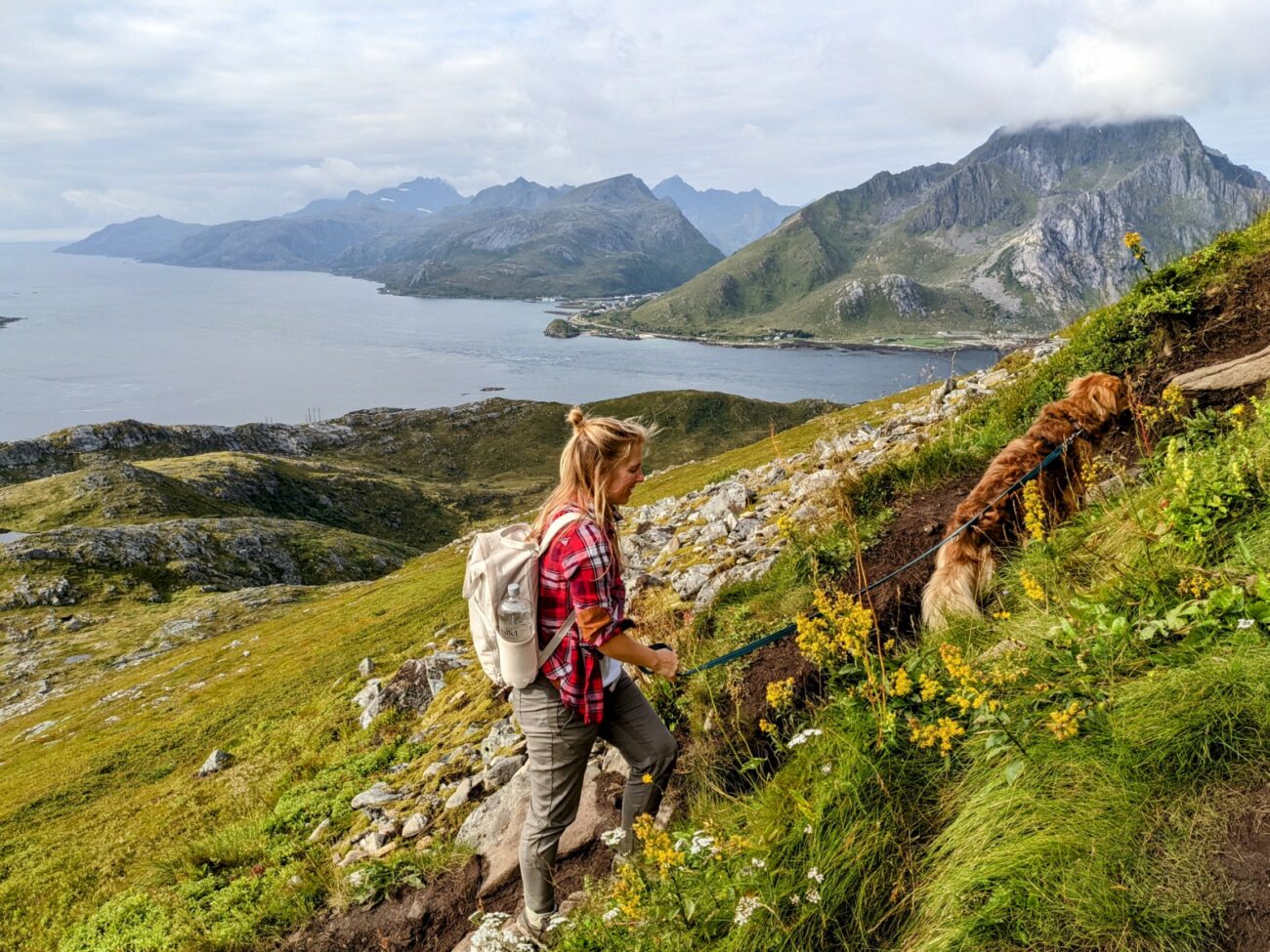
The view from the top is breathtaking. Because this hike is far less crowded than something like the Reinebringen, you can really soak it in.
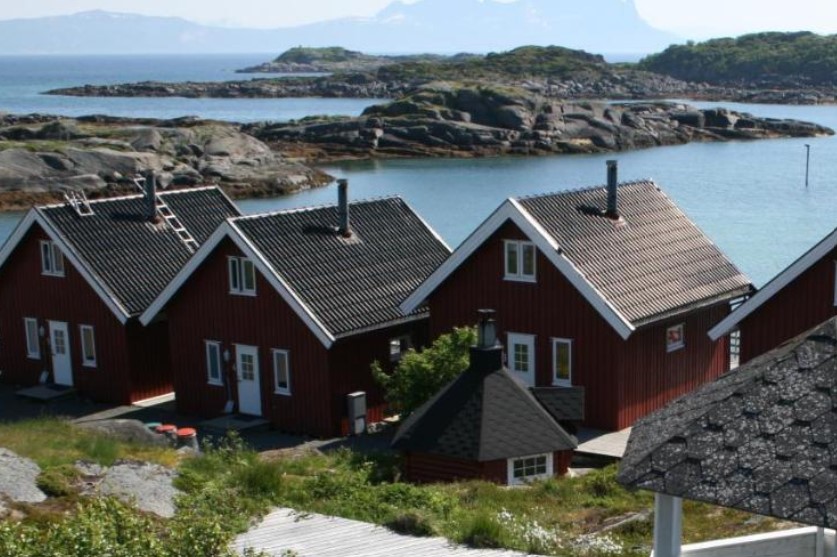
Day 5 | Nusfjord, the Lofoten Road & Ramberg Beach
📍 ~50 km | approx. 1 hr driving | Overnight: Lofoten Beach Camp
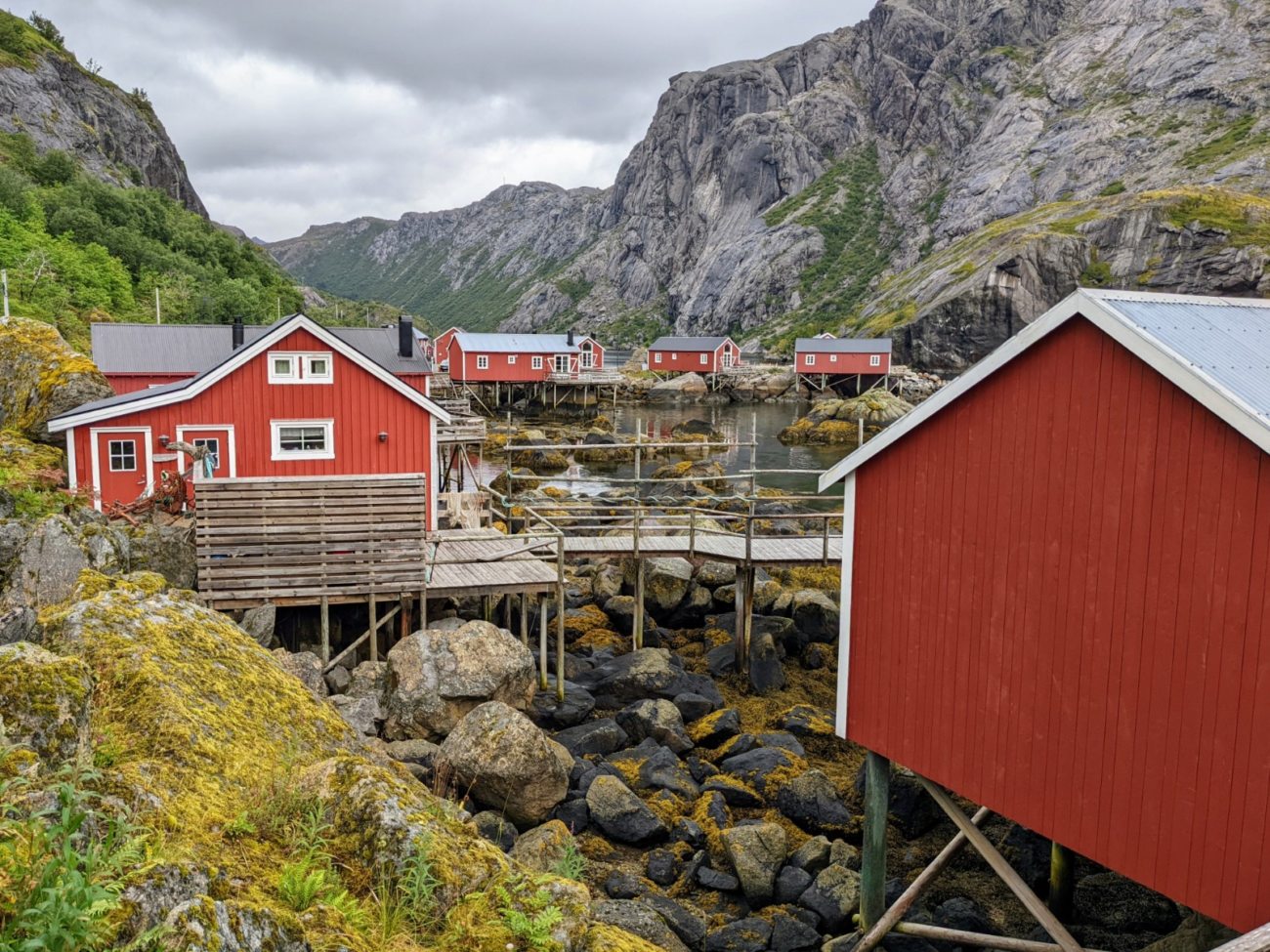
Next stop is the oldest museum village on the islands. Nusfjord was the leading fishing village in Lofoten until 1989 and remains economically significant today as a stockfish producer. Now it’s mainly a tourist destination.
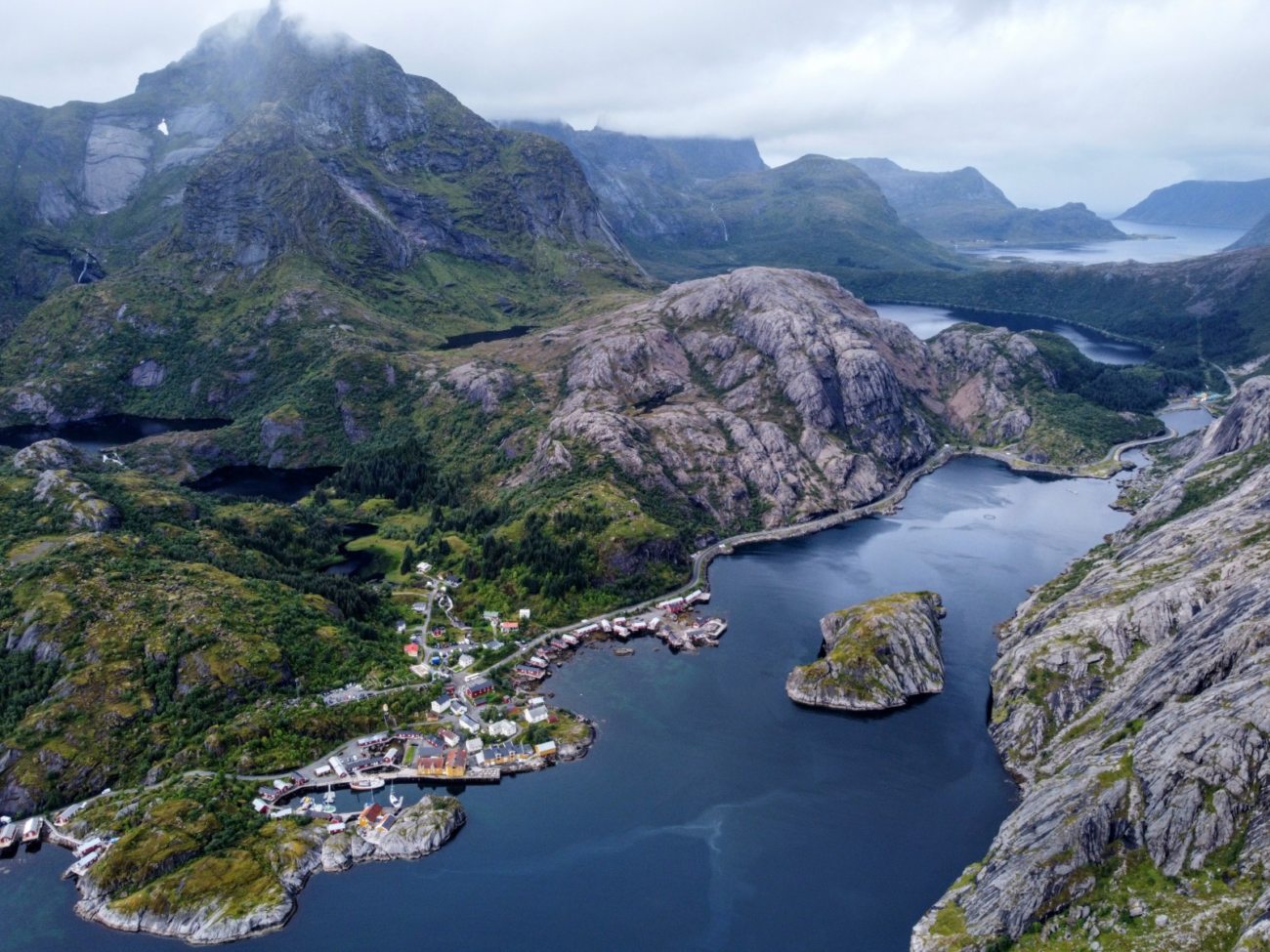
Nusfjord is beautifully preserved and worth visiting – but it’s an open-air museum rather than a living fishing village. Make of that what you will.
The Lofoten Road
On the way to Nusfjord you’ll pass a famous Instagram photo spot known as the “Lofoten Road” – a perfectly straight section of road heading directly towards a dramatic mountain backdrop. Pull over and take your photo (Google Maps).
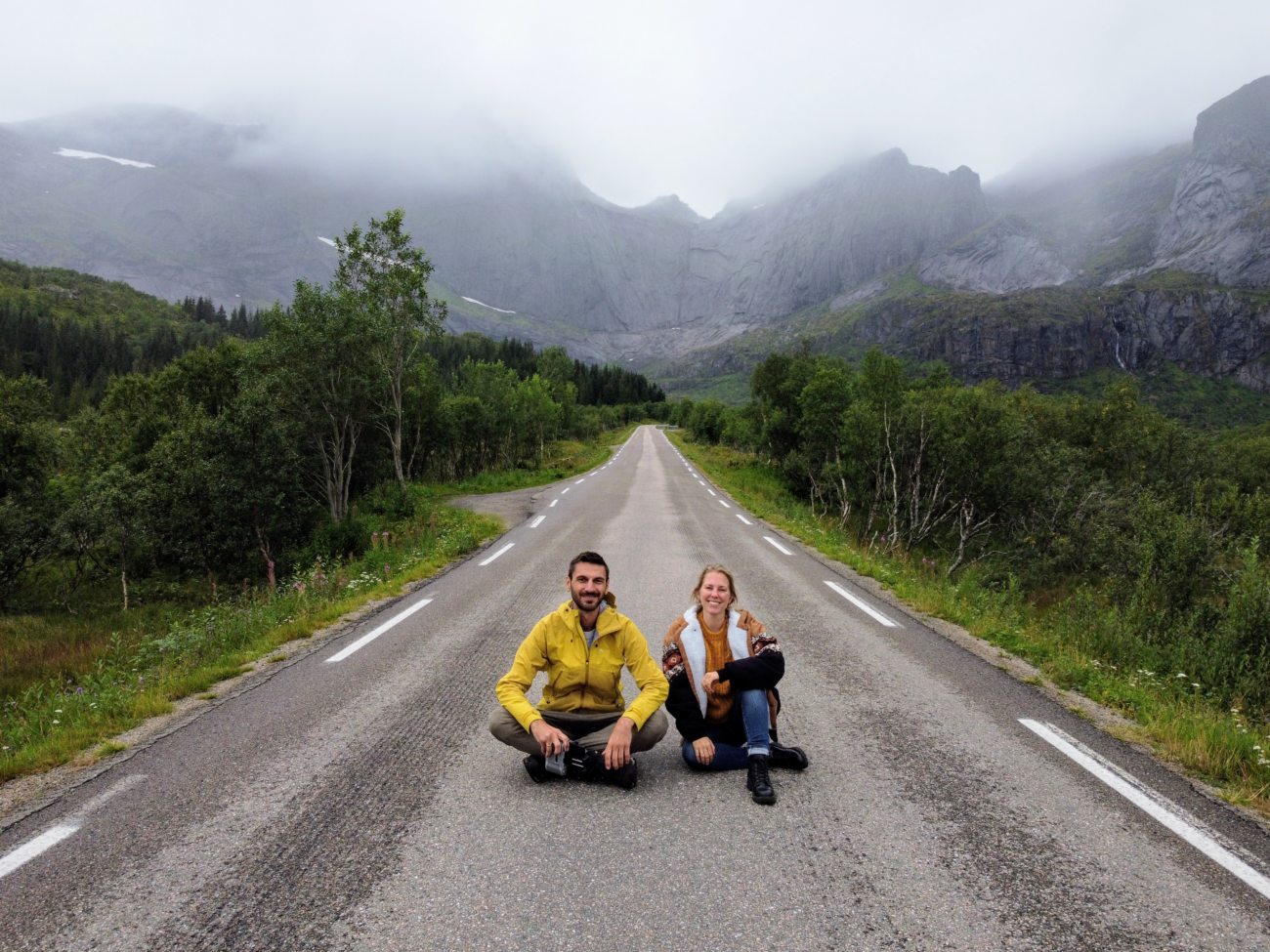
Ramberg Beach
Less than 20 minutes further along the E10 is what we’d call the best beach in Lofoten. Rambergstranda stretches for almost 900 metres in a gentle arc – perfect for a long walk and just taking it all in.
The beach sits in the small village of Ramberg and has a slightly more lively atmosphere than the more remote beaches. We absolutely loved it here.


Day 6 | Ryten Hike & Kvalvika Beach
📍 ~30 km | Hike: 4–5 hrs / 543m elevation | Overnight: Ryten car park
The Ryten hike is one of the best hikes on the Lofoten Islands – a true classic of northern Norway. A new trailhead (with a large car park) makes it easy to combine with a visit to Kvalvika Beach, one of the most stunning beaches in Lofoten.
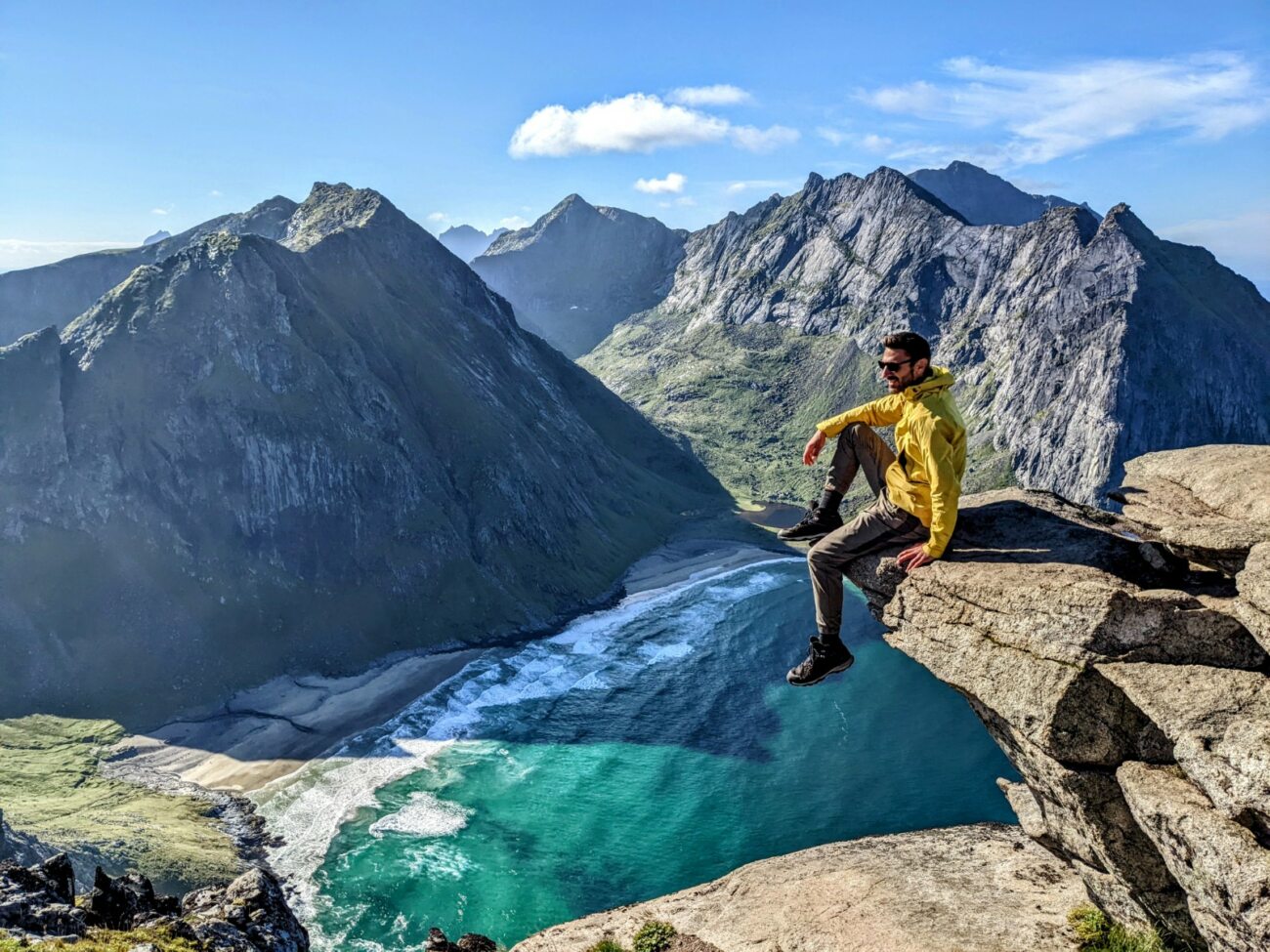
Ryten stands at 543m in the southern Lofoten, close to Nusfjord. The hike is popular, but if you start early the summit views are absolutely worth sharing the trail.


From a viewpoint you look directly down onto Kvalvika Beach – you can hike down to it or skip it. Without the beach detour, the full hike takes around 4 hours for the 8 km route.
Full details in our hiking guide: Ryten Hike + Kvalvika Beach | Tips for this Lofoten Classic
Day 7 | Fishing Villages: Hamnøy, Sakrisøy, Reine & Å
📍 ~35 km | approx. 45 min driving | Overnight: Moskenes Camping / Hamnøy
Today takes you to the deep south and the most iconic fishing villages in Lofoten.
Hamnøy
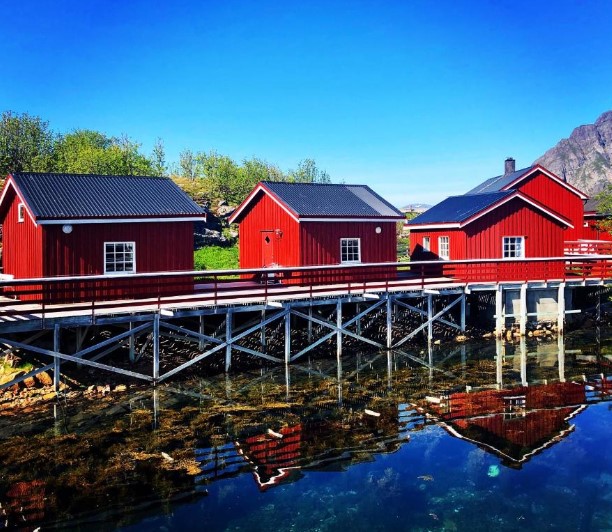
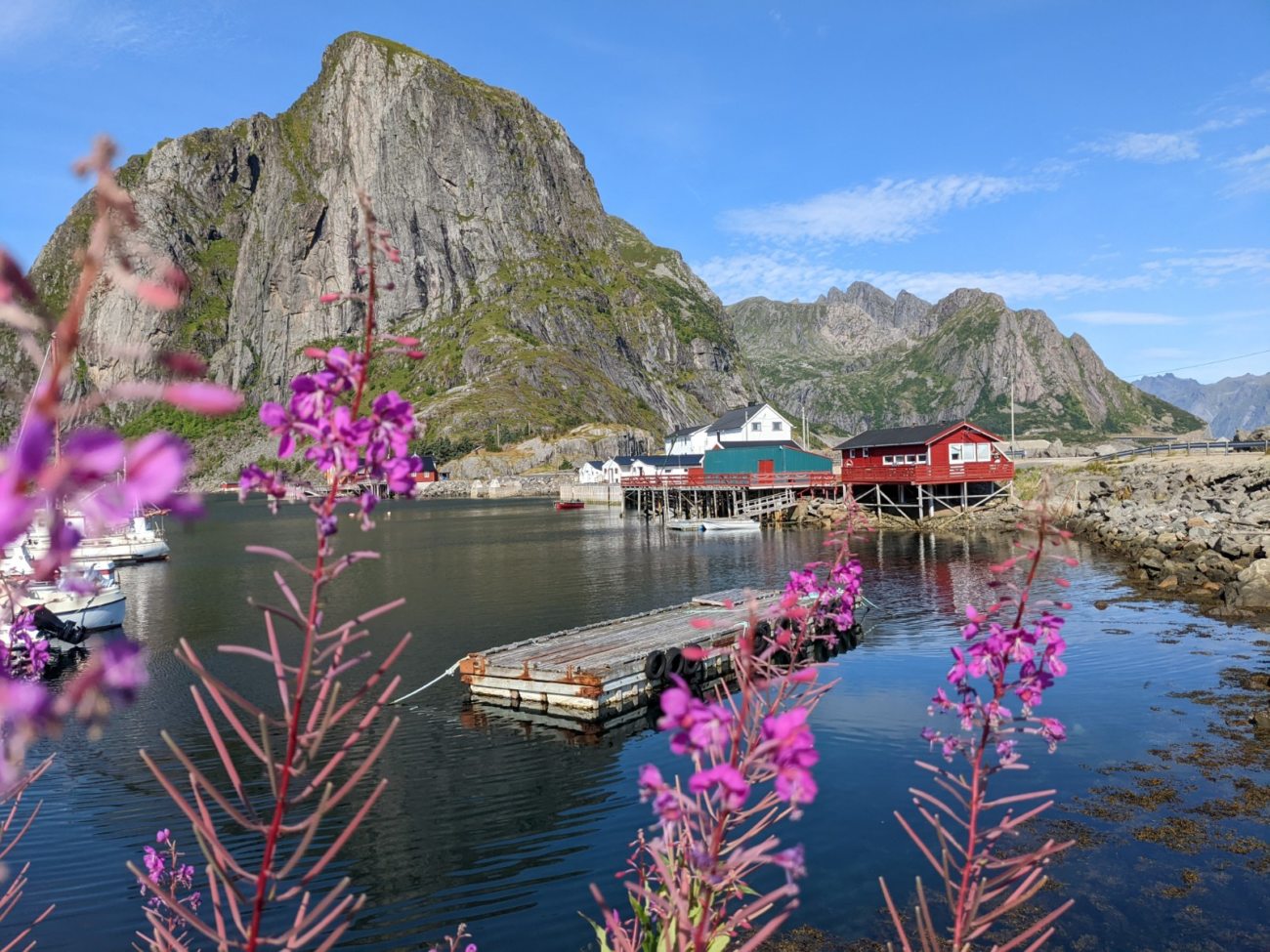
Hamnøy sits on the island of Moskenesøya – a tiny village with a picture-book backdrop that has no equal. The classic red rorbu cabins set against a dramatic mountain silhouette. Stop, take your photos, soak it in.
Sakrisøy
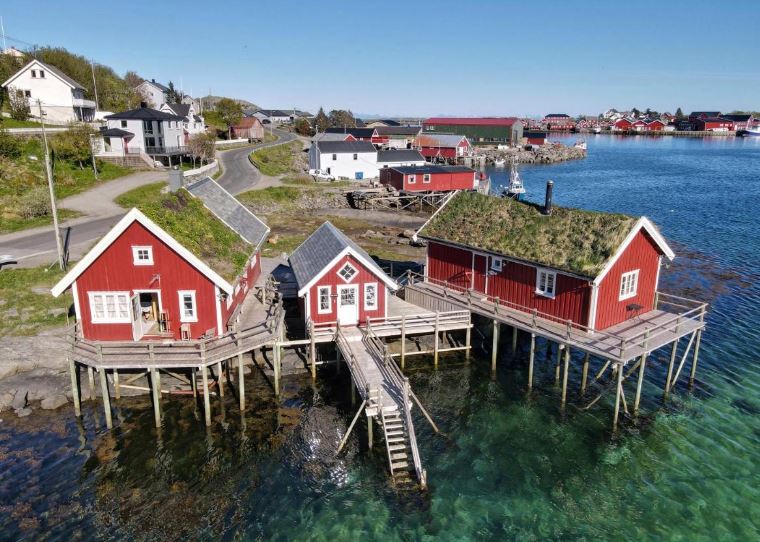
Between Hamnøy and Reine lies the tiny hamlet of Sakrisøy – famous for the yellow house on a small island right in the water, one of the most-photographed motifs in all of Lofoten. Stop for a photo. Right next door is Anita’s Sjømat – a small bistro with legendary fish soup and the best fish burger on the islands.
Reine
Just across the fjord sits Reine – one of the most visited and most photographed places in Lofoten. This is Lofoten as you’ve seen it on postcards. Reine has existed since 1743 and is the perfect base for the Reinebringen hike tomorrow.


Dinner tip: The Gammelbua restaurant in Reine has been serving classic Lofoten cuisine in a 200-year-old building for generations. Open evenings from 18:00 – book ahead.
Å
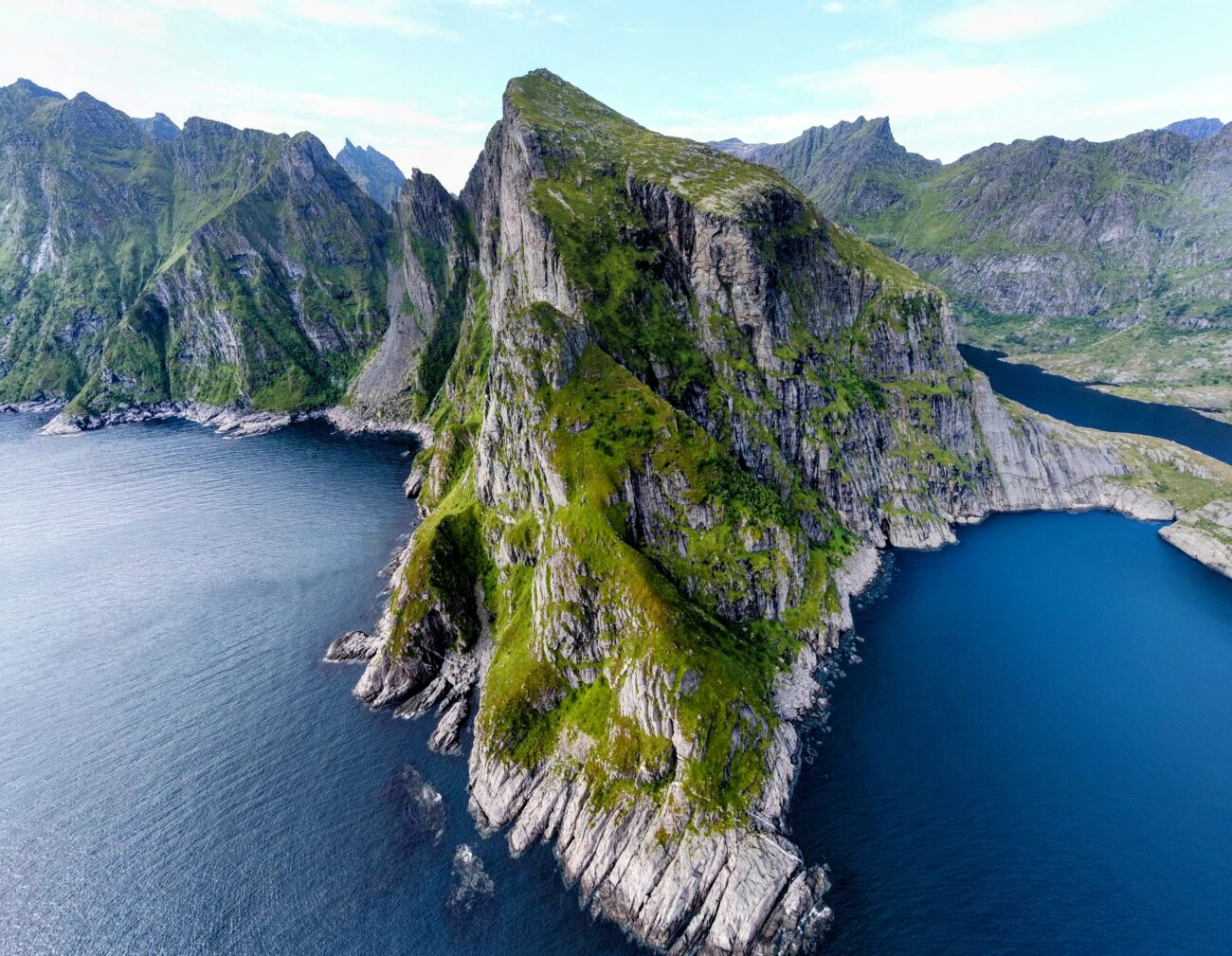
Å is not just the last letter of the Norwegian alphabet – it’s also the southernmost village in Lofoten. Very small, worth a quick walk. The highlight is the viewpoint at the southern end of the village.
From the free car park (Google Maps) it’s just a few minutes through the greenery to a large flat rock – the southernmost point in Lofoten you can officially reach. On clear days you can see for kilometres towards the islands ofVærøy and Mosken, with the Atlantic stretching out ahead of you.


Day 8 | Reinebringen Hike
📍 ~5 km | Hike: 3–4 hrs / 460m elevation | Departure: Moskenes–Bodø ferry
Stop at the Reinehalsen car park before you start – from here you already have a spectacular view over the fjord and Reine. Then head to the trailhead for the final hike of the trip.
The Reinebringen is arguably the hike with the most dramatic view in all of Lofoten. The panorama from this 460m summit over Reine and the Lofoten mountain ranges is incomparable. An absolute must.
Over 1,500 steps were carved into the rock by Nepalese Sherpas to make the ascent as safe as possible.
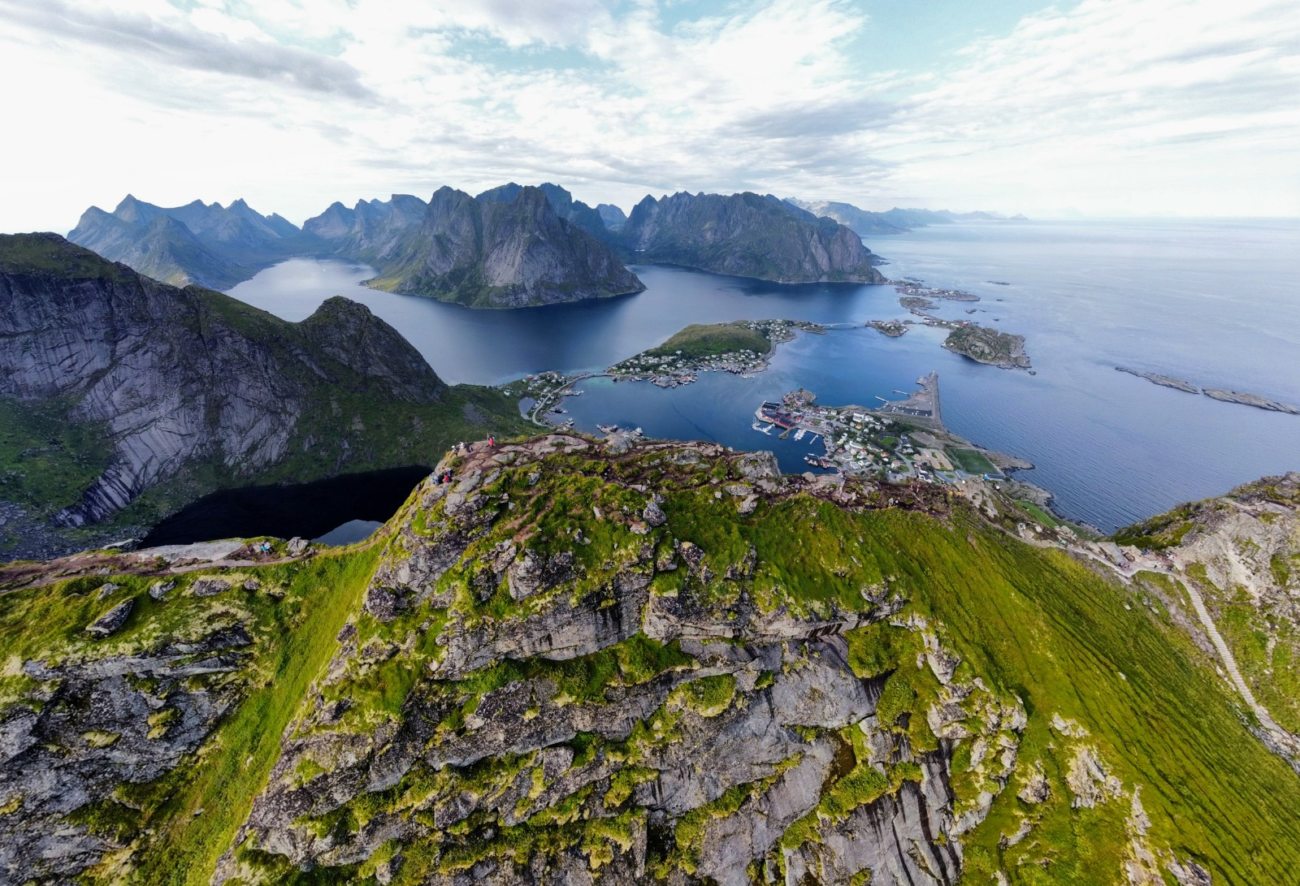
At the top there are several viewpoints depending on whether you turn left or right at the end of the steps. All of them give you a breathtaking panorama over Reine and the surrounding islands. An absolute must-do.
Full details: Reinebringen Hike | The Most Beautiful Viewpoint in Lofoten
From here you can take the Moskenes–Bodø ferry back to the mainland. If you’d like to return to Lødingen (to continue further north or return a rental car in Tromsø), you can cross the islands again in the opposite direction and take different roads on the way back.
(Optional Loop) Day 9+
📍 Return north | Side roads: Fv804, Road 815, Fv862, Midnattsolveien
Head back north if you missed any Lofoten highlights due to rain or simply want more hiking time. Make a point of using the side roads and turning down dead-end lanes without knowing what’s ahead – that spontaneity is one of the best parts of a Lofoten road trip.
Here are some great side road suggestions:
Fv804 near Napp
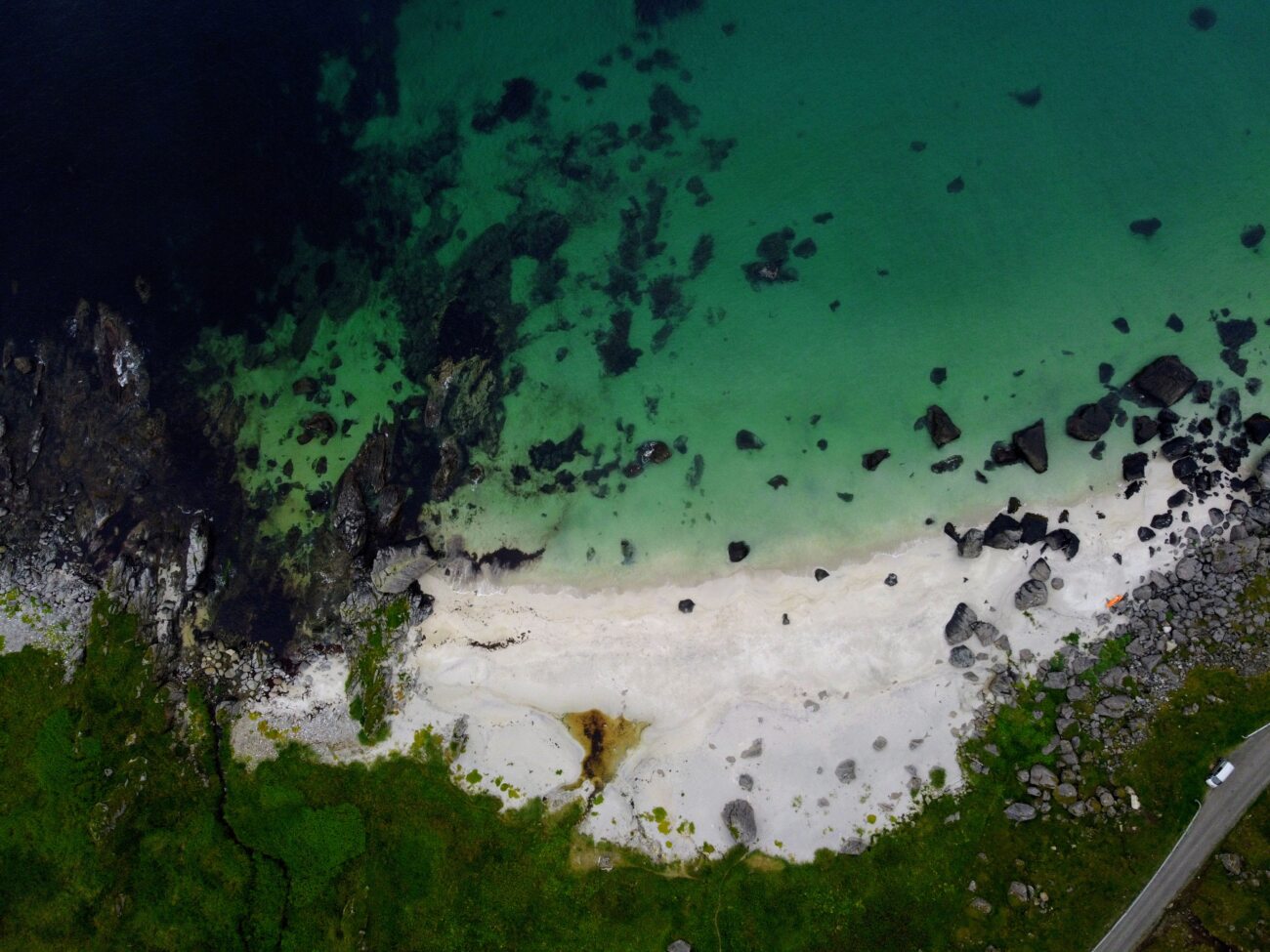
A small detour along the coast. You can’t do a full loop of the peninsula so you’ll need to drive two dead-end sections and double back to the E10. The routes pass Vikten Beach and Myrland Beach – extremely quiet roads with great coastal scenery.
Road 815 between Hag and Sundklakkbrua
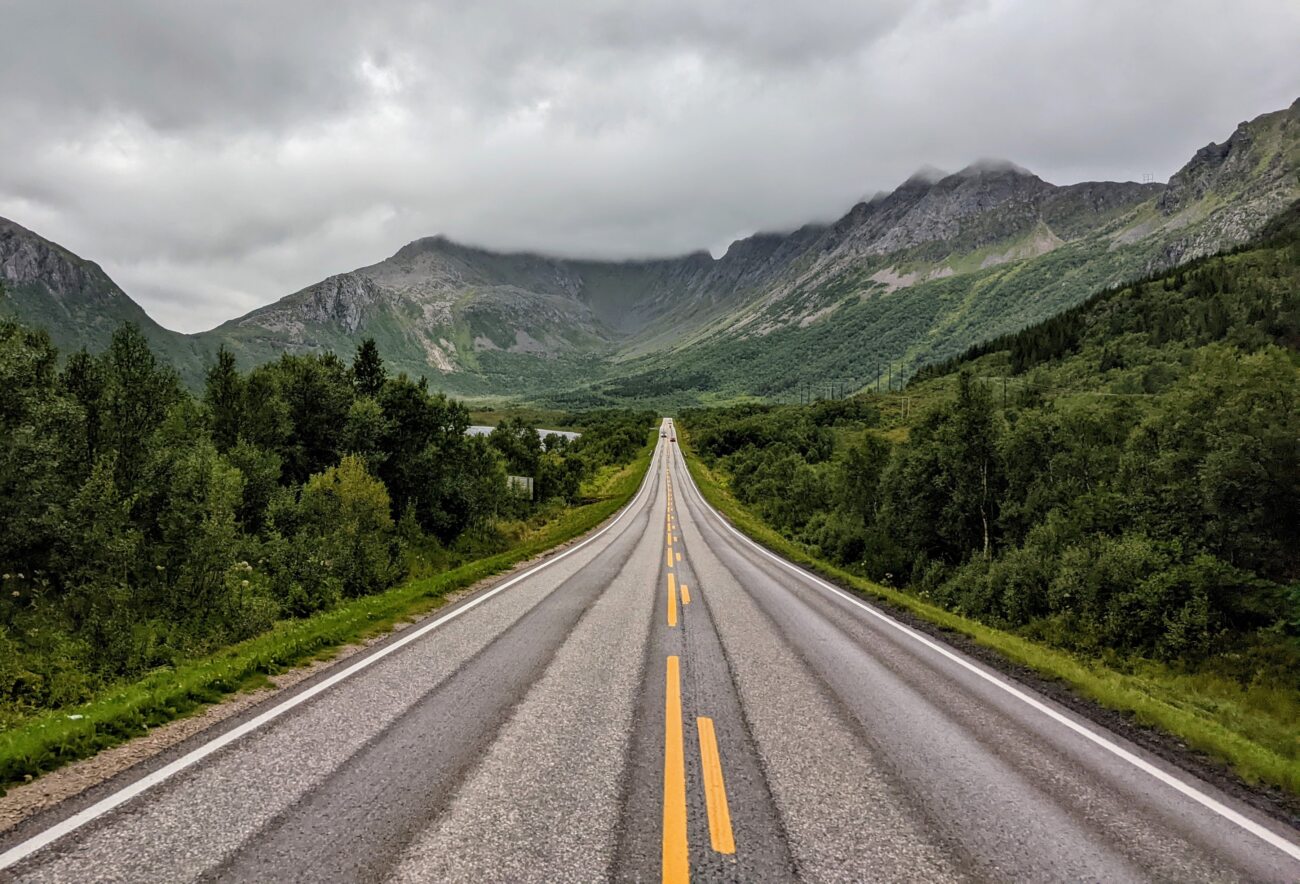
Not technically a detour as it runs almost parallel to the E10 – but it hugs the coast most of the way and makes for a much more scenic alternative to the busy main road.
Fv862 on Gimsøy
A narrow road circling the small island of Gimsøy, passing several quiet beaches and the colourfully graffitied Butterfly House (Google Maps).
Midnattsolveien
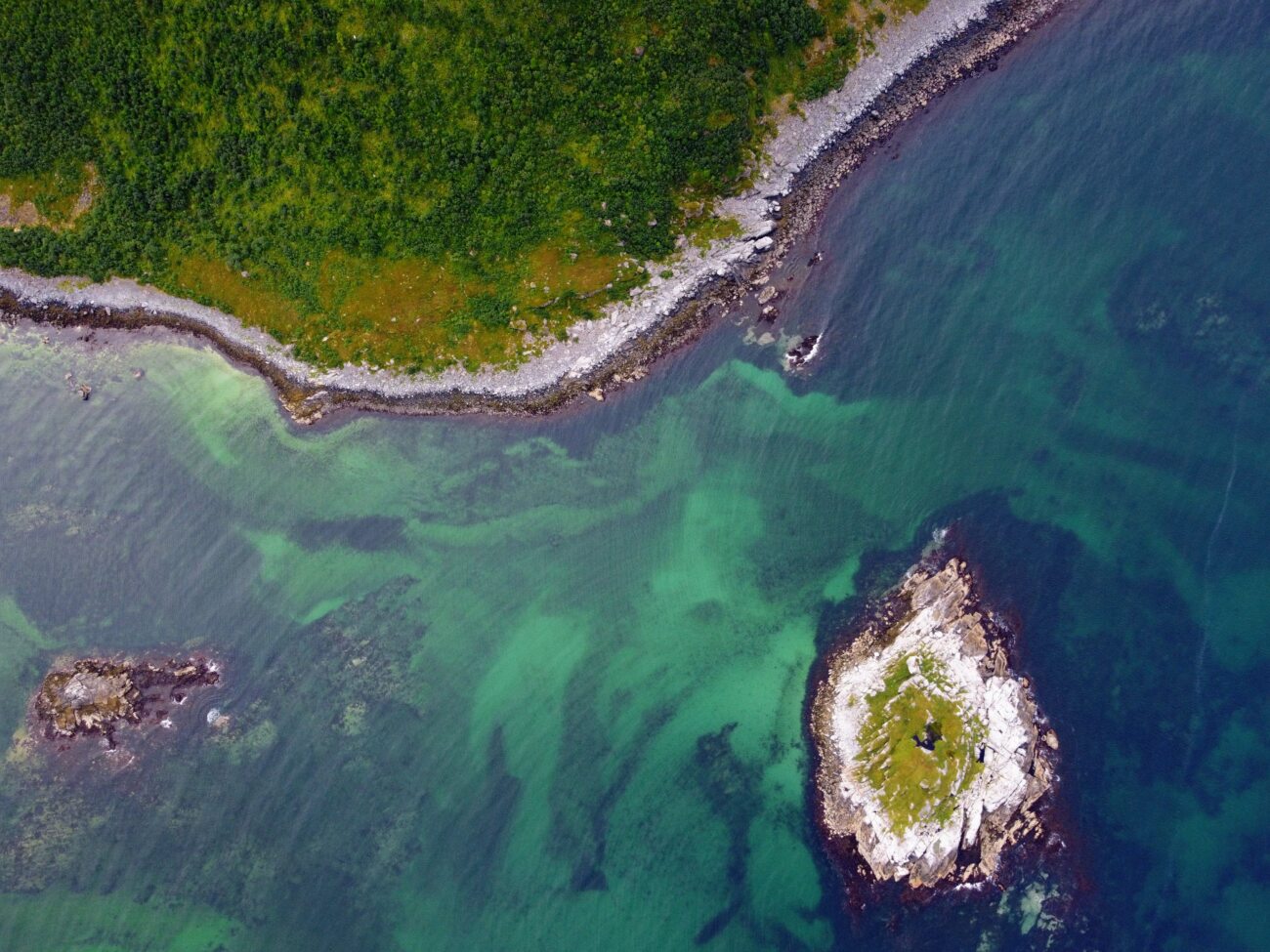
On the island of Austvågøya, this road runs beautifully along the coast through almost untouched landscapes. If you stayed at Laukvika on day one, you already know this stretch.
If not, it’s well worth adding to your route – very little traffic, lots of natural highlights.
Vesterålen & Senja
If you have more time and want to explore islands that see far fewer visitors than Lofoten, here are two tips.
First: the Vesterålen archipelago, directly north of Lofoten and just as beautiful – especially the island of Andøya. Second: the island of Senja, a few hours further north, completely unspoilt and scenically stunning. We didn’t make it to either, but if you have at least another week they’re both worth it.
Frequently Asked Questions about a Lofoten Road Trip
How many days do you need for the Lofoten Islands?
At least 7 days to cover the main highlights. With 10–14 days you can tackle all the major hikes like Reinebringen and Ryten, explore the best beaches and discover the quieter side roads at your own pace.
What is the best time to visit the Lofoten Islands?
June to August for midnight sun and the best hiking conditions. September and October for fewer crowds, stunning autumn light and the first northern lights. November to March for guaranteed northern lights and a winter wonderland – but many campsites are closed.
Do you need a campervan for a Lofoten road trip?
No – but it makes a big difference. A campervan gives you the freedom to wild camp in Lofoten and wake up with spectacular views outside your window. With a rental car you’ll stay in rorbu cabins or campsites – both are great options too. For all the ways to get there, see our Lofoten travel guide.