


Our Slovenia itinerary for 14 days leads you from Lake Bled over the Vršič Pass to the Soča Valley, on to Postojna Cave and the coastal town of Piran, and ends in Ljubljana. We drove this Slovenia road trip in October 2022 with our dog Aaro, and before we left we had no idea what to expect: we knew Slovenia borders Austria and guessed it would look a bit like the Alps. What we found were mountain panoramas, turquoise rivers, gorges and pretty coastal towns, all within a few hours of each other.
You can hike through gorges, climb up to viewpoints and swim in emerald rivers, and you can do all of it in a country that is small enough to cross in half a day. Below you find the full route day by day, a stage table with drive times, shorter 7 and 10 day versions, current costs for 2026 and answers to the questions we hear most.
Last updated: November 2026
How to Get to Slovenia
If you travel from Germany to Slovenia, you will drive through Austria on the way, past the Salzburg region and the Salzkammergut. There is so much to see there that a few stops are well worth it.
Our favorite highlights in the Salzburg region are collected here: Salzburger Region | 8 Best Things To Do
Lake Königssee is also worth a detour. It lies on the German side of the border, right next to Salzburg, and is simply too beautiful to skip. Read more: The Best Things To Do At Lake Königssee
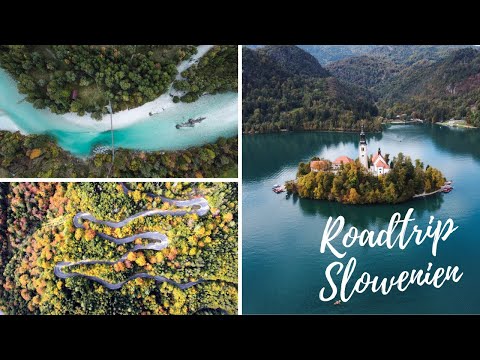
Beim Klick wird Youtube.com aufgerufen (Datenschutzerklärung) | By clicking, Youtube.com opens (Privacy)
The Karavanke Tunnel
You cross the border to Slovenia in the almost 8 km long Karavanke tunnel. The toll is not covered by the Slovenian vignette and currently comes to around €9 per car, so check the current price on the DARS website before you go. Traffic jams of several kilometers are common in front of the tunnel, especially on weekends in summer, and the toll booth can slow things down further. Check Google Maps for the traffic situation before you reach the tunnel and plan some buffer.

Slovenia Itinerary for 14 Days
Our 2 week road trip through Slovenia is based on the best things to do in the west of the country and especially on the many sights in the Triglav National Park. The scenery here is simply spectacular and especially the impressive Soča Valley will be a real highlight on your Slovenia round trip. But also coastal towns like Piran and the incredibly beautiful Lake Bled should not be missed on a Slovenia road trip.
The stages at a glance
14 days in total. Drive times are rounded estimates without traffic.
Day 1 + 2 – Lake Bled
From the Karavanke tunnel it is only about 20 minutes to one of Slovenia’s top highlights: Lake Bled. If you are staying in Ljubljana, you can easily take the bus to Lake Bled (this guide explains how).
Lake Bled lies right next to the small town of Bled, just outside the Triglav National Park, and is one of the most visited places in Slovenia. No wonder: there is a lot to do here, and the best sights around Bled are all less than an hour away. If you would rather not plan everything yourself, you can also book a guided tour to the top sights* that comes with plenty of background information.
Tour to the Best Sights at Lake Bled | Check Prices*
As a result, Lake Bled is very touristy, and you notice it everywhere in the little town: parking lots for the crowds, souvenir shops, restaurants and cafes. In one of those cafes you have to try the local specialty, the Bled cream slices. This dessert of vanilla custard and whipped cream on puff pastry is sold on every corner, and we could not resist more than once.

To work off those calories, walk around the lake, which takes about an hour. Along the way you will see the Pilgrimage Church of the Assumption of the Virgin Mary on little Bled Island and Bled Castle, perched on a steep cliff high above the lake. If you are feeling more energetic, hike up to the Mala Osojnica viewpoint for a wonderful view of the island.
Read more: Lake Bled I The Best Tips for the Slovenia Highlight


Staying Overnight at Lake Bled
 Penzion Pibernik in Bled
Penzion Pibernik is a family-run bed & breakfast in a quiet location.
The hotel is located on a large meadow surrounded by a forest above the Sava River, only 300 m from the main road to Lake Bled.
You can reach the lake very quickly on foot. Nevertheless, you are in a quiet environment in the middle of the forest.
Penzion Pibernik | Check Prices*Day 3 – Lake Bohinj
Not far from Bled is Lake Bohinj, almost 4 km long, which feels much more natural and far less touristy. Some people compare it to Königssee in Bavaria. It is much quieter here, with only a few restaurants and none of the hustle and bustle of Lake Bled.

You can walk around the lake through beautiful scenery, and it is also great for active days. Even though it does not look like it, swimming, stand-up paddling and canoeing are all possible here. From Bled you can even go canyoning*, which is perfect if you are after some adventure.
Canyoning Tour in Bohinj Valley | Check Prices*
At the western end of the lake, a cable car takes you up to 1,800 meters (5,900 ft) above sea level. In winter this small ski resort has downhill and cross-country trails, and in summer it is a great starting point for hikes.
From Lake Bohinj you can also start tours up Mount Triglav, at 2,864 meters (9,396 ft) the highest mountain in Slovenia. Climbing it is not a casual outing: you need sure-footedness and via ferrata experience, and most people spend a night in a mountain hut.
The Mostnica Gorge
Do not miss one very special highlight near Lake Bohinj: the hike through the Mostnica Gorge, which starts less than 10 minutes from the lake. It was one of the highlights of our 2-week Slovenia itinerary. The trail through the forest is gorgeous, though not always easy to walk.
You climb over big roots, cross small streams and pass the occasional moss-covered rock. The forest smells wonderfully of conifers and feels completely untouched. The trail follows the Mostnica, and at several points you can look down into the narrow gorge the river has carved into the rock.


The scenery changes quickly: after a few hundred meters the river is flat again and there is no gorge left at all. Even though the gorge itself is not long, the landscape around it makes the whole hike special, so do not skip it. If you want to know more, read our trip report:
Read more: Mostnica Gorge I Hiking at Lake Bohinj
Staying near Lake Bohinj
Lake Bohinj is an easy day trip from Bled, so you can keep your hotel from the days before.
Day 4 – Vintgar Gorge
The wonderful Vintgar Gorge is just a few kilometers from Lake Bled. It is the most visited gorge in Slovenia and one of the country’s most popular attractions. The Radovna River has carved the narrow gorge between the Hom and Boršt hills. Wooden walkways lead you along the gorge for almost exactly 1.6 kilometers, with spectacular views of the river and the steep rock walls beside you.

Moss and grass give the steep rock walls a greenish shimmer. The gorge keeps changing between wider and narrower sections, and the walkway switches from one side of the roaring river to the other. The water is a beautiful turquoise and thunders through the gorge right beneath your feet. What an experience!
Read more: Vintgar Gorge Hike I Tips, Parking & Highlights
Accommodation near the Vintgar Gorge
The Vintgar Gorge is only a few kilometers from Bled, so you can stay in the same hotel as on the first days.
Day 5 + 6 – Drive over the Vršič Pass
Today we drive over Slovenia’s highest mountain pass, the Vršič Pass, to the wonderful Soča Valley. Both are spectacular highlights of the Triglav National Park and belong on any Slovenia road trip. Before that, though, a special waterfall right along the way is worth a stop.
Peričnik Waterfall
There are two trails to the 52-meter (171 ft) Peričnik Waterfall. We recommend taking the right path up and the left one down, which makes a nice loop. The right path is quite steep and leads straight through the forest.
The trail is poorly marked, if at all, so use an app like maps.me to find your way. First you reach a viewpoint where you see the waterfall from below and can already guess what is in store.

Follow the path further up and you reach the foot of the waterfall, where you see why it is so special: the path leads behind the waterfall. We had only known that from Seljalandsfoss in Iceland. You will get wet here, and it feels like walking under a giant shower.
It is a little unpleasant, but also a lot of fun. On the other side, the wind blows the spray right back at you, so if you somehow stayed dry so far, you will not anymore. From here you can climb one more level to the upper part of the waterfall, with a wonderful view of the valley you came from.
Lake Jasna
Continue west and you pass the turnoff to the Karavanke tunnel again. Most cars, and especially trucks, turn off here toward Austria. If you keep going straight, it suddenly gets quieter, with far fewer cars on the road. On the way to the Vršič Pass you first pass the two Jasna lakes.

Lake Jasna actually consists of two artificial lakes at the foot of the Vršič Pass. You would never guess they are man-made, because they blend beautifully into the landscape. The lake is well set up for visitors, with a restaurant, a beach bar and SUP rentals.
A walk around the two lakes takes only about 30 minutes. Benches along the way invite you to sit and watch the ducks, and if it is warm enough, you can even swim in the lake.


The water is crystal clear and turquoise, and with the mountain panorama around it, the setting is stunning. Half a day here is plenty.
Lake Jasna sits on the edge of Kranjska Gora, the town where the pass road begins. It makes a good stop to refuel and eat, and in summer it is a base for hikes in the Julian Alps. A few kilometers from town you also find the Zelenci spring, a small turquoise spring-fed lake that is good for a short stop.
Drive over the Vršič Pass
Vršič Pass in 2026: A new traffic regime has been in place since June 15, 2026. Passing the barriers is free, parking at the very top of the pass is not possible in the 2026 season, and the right lane at the barrier stays closed. From June 1 to September 30, 2026 a free bus connects Kranjska Gora and Bovec over the pass, so you can also leave the car behind. The pass is closed in winter and has had full closures in the past, so check the news of the Soča Valley tourist board before you set off.
Drive on south from Lake Jasna and the road soon starts to climb, and shortly after, the hairpin bends begin. The Vršič Pass is the highest mountain pass in Slovenia and takes you up to 1,611 meters (5,285 ft) through an incredible 50 hairpin bends and back down again. Driving this spectacular alpine pass is a must on any Slovenia itinerary, whether you travel by motorcycle, car or camper van.


The road was built over a hundred years ago and still fascinates road trippers today. Many of the hairpin bends are still paved with cobblestones, which is very rare in the Alps.
Two hikes here are especially worthwhile. The first starts near the highest point of the pass and leads to the Slemenova Špica viewpoint. The trail crosses scree fields, leads through beautiful spruce forest and passes rocky peaks that remind us of the Tre Cime in the Dolomites.

The second hike starts at the second-to-last hairpin bend on the Soča Valley side and leads to the source of the Soča River. In places you have to scramble or hold on to a chain. At the top, the turquoise spring water of the Soča falls over a small waterfall into the riverbed.
You can find more information about the Vršič Pass here: Vršič Pass I What to expect at the Highest Pass in Slovenia
Where to Stay at the Vršič Pass
Hotel PLANINSKA KOČA NA GOZDU This beautiful rustic accommodation is located near the Russian chapel right on the Vrsic pass and is super quaint. The perfect place if you want to spend several days at the pass and have enough time for hiking.
- Located directly in the forest on the mountain
- Great hiking possibilities nearby
- Delicious breakfast and dinner
- Simple and rustic rooms
Day 7–10 – Soča Valley
The Soča Valley is one of the best places to visit in Slovenia, and once you have crossed the Vršič Pass, you arrive right in it. If you are short on time, you can drive through the valley in one day and see just the highlights, but we recommend spending 3 to 4 days here. It is simply too beautiful to rush.

The heart of the valley is the Soča River, which accompanies you from the Vršič Pass in the north to the Tolmin Gorge and beyond. It is 137 km long before it flows into the Gulf of Trieste in Italy. For us this is the most beautiful stretch of nature in the whole country: so much colorful water, so many gorges and mountains within a few kilometers, you will not run out of things to see on this road trip.


There are great hikes here, the spectacular Soča Troughs (a kind of gorge) and simply wonderful nature, with waterfalls, dense forests, high mountains and narrow gorges. Outdoor sports are big here, too: you can go whitewater rafting* or kayak down the river*.
On the way down the valley, we recommend a stop at the Tolmin Gorge at the southern end of the Triglav National Park, where a short loop trail leads you high above the turquoise water.
If you have a day to spare, a detour to Brda is worth it, the wine region on the Italian border. The rolling hills remind you of Tuscany but are much quieter. In Šmartno, a medieval village with a town wall, you can stroll around and taste the white grape Rebula at the wineries nearby.
Learn more about the Soča Valley in our detailed trip report: Soča Valley I 7 Spectacular Highlights & Travel Tips
Accommodation in the Soca Valley
If you are not traveling with a camper or campervan then we can recommend the following beautiful hotel:
Hotel Mangart is brand new and welcomes you with a wonderful view of the mountains. It is located in Bovec, so you are very quickly at all the highlights of the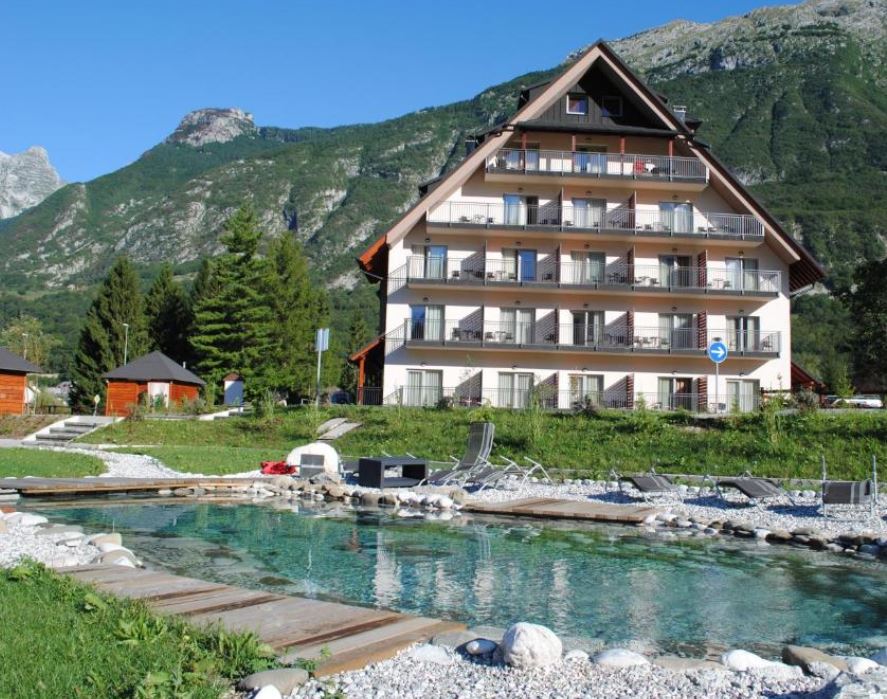 of the Soca Valley.
- Each room has a balcony and free wifi
- There is a whirlpool and sauna
- Free parking is also available
- wonderful alpine panorama
Hotel Mangart | Check Prices*
Day 11 – Postojna Cave
Another natural highlight of Slovenia is the famous Postojna Cave. Unfortunately, we could not visit it, because we were traveling with our dog Aaro and dogs are not allowed inside. You should not miss it, though.
The cave system is the second largest stalactite cave in the world. It is 24 km long in total, of which you can explore 5 km. For more than 3 km of the tour you ride an underground train. Yes, really: a train runs right through the cave. It is truly unique and a wonderful experience. Admission to the cave costs roughly 28 to 31 euros per adult in 2026, depending on the season. You can also buy a combination ticket with Predjama Castle, which is cheaper than two separate tickets. In summer the popular time slots sell out days ahead, so book on the official website of the operator and plan to arrive at least 30 minutes before your tour starts.
Predjama Castle is only a few kilometers from the cave and is built right into a cliff face. If Postojna is too crowded for you or you want to see more caves, you can visit the Škocjan Caves instead: they are a UNESCO World Heritage Site and lie roughly on the way to the coast.
Accommodation near the Caves
Postojna Cave Hotel Jama is located right next to the caves. So after a day in one of the biggest cave systems in the world, you can walk to your accommodation.
- Each room has its own bathroom and free Wi-Fi
- Walking distance to the cave
- Free parking is also available
- Tasty breakfast
Postojna Cave Hotel Jama | Check Prices*
Day 12 – Piran
Piran sits at the far southwestern tip of Slovenia and means a detour on your road trip, but you should not skip this little town on the Adriatic Sea. It lies on the short stretch of coast that Slovenia has on the Adriatic, squeezed between Italy and Croatia.

For us, Piran is the most beautiful town in Slovenia. It wins you over with its medieval old town, its location right on the sea, wonderful sunsets and, of course, its Venetian architecture.
We strolled for hours through the romantic streets and could hardly get enough. It is also one of the prettiest places on the whole Adriatic.
You can read about the most beautiful sights of Piran in our trip report: Piran Sights I The most Beautiful Highlights + Tips


Accommodation in Piran
Apartments Riva are located directly on the waterfront of Piran and you can look from your room directly on the Adriatic Sea. You are super fast in the old town and at the sea.
- Each room has free wifi
- Super furnished apartments with kitchen, bathroom and bedroom.
- a free breakfast is freshly prepared
- you are at the sea in 20 meters
Apartments & Rooms Riva | Check Prices*
Day 13 – Ljubljana
We continued from Slovenia across the border to Croatia for a few more days by the sea. If you want to end your trip in Slovenia and, like us, do not like to go back the same way, we recommend continuing via the capital and spending at least one day in Ljubljana.
From Piran it takes less than 2 hours to reach Ljubljana. The city center is almost car-free and compact, so you can easily explore it on foot. You can see the main sights in a day, which makes the capital a good end to your road trip.
Accommodation in Ljubljana
 The Zlata Ladjica Boutique Hotel has a perfect downtown location, putting it within walking distance of most of the capital's sights. The decor is also super modern and chic.
- super furnished, modern rooms
- View of the castle and the river
- in the middle of the old town
- very good organic breakfast
Zlata Ladjica Boutique Hotel | Check Rates*
Day 14 – Return Journey
From Ljubljana you drive north, passing Lake Bled again on your way to Austria or Germany. If you missed any highlights at the start of your trip, now is your chance to catch up. Otherwise, you cross the Karavanke tunnel again and you are back in Austria.
Slovenia Itinerary for 7 or 10 Days
You do not have 14 days? You can shorten the route without losing the highlights. The key is to keep the Triglav National Park and drop the detours.
Slovenia Itinerary for 7 Days
- Day 1: Lake Bled and Vintgar Gorge
- Day 2: Lake Bohinj and the Mostnica Gorge
- Day 3: Jasna lakes and the Vršič Pass to Bovec
- Day 4: Soča Valley with the Tolmin Gorge
- Day 5: Postojna Cave, then on to Piran
- Day 6: Piran
- Day 7: Ljubljana and the return journey
Slovenia Itinerary for 10 Days
- Days 1–2: Lake Bled and Vintgar Gorge
- Day 3: Lake Bohinj and the Mostnica Gorge
- Day 4: Peričnik Waterfall, Jasna lakes and the Vršič Pass
- Days 5–7: Soča Valley
- Day 8: Postojna Cave
- Day 9: Piran
- Day 10: Ljubljana and the return journey
With a bit more time, the Logar Valley in the Kamnik-Savinja Alps also fits into the route. It is a flat, green high valley with a waterfall and hiking trails, away from the classic route. Entry is charged, so check the current price on site.
Tips for Slovenia
Here are a few practical tips for your Slovenia trip, so you can relax and enjoy your vacation.
Wild Camping in Slovenia
Wild camping and parking in the middle of nature is one of the best parts of traveling in our camper van. On our trip through the Lofoten Islands in northern Norway, we loved spending the night in spectacular scenery, sometimes in complete solitude. In Slovenia that is sadly not possible, because camping outside of campsites is prohibited and sometimes punished severely.

In the Triglav National Park in particular, wild camping is strictly enforced and heavily fined. Outside the park the rules are applied a bit less strictly, but you should still stick to them. Fines of €100 and more are not unusual.
On your Slovenia road trip you will have to rely on the many campsites, which are unfortunately quite expensive. In low season, expect to pay about €30–40 per night for two people, and in high season easily €50–60. Unlike in Norway, which is otherwise expensive, campsites in Slovenia charge per person. Dogs and children cost extra, and a tourist tax is often added on top. On the plus side, showers are always included, which is not the case in Norway.
Driving in Slovenia
Driving in Slovenia is as easy as in Germany. The roads are in very good condition, and the highway network is well developed too.
Vignette & Highway Toll
To use the highways in Slovenia you need a vignette, just like in Austria. Besides the familiar windshield sticker, you can also buy an e-vignette, which we find super convenient because you can get it online right before your trip. You only enter your license plate number and the vignette is valid immediately.

The vignette is tied to your license plate, so double-check the number when you buy it, because a typo can make it invalid. In 2026, cars and motorhomes up to 3.5 metric tons (class 2A) pay €16 for 7 days, €32 for one month and €117.50 for a year. There is no one-day vignette, so one week is the shortest option. Vehicles with a front-axle height of 1.3 m (4.3 ft) or more fall into class 2B and pay twice as much. Driving without a valid e-vignette costs a €300 fine. You can buy the e-vignette on the official DARS website: evinjeta.dars.si. The Karavanke tunnel toll is not included.
Is Slovenia Touristy?
We would not have believed it before our trip, but Slovenia is just as touristy, and in places just as crowded, as neighboring Austria or Croatia. Tourist hotspots like Lake Bled can get extremely crowded in high summer.
If you are expecting an untouristy insider tip in the Alps, you will be disappointed. Still, that is no reason to skip Slovenia, because it is simply too beautiful.
How Expensive is a Slovenia Vacation?
Because Slovenia is so popular with tourists, prices are fairly high. You pay in euros, and prices are comparable to Austria, whether it is an ice cream, a restaurant meal or a hotel room. Overall, Slovenia is on a similar level as vacation regions in Austria or Germany.
Here is what you should plan for on this Slovenia itinerary:
- Vignette: €16 for 7 days, €32 for one month (car)
- Karavanke tunnel: around €9 per car, each way
- Postojna Cave: roughly €28 to €31 per adult
- Bled Castle: €19 per adult
- Campsites: about €30–40 per night for two in low season, €50–60 in high season (our 2022 prices)
Slovenia Itinerary FAQ
How many days do you need in Slovenia?
For the western highlights of this route you need 7 days at the very least and 10 to 14 days if you want to hike, spend time at the lakes and visit the coast without rushing. We recommend 14 days, with three to four days alone in the Soča Valley.
How long does it take to drive through Slovenia?
Slovenia is small. The drive from the Karavanke tunnel to Ljubljana takes about one hour, and from Ljubljana to Piran on the coast it is another one and a half to two hours. The long days on this route come from the mountain roads, especially the Vršič Pass, not from the distances.
What is the best month to go to Slovenia?
For swimming in the lakes and rivers and for open mountain roads, summer is the safest choice. We traveled in October and enjoyed the autumn colors at Lake Jasna with far fewer crowds. Check opening times before you go, because some attractions like the Vintgar Gorge close for the winter.
What is the prettiest town in Slovenia?
For us it is Piran on the Adriatic coast with its medieval old town and Venetian architecture. Lake Bled is the most famous place, but it is also the most crowded.
Is Slovenia nicer than Croatia?
They are different. Slovenia stands out with mountains, gorges and turquoise rivers, Croatia with its islands and long coastline. We combined both and continued from Piran to Croatia.