


If you want to explore Iceland’s Highlands with a standard rental car, there are a few things you need to know. Not every 4×4 SUV can handle every F-road, and a proper off-road vehicle – the kind that would open up the really tough routes – comes with a hefty price tag in Iceland. But there are some Highland roads that are perfectly doable in a standard AWD SUV like a Dacia Duster. We spent a long time researching which Highland roads are beautiful and genuinely manageable. Some are clearly fine, some depend heavily on current weather and snowmelt, and others are simply off limits for standard vehicles. Here are the Iceland Highland roads we’d recommend for a standard AWD rental car. If you still need to sort your car, we recommend booking through Northbound* – in our opinion the best rental platform for Iceland.
Last updated: May 2026
Iceland F-Roads at a Glance
What Are Iceland’s Highland Roads / F-Roads?
The Highlands refer to the remote interior of Iceland, accessible only via so-called F-roads. F-roads are almost entirely unpaved tracks characterised by potholes, sand, mud and sharp stones. Most of them also involve river crossings – stretches of river or stream that you have to drive through, as there is no bridge.
 Some Highland roads would technically be passable in a standard 2WD car – though that’s of course illegal. Many F-roads are only safe in a proper AWD 4×4 due to severe terrain and deep river crossings. And some can only be tackled in a super jeep you can’t even rent yourself. There’s quite a wide spectrum. If you want to explore Iceland’s most beautiful Highland roads but only have a standard SUV, read on – here’s our list of F-roads that are doable in a regular AWD vehicle like a Dacia Duster. Live road conditions overview F-road map of Iceland
When Are Iceland’s F-Roads Open? (2026)
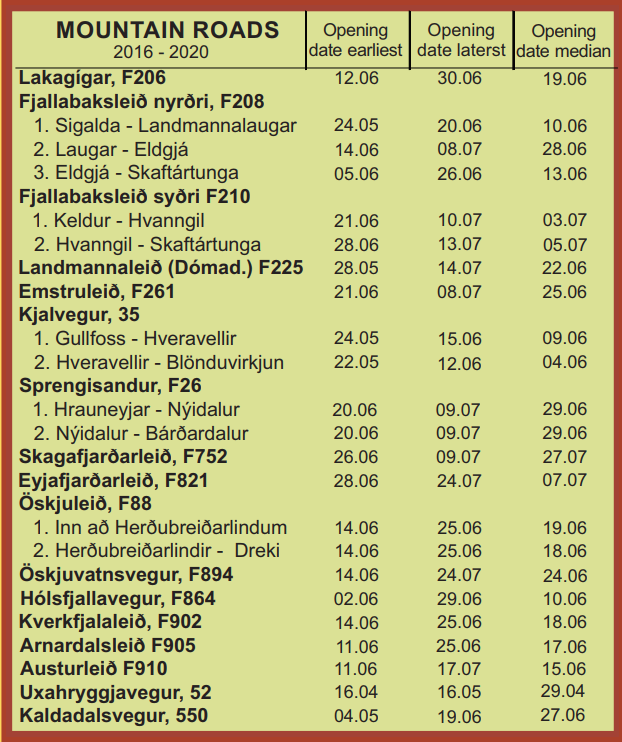 It’s important to know when the Highland roads are actually open. They only open in early summer and close again in autumn – and the exact dates vary from road to road and year to year. If you want to be sure all Highland roads are accessible, aim to travel in late July or early August. Please note: Driving on closed Highland tracks in Iceland is illegal and extremely dangerous. For current road closures, check the Icelandic road authority website: road.is.
What Makes Some Highland Roads So Difficult for Rental Cars?
The reason so many F-roads are challenging for standard SUVs is almost always the same: water. It’s not the potholes or the rough gravel that stops you – it’s streams, rivers and waterways. The Highlands are full of them, and in most cases there’s no bridge. You have to drive straight through.
Beim Klick wird Youtube.com aufgerufen (Datenschutzerklärung) | By clicking, Youtube.com opens (Privacy)
The range goes from large puddles all the way to raging glacial rivers that can be over a metre deep. Even in a proper off-roader, the risk of getting seriously stuck is real. With a standard SUV like the Dacia Duster, you should only attempt Highland tracks with a maximum water depth of around 40–50 cm. Since conditions can change daily, always walk the river crossing on foot first if in doubt – or turn back. Most insurance policies in Iceland do not cover water damage. Only one rental provider offers a river-crossing insurance. Find out which one in our Iceland car rental guide.
F-Road Car Rental Iceland – Which Vehicle for the Highlands?
Finding the right rental car for Iceland’s Highlands is crucial. There are huge differences in off-road capability and price. And no matter how expensive your rental, you won’t be able to drive every F-road in Iceland. The key is finding the right compromise. How to find the right Highland-capable rental car for your Iceland road trip:
If you want to find the best value Highland-capable rental quickly, here’s our top tip.
The Best Budget 4x4s for Iceland’s Highlands
The most affordable Highland-capable SUVs available from most rental companies in Iceland are models like the Dacia Duster and Suzuki Jimny. You’ll see them everywhere in Iceland – including deep in the Highlands. Having driven almost a month across Iceland in a Dacia Duster, we can say it’s a genuinely great car. It got us everywhere we wanted to go in the Highlands without fail. Whether it was brutal gravel tracks, river crossings or steep ascents – for us the Duster is the perfect balance of affordable and capable, and we’d recommend it without hesitation.
More detail in our Iceland car rental guide. 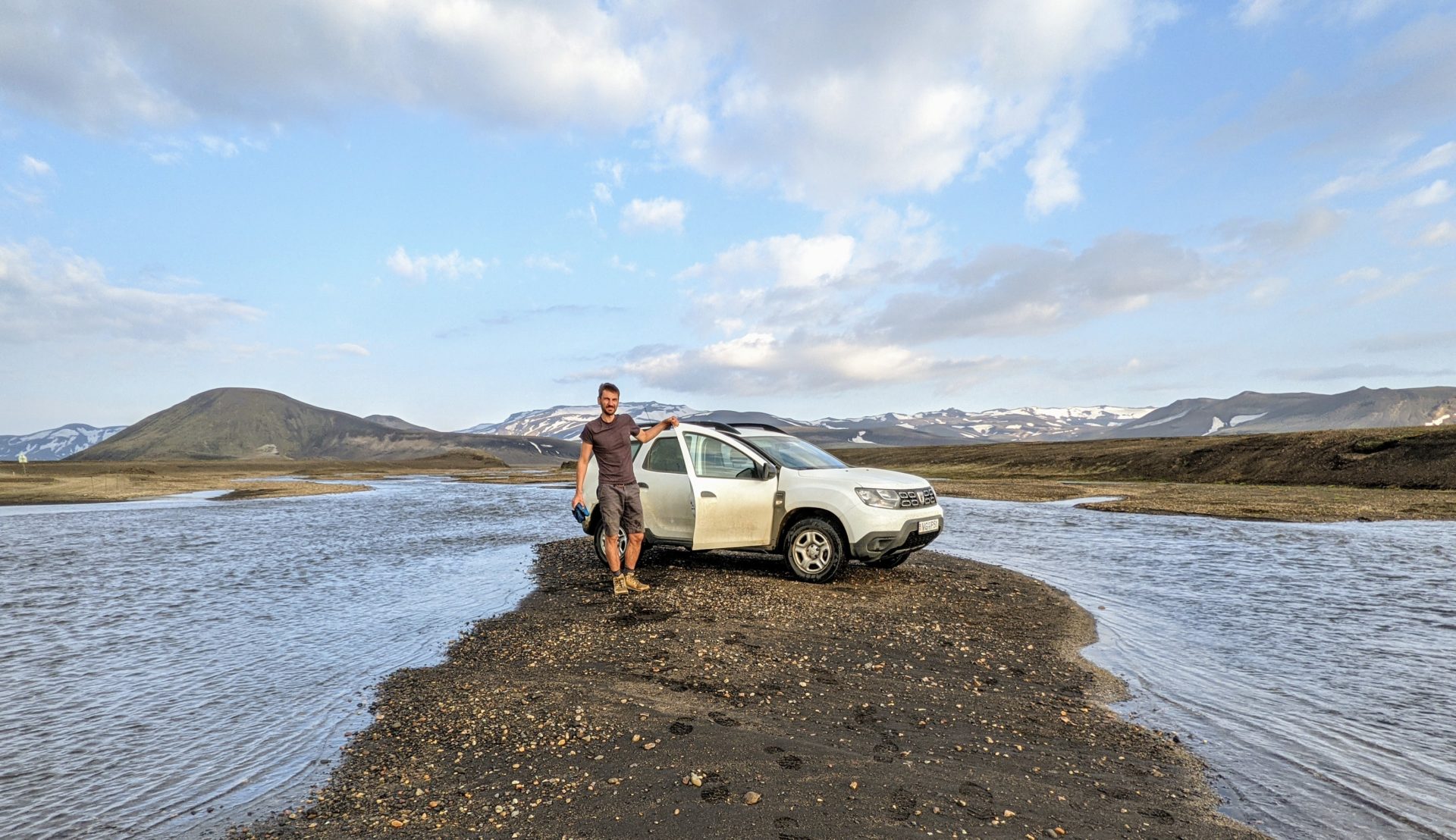
Wondering what a Highland-capable rental car costs? We broke down all our expenses in our Iceland trip cost article.
Where Should You Book a Rental Car for Iceland?
There are many Iceland-specialist rental companies, and all of them offer Highland-capable vehicles. But prices vary significantly and comparing insurance packages can be confusing. We booked our Iceland rental through northbound.is* – a platform that compares all Icelandic rental providers, lets you filter for Highland-capable vehicles and allows free cancellation up to 48 hours before. Changes are also easy and free. We once removed a rooftop tent from our booking by email – no fees, no hassle. Why northbound.is:
- Specialist in Icelandic car rentals
- Compares all providers on the island
- Free cancellation up to 48 hours before pickup
- Specialist in campervans and Highland-capable vehicles
F-Roads Iceland with SUV – These Routes Are Doable
When planning our Iceland road trip, we made a point of including as many Highland roads as possible alongside the Ring Road. It’s often not easy to figure out which F-roads are manageable in a standard SUV. We researched thoroughly and this is our list of the most beautiful Highland routes that are doable in a regular AWD vehicle.
Overview: Which F-Roads Can You Drive with an SUV?
| F-Road | Destination | Drivable with SUV? | Difficulty | River crossings |
|---|---|---|---|---|
| Pakgil | Canyon near Vík | ✅ Yes | Easy | None |
| F35 Kjölur | Kerlingarfjöll / South–North | ✅ Yes | Easy | None |
| F26 Sprengisandur | South–North crossing | ✅ Yes | Moderate | Some moderate crossings |
| F208 (southern) | Landmannalaugar | ✅ Very likely | Moderate | Many (mostly passable) |
| F235 | Lake Langisjór | ✅ Yes | Moderate | Some smaller crossings |
| F206/F207 Laki | Laki Craters | ✅ Yes | Challenging | Many crossings |
| Askja F905/F910 | Askja / Víti crater | ⚠️ Probably | Moderate | Some |
| F249 Þórsmörk | Þórsmörk | ❌ Super jeep only | Very difficult | Extremely deep |
| F210 | Mælifell | ❌ Super jeep only | Very difficult | Too deep |
Pakgil
- Drivable with SUV? Absolutely
- Difficulty: Easy
- River crossings? No
Þakgil is a 15-kilometre road near Vík that leads from the Ring Road south to a campsite of the same name, tucked beautifully into a canyon. Even if you’re not camping here, the drive is worth it – the track to Þakgil (sometimes spelled Pakgil) is one of Iceland’s dream roads. You’re not quite in the true Highlands yet, but it certainly feels that way. 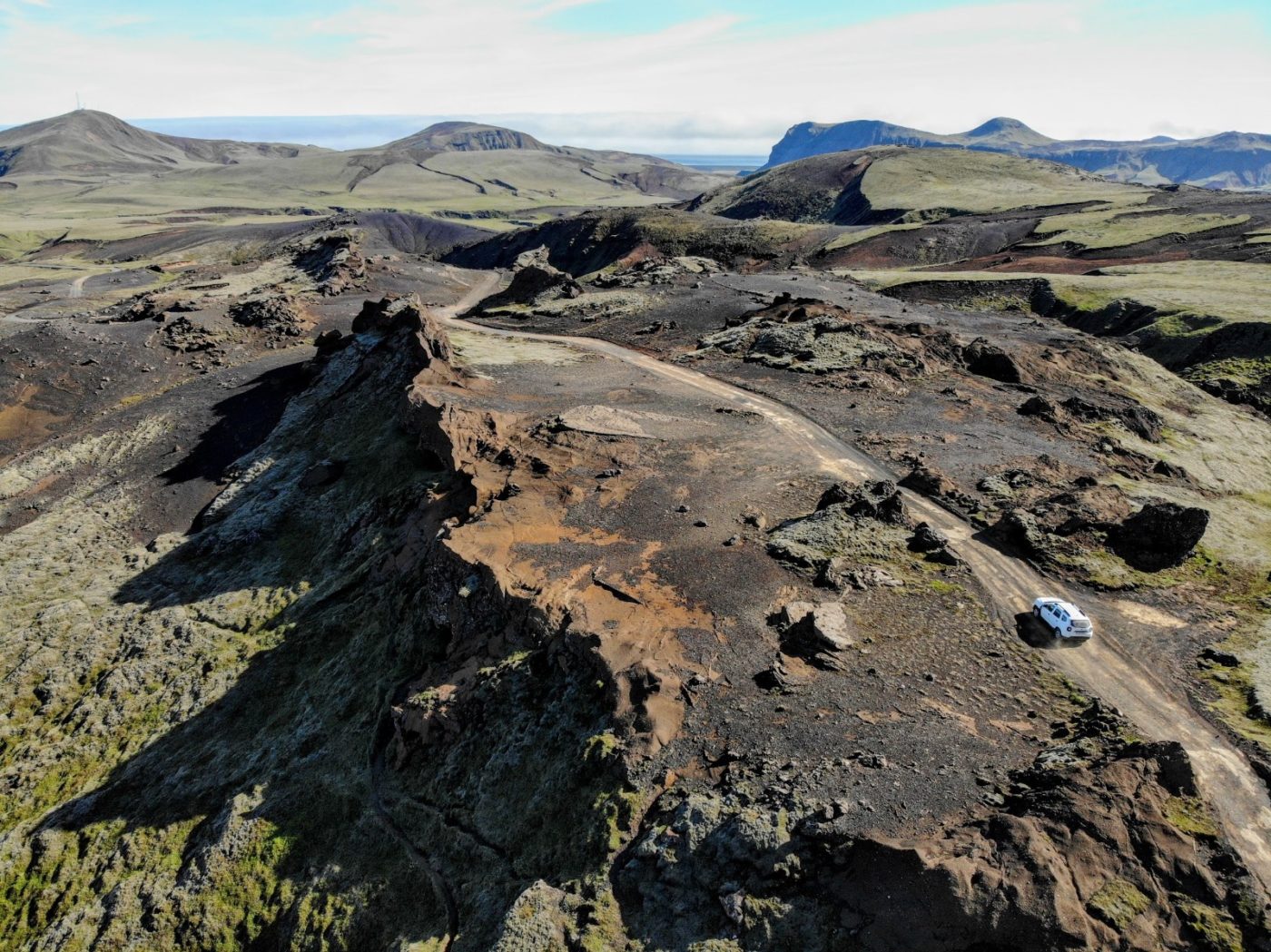
The route is genuinely adventurous – steep, winding, with narrow rock faces on either side and sharp black volcanic rock glittering in the distance. The surface is often very uneven and in places you’re crawling at walking pace. Online descriptions call this place “the Valley of Mordor” or “the valley of trolls and elves”. That sounds a bit dramatic, but honestly – it’s not far off. It is stunningly beautiful. For more on this route, read our Pakgil travel guide.
Laki Craters (F206, F207)
- Drivable with SUV? Yes
- Difficulty: Challenging
- River crossings? Yes – many
The Laki Craters are one of the top highlights of Iceland on any Iceland road trip. These craters, formed during an 18th-century volcanic eruption, are not to be missed. Whether you join an organised tour or tackle it independently in a capable 4×4, it’s absolutely worth the journey. The Laki Craters take their name from Mount Laki, which sits at the centre of the crater row. They were formed during one of the largest volcanic eruptions in recorded history, starting on 8 June 1783 and continuing until February 1784 – with a new volcanic vent opening every few weeks along the Laki chain.
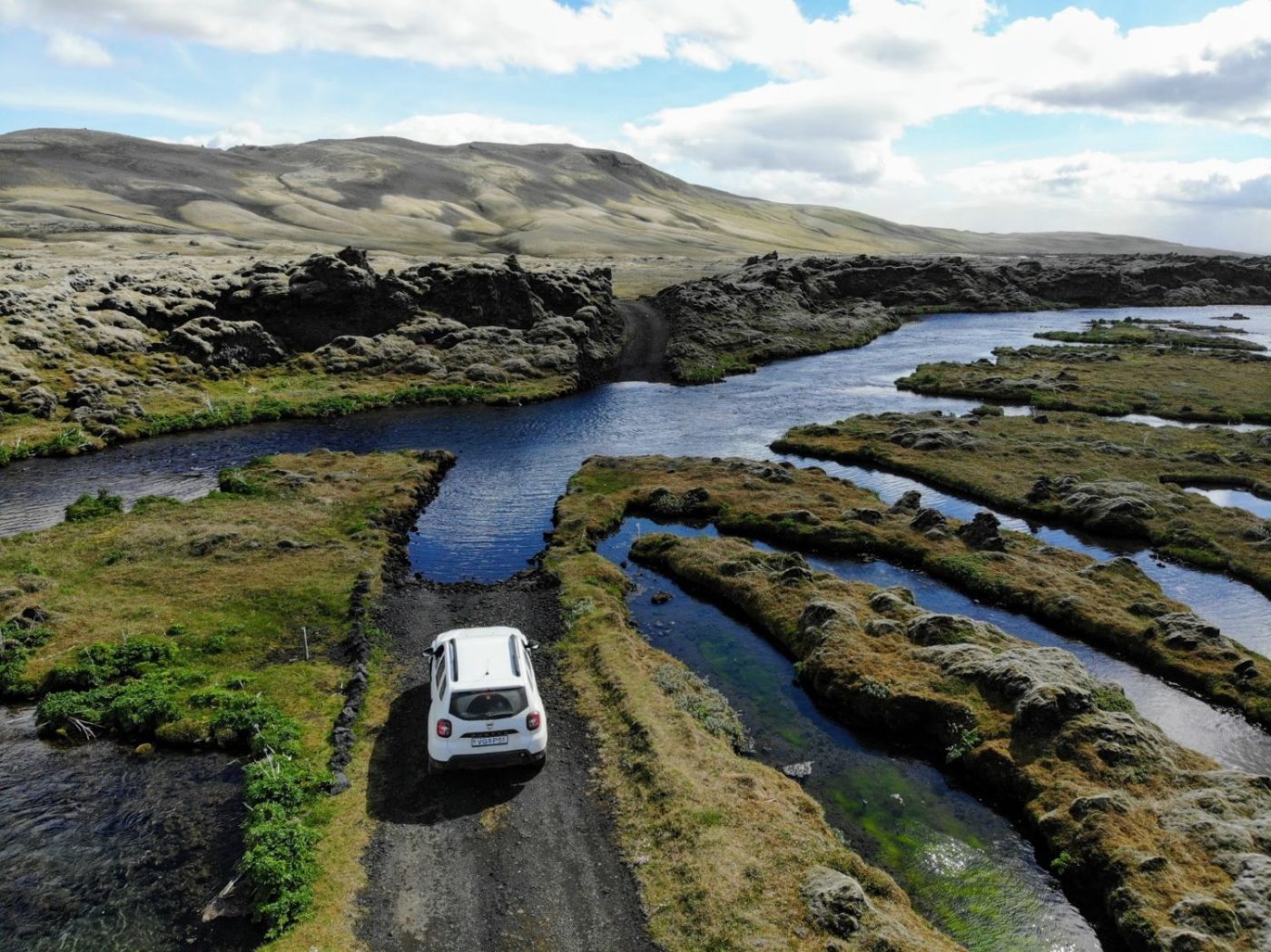
The drive to the crater is stunning, rewarded at the end by a fantastic hike up Mount Laki itself. There are more walks nearby, and the return via the F207 is another highlight – big river crossings and proper adventure. Read more about the drive to the Laki Craters in our travel guide.
F208 (southern) | Landmannalaugar
- Drivable with SUV? Very likely
- Difficulty: Moderate
- River crossings? Yes – several
Landmannalaugar is one of the highlights of any Iceland road trip and should definitely be on your itinerary. The journey alone is spectacular. Once there, you can hike, soak in natural hot springs and take in some of the most extraordinary landscapes in the country. Landmannalaugar is a wonderland of rainbow-coloured mountains, black lava fields and geothermal springs, sitting inside the Fjallabak Nature Reserve in the heart of the Highlands. The mountains and lava fields are the result of thousands of years of volcanic activity – the vast Laugahraun lava field, for example, was created by a volcanic eruption in 1477. 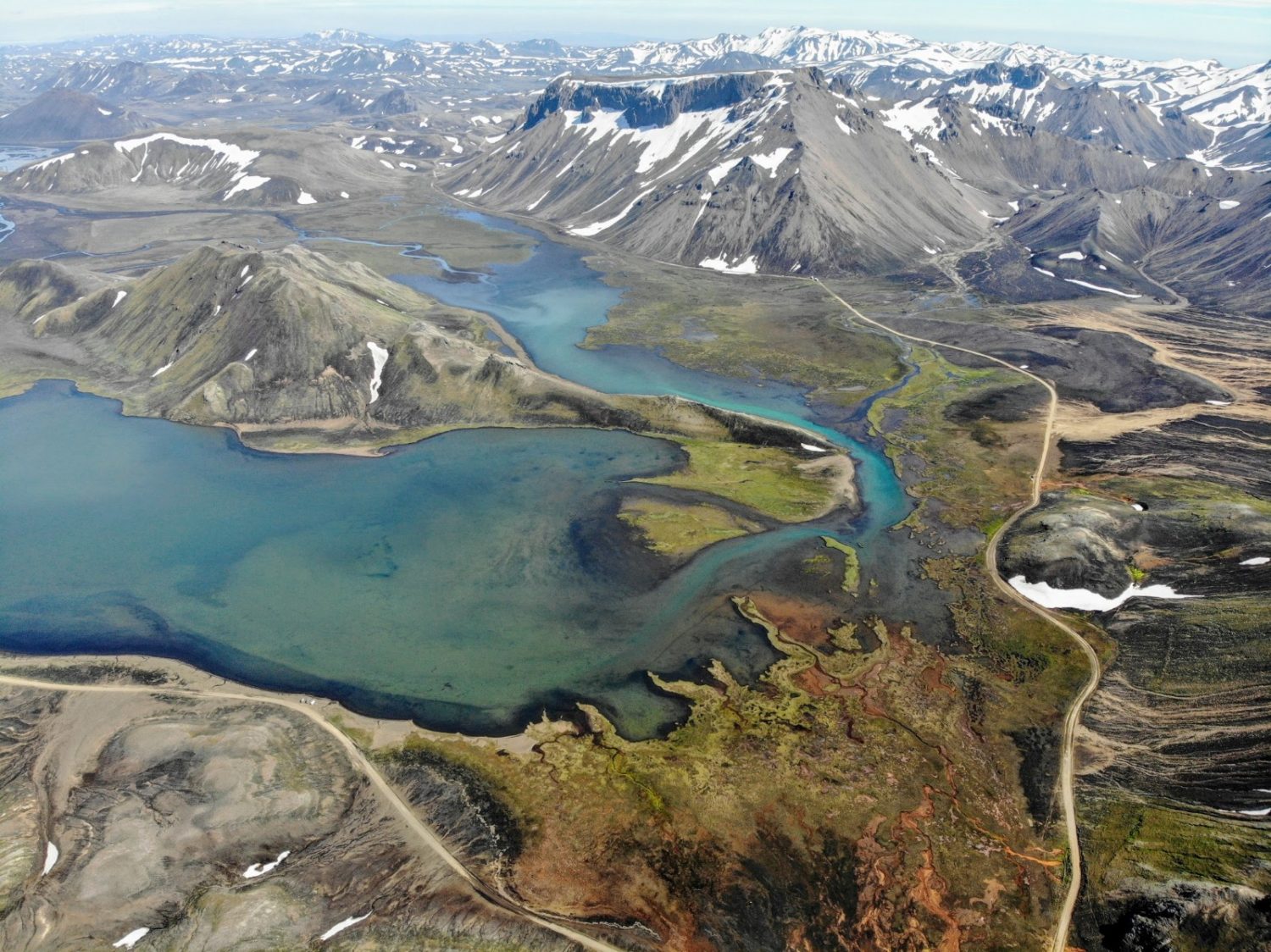
The southern F208 route is incredibly varied – mountains, valleys and completely wild terrain. The main risk here is the sheer number of river crossings: around 40–50 in total, though only a handful are genuinely challenging. Even those are manageable in a standard SUV like the Dacia Duster. The southern F208 gave us some of the most dramatic landscapes of our entire Iceland road trip. If you’d prefer to leave the driving to someone else, there are super jeep tours from Reykjavík:
Super Jeep Tour to Landmannalaugar | Check prices*
For details on all access routes and what to expect on the way there:

F235
- Drivable with SUV? Yes
- Difficulty: Moderate
- River crossings? Yes – some smaller ones
This spur road branches off the southern F208 (see above) and leads to Lake Langisjór. The lake – 20 km long and up to 75 metres deep – is the destination, but as always in Iceland’s Highlands, the drive itself is half the point. It’s absolutely beautiful. There are river crossings along the route, but most are small – many are really just large puddles. We drove through moss-covered mountains, grey stone deserts and muddy brown ridges. For us, one of the most beautiful Highland routes in Iceland.  The destination hides behind a small ranger station and a large reddish-brown hill. Lake Langisjór stretches out majestically in front of you, almost to the horizon. What a sight. The lake and the road to get there are a major Iceland highlight you shouldn’t miss.
Askja (F905/F910)
- Drivable with SUV? Probably
- Difficulty: Moderate
- River crossings? Yes – some
Askja is a famous volcano north of the Vatnajökull glacier – the largest glacier in Europe – and part of the Vatnajökull National Park. The Askja volcano rises up to 800 metres above the surrounding plateau, reaching a total elevation of 1,510 metres above sea level. Askja comprises several volcanic craters, the largest of which spans 50 km³. The most famous is the Víti crater – its name meaning “Hell” in Icelandic. Víti is a volcanic crater filled with water that stays at around 30°C, making it a popular wild swimming spot. Yes, you can actually swim inside a volcano crater.
Be careful on the way down though – the path is very slippery, especially when wet. The approach via the F88 is technically possible but involves some very deep river crossings. We’d recommend taking the F905/F910 instead as the safer alternative. The drive takes you through lunar landscapes of grey rock and brown hills. You’ll also be sharing the road with very few other independent travellers – most people don’t venture out this way on their own. When we visited Iceland, the Highland roads leading to Askja were still closed. We unfortunately couldn’t make it to Víti – but had the road been clear, we would definitely have gone.
F26
- Drivable with SUV? Yes
- Difficulty: Moderate
- River crossings? Yes – some moderate ones
The F26, together with the F35, is one of only two Highland roads that cross Iceland from north to south. Also known as Sprengisandur (or Sprengisandsleið), it runs for over 200 km from Goðafoss in the north, across vast moraine landscapes, all the way to Háifoss in the south where the F26 meets the regular Route 26. In its central section, between the Hofsjökull and Vatnajökull glaciers at around 800 metres altitude, lies the true Sprengisandur area – a largely barren stone desert.
Historically this stretch was a major obstacle for travellers, as the 70 km of terrain offered almost no grazing for horses, the main form of transport at the time. The F26 isn’t necessarily one of Iceland’s most dramatic landscapes, but it’s a great way to experience the Highlands and makes for a solid alternative to the Ring Road if you’re travelling between the south and north (or vice versa).
F35
- Drivable with SUV? Yes
- Difficulty: Easy
- River crossings? No
The F35 is the second Highland road connecting south to north Iceland, covering 168 km. Also known as Kjölur, it’s the easiest of all Highland routes – no river crossings, and the road itself is in relatively good condition. Along the way sits one of Iceland’s most impressive highlights: Kerlingarfjöll with the Hveradalir geothermal area. Like the F26, the F35 isn’t the most dramatic Highland road scenically, but it’s an excellent and easy introduction to Iceland’s interior. The landscape is largely grey stone desert and reddish-brown hills. In summer the F35 is well-travelled and used by locals as a shortcut between Reykjavík and Akureyri. 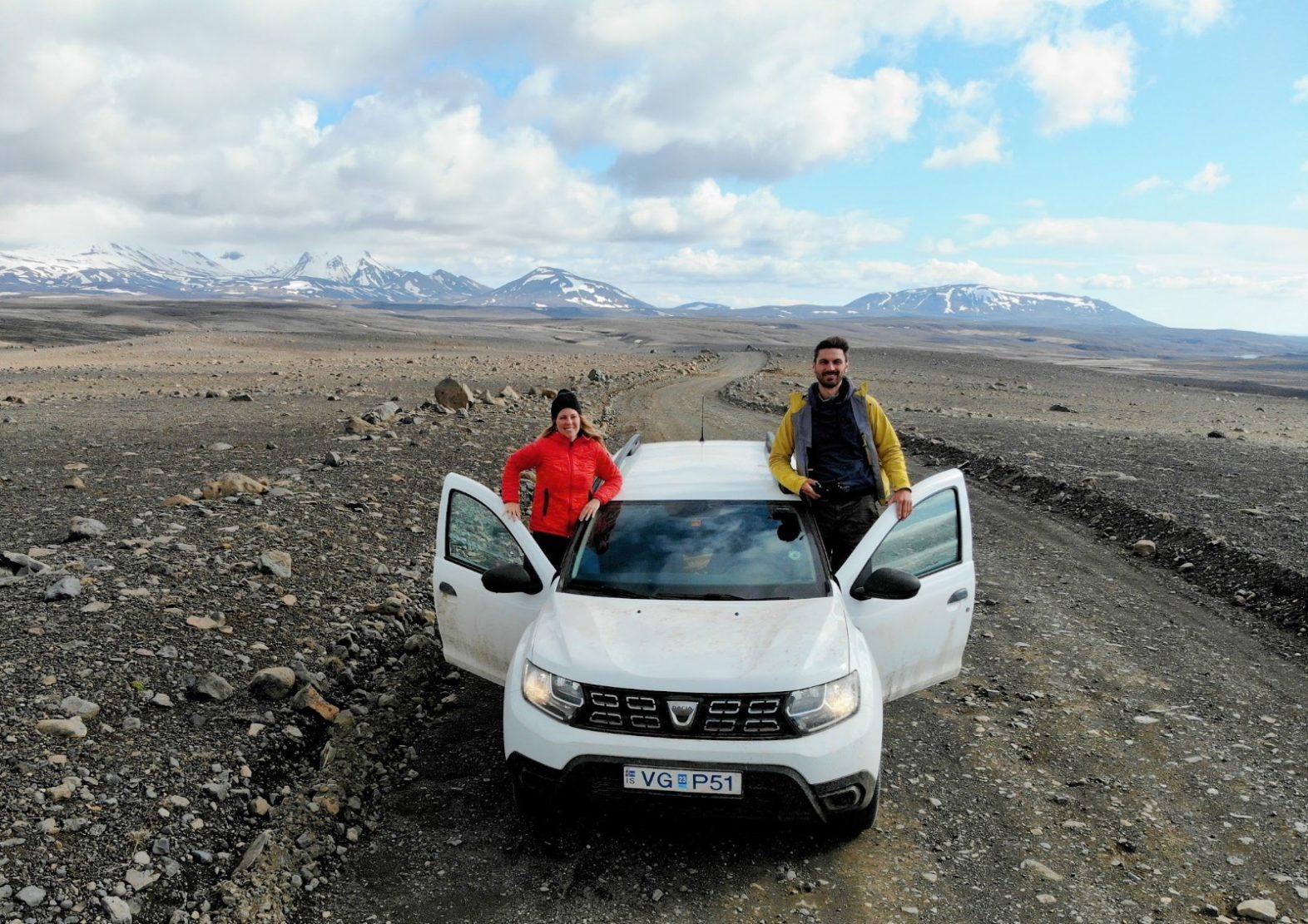
More Iceland F-Roads – What You Need to Know
The Many Other F-Roads in Iceland
There are of course many other F-roads in Iceland beyond those in the Highlands. The Westfjords, northern Iceland and the Snæfellsnes Peninsula all have F-roads – but in most cases, if they’re open, any 4×4 AWD vehicle will manage them fine. That’s why I haven’t listed them individually here. For a full overview of all F-roads and their current status, check road.is. 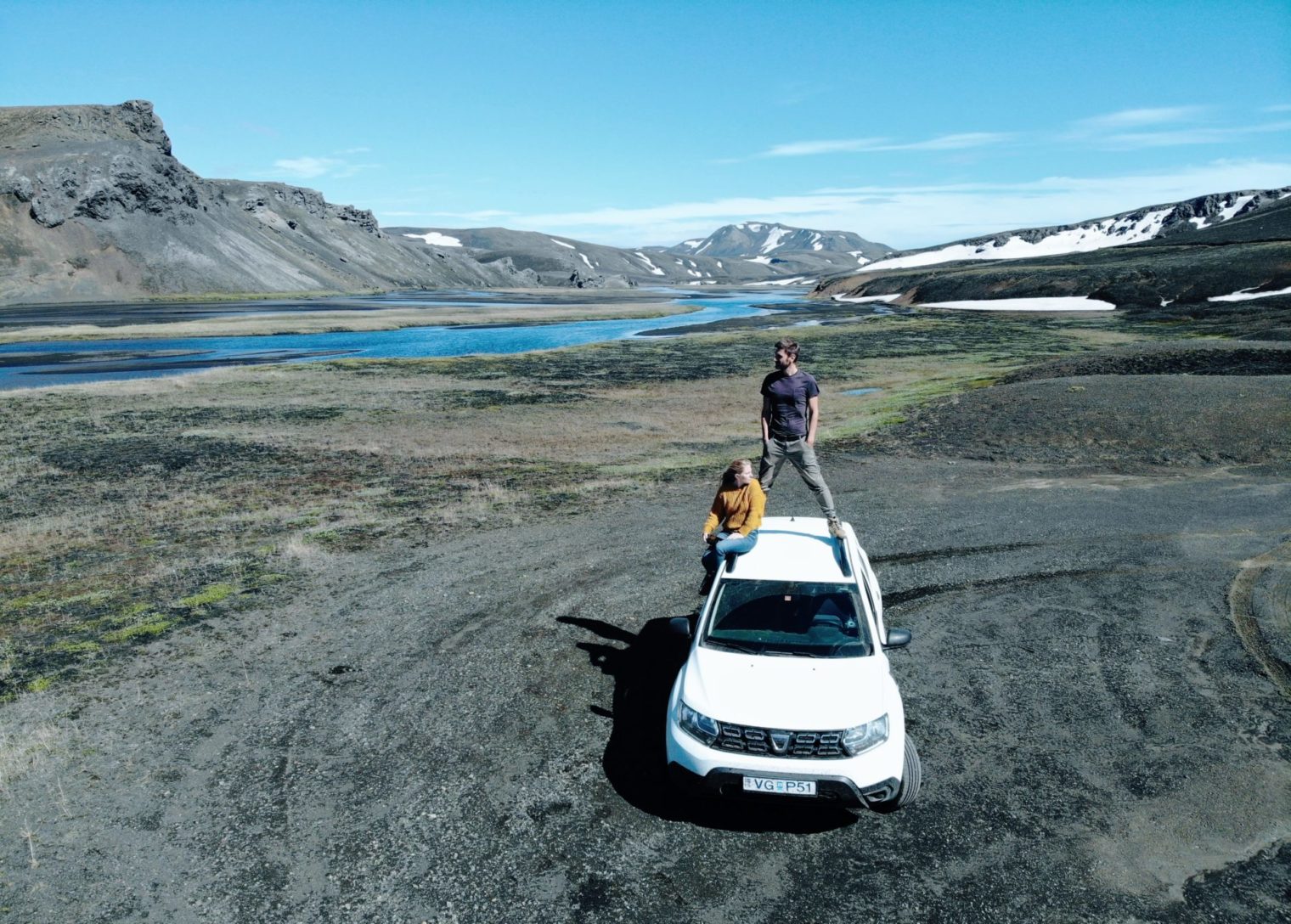
Highland Roads That Are Not SUV-Accessible
There are many more stunning Highland F-roads we’d have loved to drive. But for some, it’s clear from the outset that they’re not manageable in a standard SUV – and in some cases not even in a pricier 4×4 like a Land Rover or Toyota Hilux. The reason is always the same: river crossings that are simply too deep, requiring a super jeep and serious driving skills. With a standard rental car, these routes are out of the question. F249 to Þórsmörk The drive to Þórsmörk is stunning and the valley itself has incredible landscapes. Unfortunately the route involves extremely deep river crossings and is only doable by super jeep or organised tour.
Super Jeep Tour to Þórsmörk | Check prices*F210 This route starts in southern Iceland near Hella and connects to the F208, from where you can continue to Landmannalaugar or back to the Ring Road. The landscape is spectacular and en route you’ll pass the iconic Mælifell volcano. Unfortunately, deep river crossings make this route impassable for standard SUVs.
After the Highlands, the Ring Road takes you past Diamond Beach Iceland – absolutely not to be missed.