


Corsica is one of the most varied islands in the Mediterranean, with rugged cliffs, idyllic beaches, turquoise bays, wild rivers and thousands of years of history packed into a small area. If you are travelling to the island for the first time, you will quickly ask yourself: What shouldn’t I miss? And which Corsica attractions are the biggest highlights?
In summer 2026 we spent over a month travelling around Corsica in our campervan, and in this article we share the attractions that impressed us most, plus a few more highlights that belong on any good Corsica list.
Last updated: October 2026.
Corsica Attractions Map
For a better overview, here are all the attractions from our list plotted on a Google map.
The Best Things to Do in Corsica: Our 12 Highlights
#1 Bonifacio
With its houses perched on white limestone cliffs, Bonifacio is probably the most impressive and best-known town in Corsica. France’s southernmost town sits up to 80 metres above the sea, and the view from the citadel over the turquoise water is one of the most spectacular on the whole island.
You can easily spend several hours strolling through the narrow lanes of the upper town and letting your eyes wander over the cliffs from the quay wall. The old town of Bonifacio juts out into the sea like a long peninsula. North of the old town (and 80 m below) is the natural harbour, which impresses with luxury yachts and a great view. South of the old town you will find the steep limestone cliffs mentioned above.

Be sure to walk the hiking trail east of the old town too. After a few hundred metres you get a wonderful view of the steep cliffs and the buildings of the old town perched on top. The trail leads through the Réserve naturelle des Bouches de Bonifacio, which is well worth seeing.
Tip: Come early in the morning or in the late afternoon, when the lanes are much quieter and more pleasant than in the blazing midday heat.
#2 Plage de Piantarella, Île Piana & the Grotte des Amoureux
Not far from Bonifacio is Piantarella beach, which is not the prettiest in Corsica. It is very long and shelves gently, but it doesn’t make our list of the island’s best beaches.
On the plus side, there is good tourist infrastructure here, a small restaurant, a kayak rental and plenty of (paid) parking.
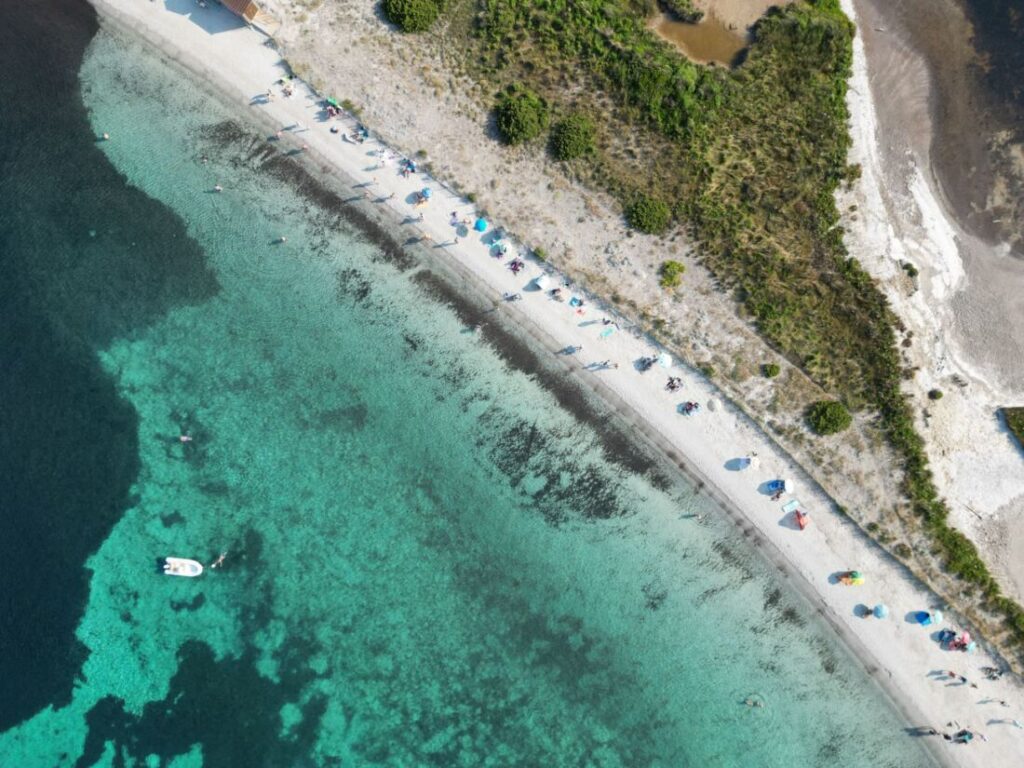
What makes it worth a visit is the small offshore island of Île Piana and a lovely little grotto. You can reach both best by kayak or SUP, and you can rent either on site.
From the beach we paddled our SUP first to the small offshore island of Île Piana, where we marvelled at the many nesting gulls. The island is otherwise uninhabited and has no infrastructure at all. In return, you have far more peace and quiet by the beautiful sea than on the beach on the other side.
Then we paddled on for about 20 minutes to the Grotte des Amoureux. This is a cave that the sea has carved into the rock over thousands of years. It is only about 20 metres across, and with a bit of luck you will have it all to yourselves and can lie down on the cave’s narrow sandy beach.


When you have had enough, paddle back to Piantarella beach. On the way you will pass a very small but beautiful beach, the Plage du petit Sperone. Framed by rocky headlands, the water is very shallow here and the sea is a wonderful turquoise.
Our verdict: it is somewhat busier and more touristy here than at other stops on our route, but the combination of crystal-clear water, the small island inhabited only by gulls and the little grotto still thrilled us.
Tip: You can rent a SUP or kayak right on Piantarella beach; you should visit the cave in calm seas.
#3 Plage de Rondinara
The almost perfectly circular bay of Rondinara between Bonifacio and Porto-Vecchio is often counted among the most beautiful beaches in Europe, and after our visit we can only confirm that. Fine white sand, shallow, calm water and a sheltered location make the bay ideal for swimming.
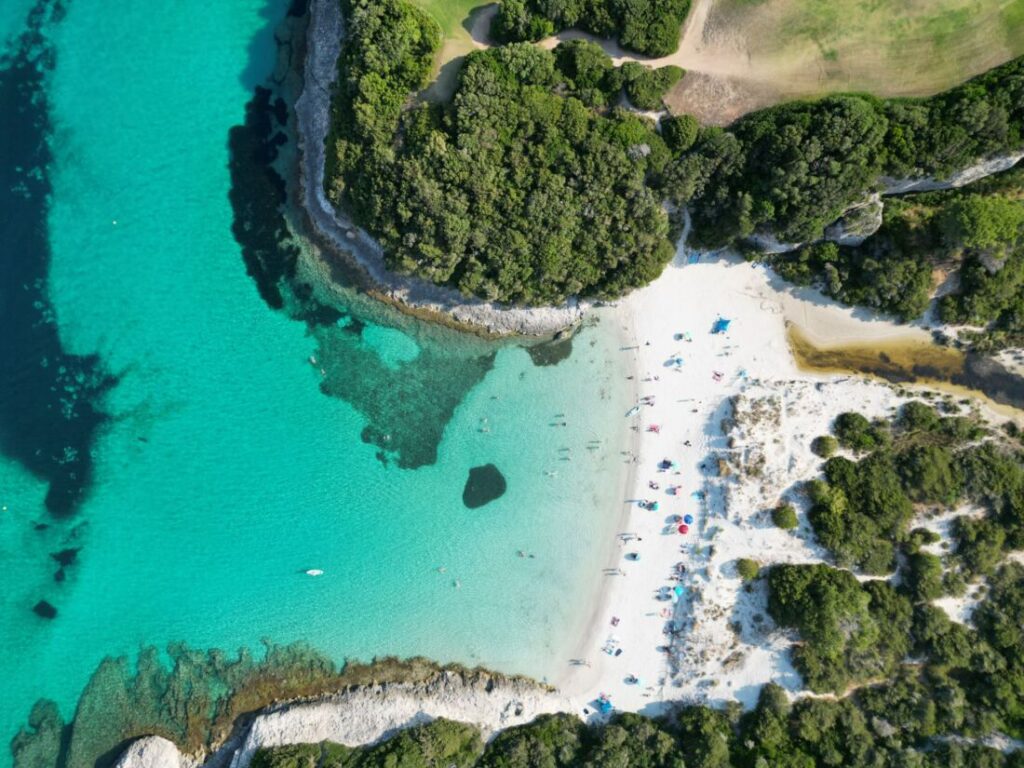
Of course, everyone else knows this too, so the beach is extremely busy, especially in high season, and the paid car park is often full by midday. On the beach itself you hardly notice, as the crowds spread out along its length.
Even so, the crowds also leave a lot of litter behind: we haven’t seen as much rubbish on any other beach in Corsica so far.


We stayed right nearby at the highly recommended Rondinara campsite; you can find out more in our article on camping in Corsica.
#4 Calanques de Piana and the Gulf of Porto
The impressive Gulf of Porto has been a UNESCO World Natural Heritage Site since 1983, and for us even the drive in from the north, along the coastal road beside the steep cliffs, was one of the most spectacular in all of Corsica.
The Calanques (in Corsican: Calanche), the bizarre, reddish granite rocks between Porto and Piana, rise up to 400 metres out of the sea and offer new views around every bend. The truly impressive stretch of road is only a few kilometres long in total, but there are several viewpoints and short hikes that let you experience the landscape up close.
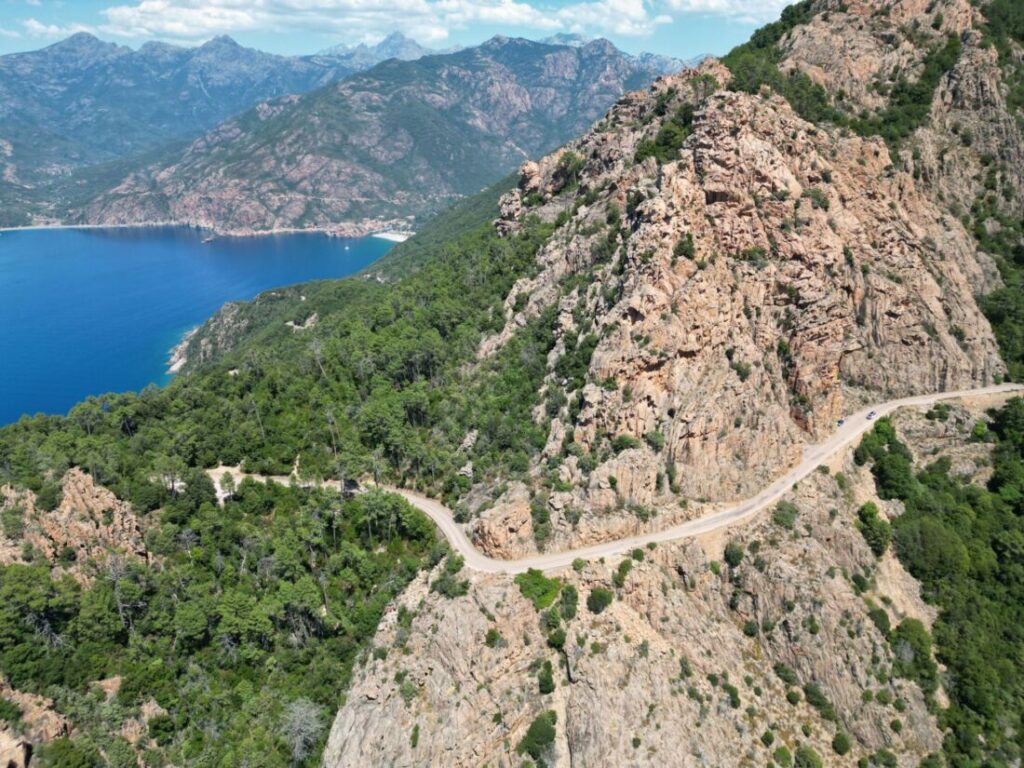
One of these hikes takes you to the so-called Dog’s Head (Tête du Chien). On this hike of only about 30 minutes you walk through a lovely pine forest and are rewarded at the end with truly impressive views over the sea and along the coast as far as Porto.
Another recommended hike is the old mule path, which is also suitable for children thanks to its very small elevation gain. Both hikes are most beautiful shortly before sunset, when the sun bathes the rocks in a warm light.
We also took a boat tour from Porto to the Scandola nature reserve and the Calanche de Piana*, which gave us a completely different view of the rock formations from the water. A boat tour like this is well worth it, as you also sail into several small caves and get really close to the rock walls.


We spent the night in Porto at a lovely campsite (Funtana a l’ora) right by a river; it was only a few minutes’ walk to the water, and it is good for swimming too.
Tip: It is best to book boat tours from Porto to the Scandola nature reserve and the Calanche de Piana online in advance*; in high season they sell out quickly.
#5 Hike Through the Spelunca Gorge
Not far from the small village of Porto, on the way to the high mountains and the small mountain village of Evisa, are two beautiful gorges, and we would particularly recommend one of them.
You park at a hairpin bend at the side of the road and are already looking at the steep rock walls of two imposing gorges: on the left you see the Lonca Gorge and on the right the Spelunca Gorge. Both hikes offer lovely views and the occasional chance to swim in the river.
The Lonca Gorge offers better swimming opportunities, while the hike through the Spelunca Gorge is the more beautiful walk.


If you hike through the Spelunca Gorge, you walk along a historic mule path past rugged rock walls to an old Genoese bridge.
You need about 30–45 minutes to reach the Genoese bridge, and the path runs mostly in the shade, which can be very pleasant in the high temperatures of midsummer. At the bridge itself there are shady spots to rest and a good place to swim.
#6 Fango Valley & Fango Delta
In north-western Corsica lies the wonderful Fango Valley, a nature reserve around the Fango river with emerald-green swimming pools and dense forests.
We stayed here at the nature-oriented Casa di Luna campsite, from where you can reach the swimming holes in the valley in a few minutes by bike (or car).
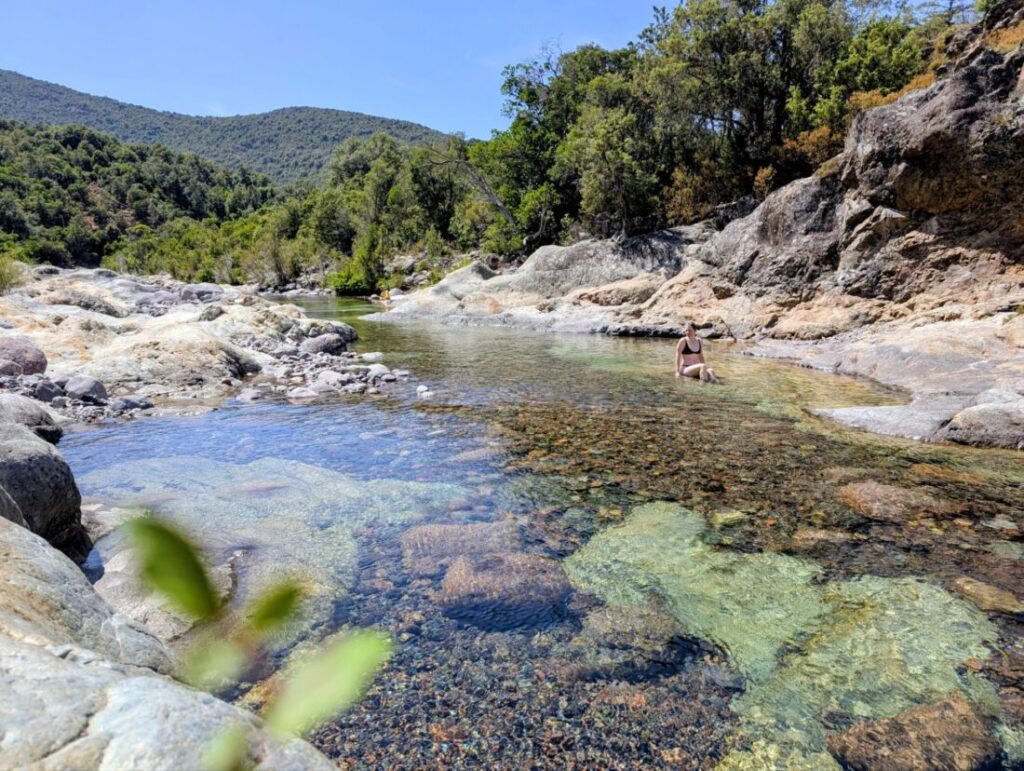
There are several ways to reach the water here, and the further you drive the quieter it gets. The car parks along the river are generally free, but the walk to the water is sometimes a bit arduous.
The pools are simply wonderful for swimming and relaxing. The water is lovely and warm, and you can easily spend a whole day here.
Fango Delta
Another absolute highlight for us was the kayak tour in the Fango Delta, where you paddle on your own through tall reeds with fantastic views of the surrounding mountains. The biggest attraction here is the many turtles basking on small wooden boards along the paddling route.


You get really close to the animals, which makes for a wonderful nature experience (especially for children).
#7 Calvi
We ended up in Calvi more or less by chance, but in the end we were really delighted with the little town.
The port town in north-western Corsica lies in the Balagne region and, with its imposing citadel above the picturesque bay and the kilometre-long sandy beach directly below the old town, is one of the most visited places on the island, and rightly so.


Visiting the citadel itself is free and offers a really great view of the bay and the sea.
From there, winding lanes lead down towards the harbour, past restaurants, souvenir shops and ice cream parlours. The harbour is wonderful for a stroll, and you can eat directly in numerous restaurants with sea views.
#8 Porto-Vecchio
Porto-Vecchio in the south-east of the island is a good base for the region’s famous beaches such as Palombaggia or Santa Giulia. The old town with its 16th-century Genoese citadel sits on a hill above the modern harbour district and invites you to stroll through the small lanes and boutiques.


It is best to park at the large car park by the marina and walk up from there; driving into the old town itself is not worth it.
If you don’t fancy the steep climb, there is a tourist mini train (Petit Train) in the summer months. You should plan about half a day for the visit, and it is most pleasant to wander through the lanes outside the midday heat.
#9 Solenzara River
The Solenzara is one of the best-known and most beautiful swimming rivers in Corsica. The river rises in the spectacular Bavella massif at over 1200 metres and winds for around 22 kilometres down to Corsica’s east coast, where it flows into the sea near the village of Sari-Solenzara.
The Solenzara is famous for its crystal-clear, emerald-green (and warm) water and the countless deep natural pools that are perfect for swimming, cliff jumping and relaxing.
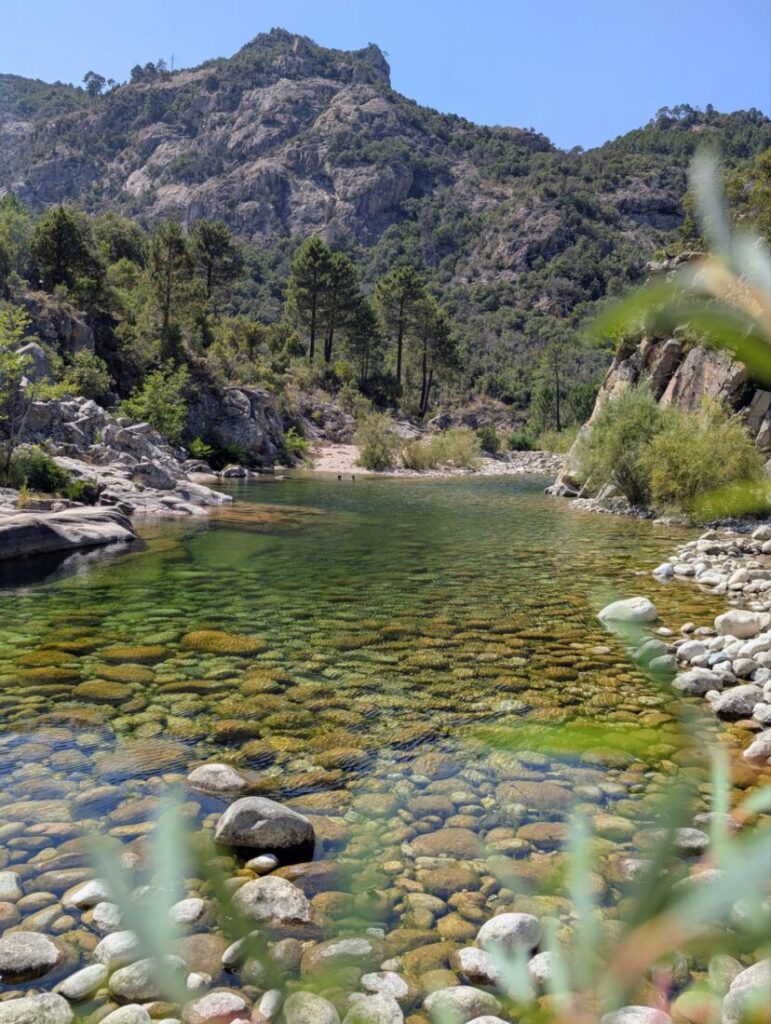
There are many lovely places to swim in the river, and these are the main reason most visitors come to the Solenzara.
At the same time, an impressive mountain panorama begins here a few kilometres from the coast and will accompany you all the way up to the Bavella Pass. You can find more information about the region in our detailed article on the Solenzara valley.
#10 Restonica Valley near Corte
The Restonica near Corte is considered one of the most beautiful rivers in Corsica, with numerous crystal-clear pools for swimming.
This hike is probably the main reason most tourists come to this area. Unfortunately, since the storms of November 2023 the hike has been hard to reach, so for us it is not ideal as an “easy” hike.


The actual starting point of the hike can no longer be reached by car. From Corte (or from the last campsite before the closure, Camping Tuani) you have to take a shuttle bus (line C13, running daily from 1 May to 30 September 2026, €4 return). Tickets can only be bought online in the Via Corsica app, and you should book from Corte, as there is hardly any mobile reception in the valley. In high season the tickets also sell out quickly. These details apply to the 2026 season, so check the current timetable before you go.
You can find more details on getting there and buying tickets here: Restonica shuttle from Corte: timetable and booking
You can find the hiking route here on Komoot.
#11 Cap Corse
The peninsula in the north of Corsica is about 40 kilometres long and is also called the index finger of Corsica because of its shape. Despite its proximity to Bastia, where most ferries arrive, it is still fairly quiet and unspoilt here. So if you want to experience authentic Corsica without crowds, you are in the right place.
While the east coast of the peninsula is rather flat and dotted with gentle hills, the west coast falls steeply to the sea in sheer rock faces. Driving on the west coast, with its many hairpin bends, is also somewhat more strenuous than on the east side.
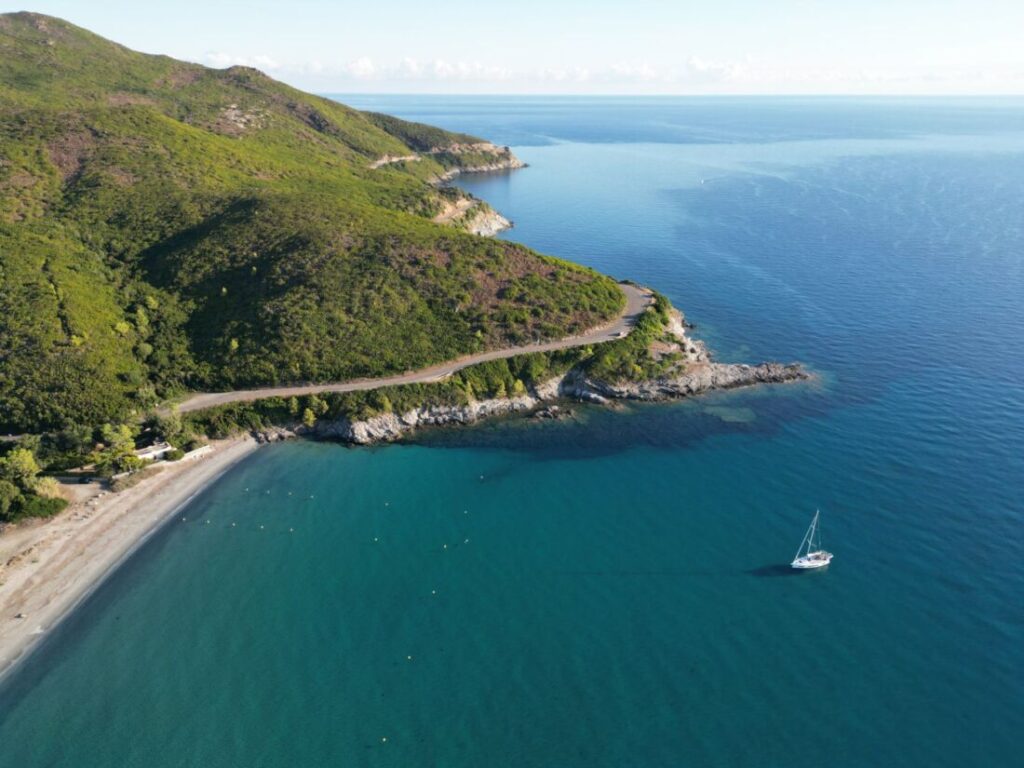
Particularly worth seeing are the villages of Erbalunga, Centuri and the little village of Nonza with its striking black pebble beach.
It is best to drive around the Cap anticlockwise, i.e. from Bastia towards St-Florent, so that on the winding west coast road you have the view on the passenger side and can drive more relaxed. You can easily do a circuit in a day, but with two days (or more) you have much more time for stops at the small bays.
#12 Filitosa
Filitosa in the south-west of the island is Corsica’s most important archaeological site. Here, skilfully carved menhirs of the ancient Corsicans stand beside the fortifications of the Torreans, who settled the island as early as the second millennium BC.
The site is open daily from April to early November from 9 a.m. until sunset; admission costs €9 for adults and €7 for children aged 6 to 17, and small children get in free.
Allow about 1.5 hours for the tour of roughly 1.5 kilometres. A must for history lovers looking for something beyond the usual beaches and coast.


Frequently Asked Questions About Corsica Attractions
What is the best-known attraction in Corsica?
Bonifacio, with its houses built on cliffs, is considered the most photographed and best-known attraction in Corsica.
How many days do you need to see Corsica’s main attractions?
For the main highlights you should plan at least 10 to 14 days, because the island (especially in the west) is very mountainous and journeys between destinations often take longer than the distance suggests.
Which Corsica attractions are good for families?
Beaches such as Rondinara or Petit Sperone with their shallow, calm water, the swimming pools in the Fango Valley and on the Solenzara, and the kayak tour in the Fango Delta are particularly popular with families.
Is the Calanche de Piana a nature reserve?
Yes, the Gulf of Porto with the Calanche has been a UNESCO World Natural Heritage Site since 1983.
Where can you stay in Corsica if you want to visit the highlights in the south?
There are numerous campsites around Bonifacio, Rondinara and the Bavella massif; you can find details in our article on wild camping in Corsica. But there are also plenty of hotels in all price ranges on the south coast. You can find them e.g. on Booking.com*