


The Calanques de Piana (also spelled Calanche de Piana) on Corsica’s wild west coast are one of the island’s absolute highlights. Bizarre red-orange rock formations tower over the southern end of the Gulf of Porto, with spectacular hiking trails, boat trips and a famous scenic road running right through them. Here’s what to see and do, and what you shouldn’t miss. We visited in June 2026 on our Corsica road trip and share our own experiences below.
Last updated: October 2026.
Facts About the Calanques de Piana in Corsica
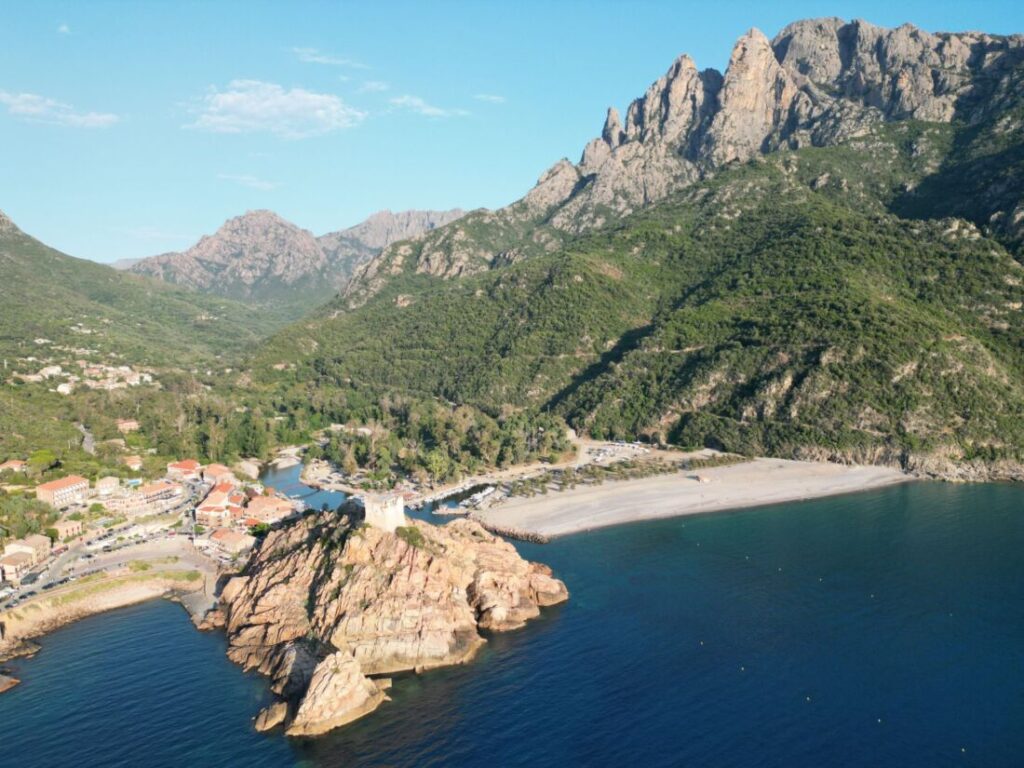
The Calanche de Piana lie on the Gulf of Porto on Corsica’s west coast. They’re known for their steep cliffs and the striking red-orange color of the porphyry rock. Shaped by wind and sea over thousands of years, this volcanic rock now forms one of the most impressive natural landscapes in the region.

Since 1983, the Calanques de Piana have been part of a UNESCO World Heritage Site, together with the Gulf of Girolata and the Scandola Nature Reserve.
You can explore this area by car, by boat and, of course, on foot. But what is there to do around Piana in Corsica, and what shouldn’t you miss?
Highlights of the Calanques de Piana & Gulf of Porto
#1 Boat Trip Along the Cliffs
From the small village of Porto, you can book a variety of boat trips along the coast, with incredible views of the cliffs and the bizarre rock formations. Don’t skip this one: the view of the coastline from a small boat is something you simply can’t get anywhere else, although some of the hikes come pretty close.


Most boat trips head south from Porto to the Calanques de Piana. You’ll glide right along the cliffs and even into a few small caves. These Calanche-only tours usually take around 1.5 hours.
If you also want to visit the Scandola Nature Reserve to the north and the Gulf of Girolata, a Scandola boat trip takes more like 3 to 4.5 hours. Prices range from about €37 to €81 per person, depending on the operator and the route. Both options are equally beautiful.
You can book tours directly with the operators in Porto, or online in advance, which we recommend in high season. Spots fill up quickly then, especially for the late-afternoon departures, when the light on the rocks is at its best. When booking online, check the cancellation policy so you stay flexible if the weather turns.
#2 Drive the Scenic D81 Road
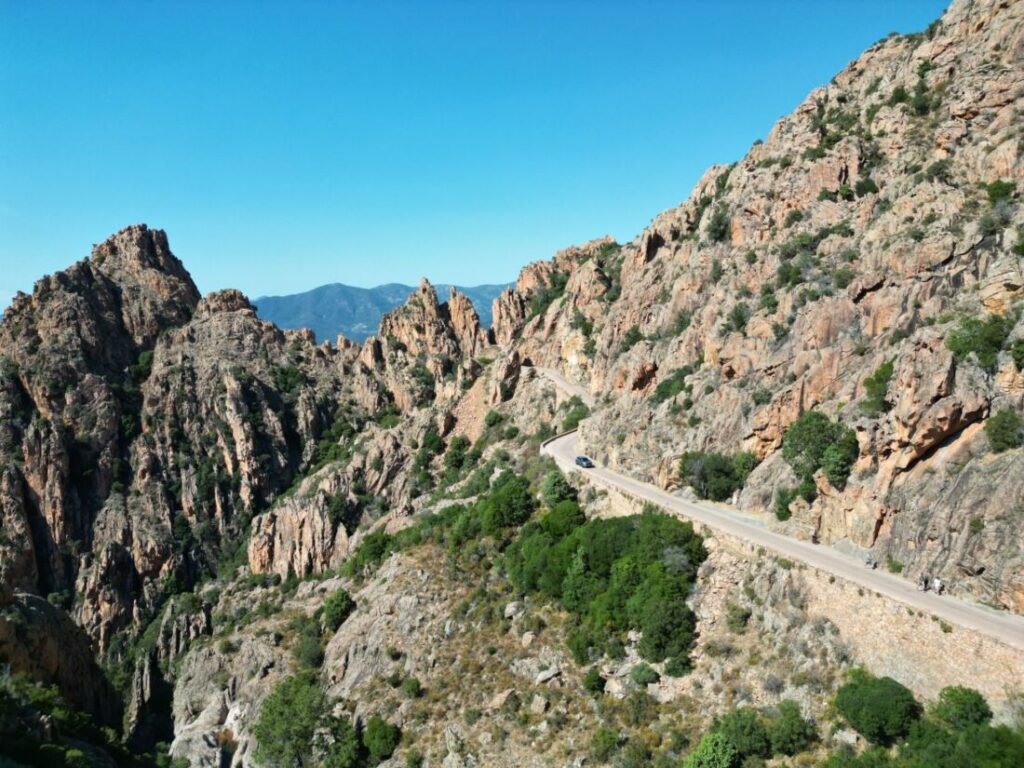
The D81 runs from Porto to Piana and offers spectacular views of the rock formations and the sea cliffs. The truly dramatic stretch, where you drive right past the bizarre rocks, is only a few kilometers long, so you’ll be through it in no time. Allow at least an hour for the roughly 12 kilometers (7.5 miles) between Porto and Piana if you want to stop for photos. The road is winding and narrow in places, so drive carefully, especially in high season, and use the pull-outs instead of stopping in the middle of the road.


It makes sense not just to stop at the few viewpoints, but to experience the area on foot as well. We describe some of the best trails in the next section.
#3 Hikes Along the Coast
Since you’ll drive through the beautiful part of the coast in no time, we strongly recommend doing at least one hike in the area.
These are the hikes we can recommend. All three lead through open terrain with little shade, so bring plenty of water, sun protection and sturdy shoes. The reddish rock can be slippery, especially after rain.
Tête du Chien (Dog’s Head)
This short hike is one of the most popular in the Calanques de Piana. From the small parking lot right on the coastal road below the Tête du Chien, a clear path leads through the typical rock landscape of the area.
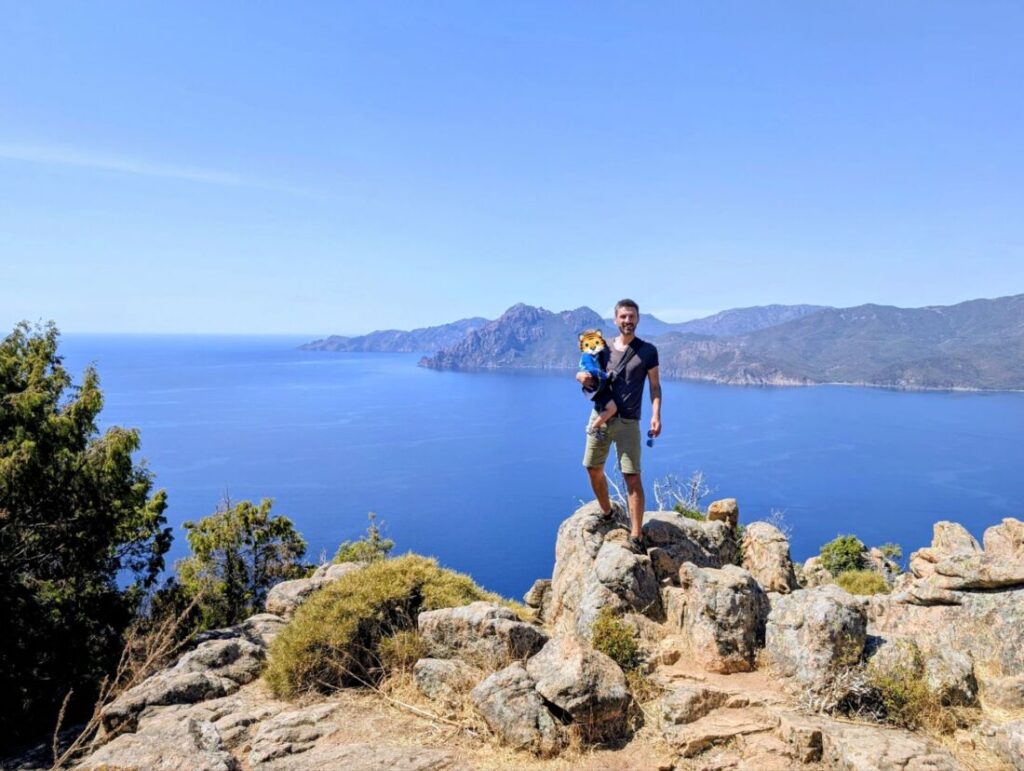
Past impressive tafoni rocks, you finally reach the Château Fort, an exposed rock plateau with wonderful views of the Gulf of Porto. We hiked this trail ourselves. Since it’s really short, it’s an easy stop to fit in, and well worth it for the views.
Sentier Muletier: Hiking the Old Mule Path Through the Calanques
The old mule path is a lovely short hike through the impressive Calanques de Piana on Corsica’s west coast, with fantastic views of the UNESCO World Heritage landscape at nearly every turn.


It’s not only the historic, beautifully preserved mule path that makes this trail special, but also the spectacular rock formations and the many viewpoints along the entire route.
Capu Rossu to the Tour de Turghiu
This hike takes you over the prominent headland of Capu Rossu to the old Genoese tower, the Tour de Turghiu. The trail is demanding and requires sure-footedness, but you’ll be rewarded with spectacular views of the rugged coastline.
#4 Hike Through the Spelunca Gorge
If you’d like a little excursion into the hinterland, we can recommend this short hike. You park at a hairpin bend on the roadside on the way to the mountain village of Evisa, and you’re already looking at the steep rock walls of two impressive gorges: the Lonca Gorge on the left and the Spelunca Gorge on the right. Both hikes offer beautiful views and plenty of chances to take a dip in the river.
The Lonca Gorge is the better choice for swimming, while the hike through the Spelunca Gorge is the more scenic one.


If you hike through the Spelunca Gorge, you’ll follow a historic mule path past rugged rock walls to an old Genoese bridge. We hiked this trail ourselves, too.
It takes about 30-45 minutes to reach the Genoese bridge, and the path is mostly shaded, which is very welcome in the summer heat. There’s shade at the bridge itself, a good spot to rest, and a great place to go for a swim.
Practical Tips for Visiting the Calanques de Piana
Is the village of Porto worth a visit?
Porto consists of a supermarket, a handful of restaurants and a few streets. The very long beach is made up of coarse pebbles and, in our opinion, isn’t the prettiest in the region.
The only real sight is the harbor, which you’ll see anyway if you take a boat trip. So if you’re short on time, you can skip the village itself.
Where to stay near the Calanques de Piana
Camping
We stayed at the Funtana a l’ora campsite (Google Maps), just a few kilometers from Porto, and can recommend it. It’s not within walking distance of the village, but you can walk to a small river with some lovely swimming holes. For the rules on camping outside of campsites on the island, see our article on wild camping in Corsica.
Hotels
There are some good hotels in Porto. You’ll find the best-rated ones on Booking.com*. For more places to stay across the island, see our overview Where to stay in Corsica.
How long should you stay near the Calanques de Piana?
The area is truly beautiful and there’s plenty to do. Plan on 2-3 days if you want to hike and take a boat trip, though you could easily spend even more time here. If you’re continuing north, the Fango Valley with its swimming holes makes a great next stop. To see how the Calanques fit into a full trip around the island, take a look at our two-week Corsica itinerary.
What’s the best time of day for hiking?
The red of the rocks glows even more spectacularly when the evening sun bathes everything in warm light. That’s why we recommend hiking, or taking a boat trip, in the late afternoon.
Is there good parking along the scenic road?
There are no big parking lots along the scenic route, but you’ll find pull-outs and gravel areas again and again where you can leave your car, for example if you want to go for a hike.
Can you drive the D81 in a motorhome?
The road is quite narrow in places, but it shouldn’t be a problem to drive it in a (large) motorhome. It’s always well maintained and has two lanes the whole way.
Are the Calanques de Piana a UNESCO World Heritage Site?
Yes. The Gulf of Porto with the Calanques de Piana, the Gulf of Girolata and the Scandola Nature Reserve has been on the UNESCO World Heritage List since 1983.
When is the best time to visit the Calanques de Piana?
May, June and September are best. Temperatures are pleasant for hiking, and it’s less crowded than in July and August. In midsummer, the trails with little shade get hot, so start early in the morning.
How do you get to the Calanques de Piana?
The Calanques de Piana lie along the D81 between Porto and Piana. From Calvi, Ajaccio or Corte, expect a drive of about two to three hours, as the coastal road is winding and slow going. A car or camper is the most convenient way to get here.
Where are the Calanques de Piana?
On Corsica’s west coast between Porto and Piana. The D81 runs right through the rock formations.