


What are the best things to do in Montenegro that you shouldn’t miss when visiting this small country on the Balkan peninsula? For most travellers, Montenegro isn’t exactly a top destination for a holiday. Yet Montenegro is rich in wonderful sights, stretching from the Adriatic all the way into the mountainous north of the country. The highlights in Montenegro are incredibly diverse, but nature clearly takes centre stage.
In Montenegro you can swim in the warm Mediterranean, climb peaks over 2,000m high in Durmitor National Park, and fly across ice-cold mountain rivers on a zipline. The nature here is wonderfully pristine – an exciting mix of Slovenia and Croatia. Which highlights you shouldn’t miss on a Montenegro road trip, you’ll find out right now.
We spent two weeks in Montenegro ourselves in June 2025 and explored not only the mountains and national parks inland, but also the coast from Kotor to Budva.
Last updated: August 2026
All Highlights at a Glance
To help you picture the route, we’ve marked all 14 highlights from this article on an interactive map – from the coast near Budva to Durmitor National Park in the north.
Montenegro Highlights
We present the most beautiful things to do in Montenegro along a classic road trip through the country. On a Montenegro road trip, you’ll see the country’s most beautiful highlights while driving in a loop through this lovely Balkan nation.
Old Town of Kotor
The old town of Kotor lies tucked away in the bay of the same name (more on that in the next section) and is a true tourist magnet. The old town itself has only around 1,300 residents, while Kotor’s wider municipal area comes to about 13,000 people. It has existed since the Middle Ages, was once occupied by the Venetians and the Romans, and has been a UNESCO World Heritage Site since 1999.
The city’s architecture, with its narrow, cobblestoned streets and centuries-old buildings, is strongly reminiscent of Croatian cities like Split or Dubrovnik. The old town is framed by tall city walls and holds a wealth of sights inside.


In roughly 2-3 hours you’ll have walked through most of the alleyways and should have seen the bulk of it. You can now settle into a nice café, or take on the strenuous but rewarding climb up to San Giovanni Fortress. A steep path of 1,300 steps, also known as the Ladder of Kotor, leads up to the medieval fortress and rewards you with a breathtaking view over the old town and the Bay of Kotor.
How to get an equally stunning view of the bay without the sweaty hike, you’ll learn in the next section.

The Bay of Kotor
The Bay of Kotor is often called Europe’s southernmost fjord. It really does resemble the beautiful fjords of southern Norway (or the Lofoten Islands), even though it isn’t technically a fjord but a drowned river valley.
The 28km-long bay, like the city of the same name, is a UNESCO World Heritage Site and a popular stop for cruise ships. Steep limestone mountains rise along the bay, giving the whole area a dramatic backdrop.
At the southern end of the Bay of Kotor lies a huge switchback road that climbs over 1,000 metres in 21 hairpin turns. The road is very narrow, and there isn’t much room to pass oncoming traffic.
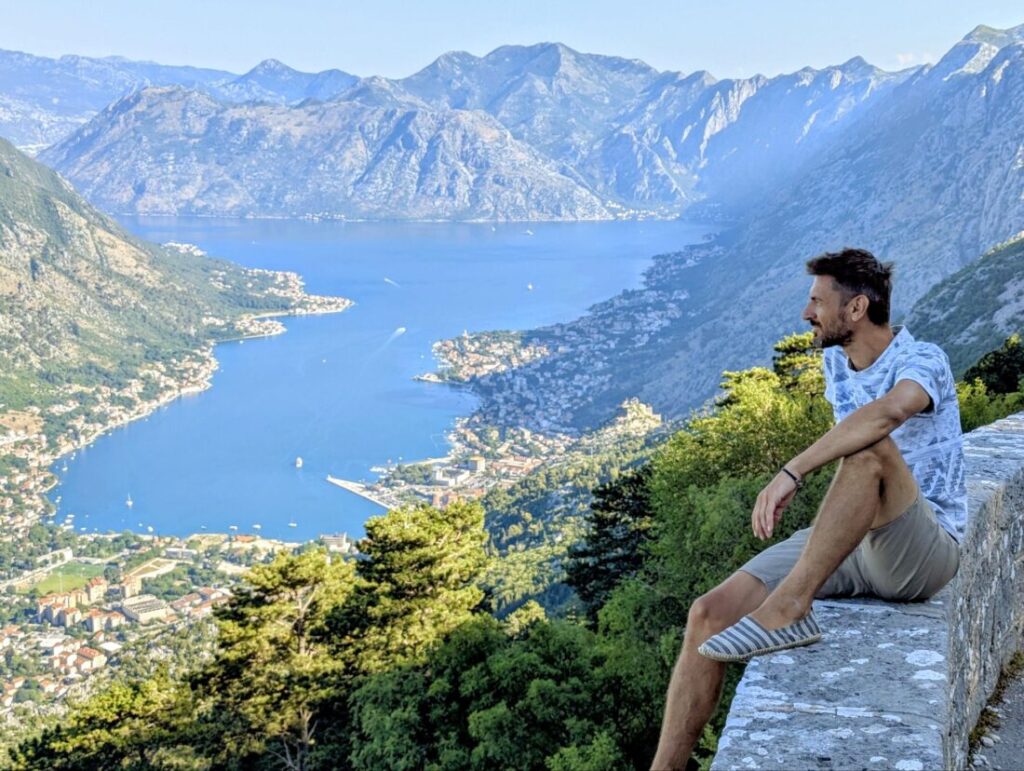
Still, the view is simply phenomenal. From the top, you can grasp the sheer scale of the Bay of Kotor and also spot the neighbouring Bay of Tivat.
You can also drive around the bay by car – a well-paved road circles it entirely. The E80, running along the eastern side, carries much more traffic and offers fewer panoramic views than the Jadranska Magistrala on the western side. There, you drive almost the whole way right along the water, with breathtaking views over the fjord.
Perast & Our Lady of the Rocks
The small town of Perast on the western shore of the Bay of Kotor is, alongside Kotor itself, the most photogenic spot in the region. The old town’s nameless alleyways wind along the waterfront in a maze, while the coastal road passes above the town.


You can explore Perast’s old town in 1-2 hours, then take a boat for a few minutes to the small islet of Our Lady of the Rocks (Gospa od Škrpjela). There, for €3 extra, you can visit the church inside. But honestly, the short crossing itself is the best part.
Blue Cave (Plava Špilja)
On the Luštica peninsula, near Herceg Novi, lies one of Montenegro’s most beautiful natural attractions. The Blue Cave is only accessible by boat and is visited on guided tours from April to October (usually combined with a stop at Mamula Fortress).
Inside the cave, daylight reflects beneath the water’s surface, making the water glow in bright turquoise – most intense in the early morning hours.
Sveti Stefan
The tiny islet village of Sveti Stefan was founded in the 15th century by twelve families as a fortified refuge from Ottoman attacks. In the 1950s it was converted into a luxury hotel and quickly became a haunt for film stars and royalty – today it’s run by Aman Resorts, and access to the island is only possible via a paid tour.
You get the best view of its iconic silhouette for free, either from the small church of St. Sava on the hill or from Milocer Park. Right next to the island lies a public beach with pink pebbles and turquoise water.
Tip: For the best photo, come early in the morning or at sunset – the viewpoints are often crowded during the day.
Beim Klick wird Youtube.com aufgerufen (Datenschutzerklärung) | By clicking, Youtube.com opens (Privacy)
Budva Old Town & Beaches
Budva is among the oldest towns on the entire Adriatic coast and today serves as Montenegro’s tourist party capital. After a severe earthquake in 1979, the medieval old town was rebuilt true to its original Venetian style using preserved Austrian building plans, and it has been a protected heritage site ever since.
The narrow streets behind the Venetian city walls are today full of cafés, boutiques and restaurants. Right outside the old town gates lie some of Montenegro’s best-known beaches.
Ostrog Monastery
Built into an almost vertical cliff face of the Ostroška Greda massif in the 17th century, Ostrog Monastery is today one of the most important pilgrimage sites in the Balkans. The monastery sits over 900 metres up and can only be reached via a steep, very winding switchback road. Alternatively, you can reach it on an equally steep hiking trail – you’ll find a route description here on Komoot.
Ostrog Monastery is open daily and can be visited free of charge. Keep in mind that you’ll need to cover your knees and shoulders, or you won’t be let in. Unfortunately, photography is not allowed inside.
Try to arrive early, as parking is limited and the monastery is a very popular destination.


Cetinje & Lovćen National Park
Cetinje was Montenegro’s royal and cultural capital for centuries, before that role shifted to Podgorica. Worth seeing are the pale-blue Royal Palace (now the presidential residence), the monastery with its religious relics, and the National Museum, including the King Nikola Museum and the Njegoš Museum.
Just a short drive away lies Lovćen National Park. Along the historic switchback road with 25 hairpin turns (built by Austria-Hungary in the 19th century), you’ll reach the foot of Jezerski Vrh (1,657m). From there, 461 steps lead up to the mausoleum of the poet-prince Petar II Petrović-Njegoš – with one of the most spectacular panoramic views over all of Montenegro.
Entry: €2 for the national park plus €5 for the mausoleum. Plan around 1.5-2 hours for the visit without hiking.
Durmitor National Park
Durmitor National Park is arguably Montenegro’s biggest highlight and the country’s most-visited national park. Listed as a UNESCO World Heritage Site since 1980, it’s a classic winter destination for locals, while foreign visitors typically come in summer for hiking and mountaineering.
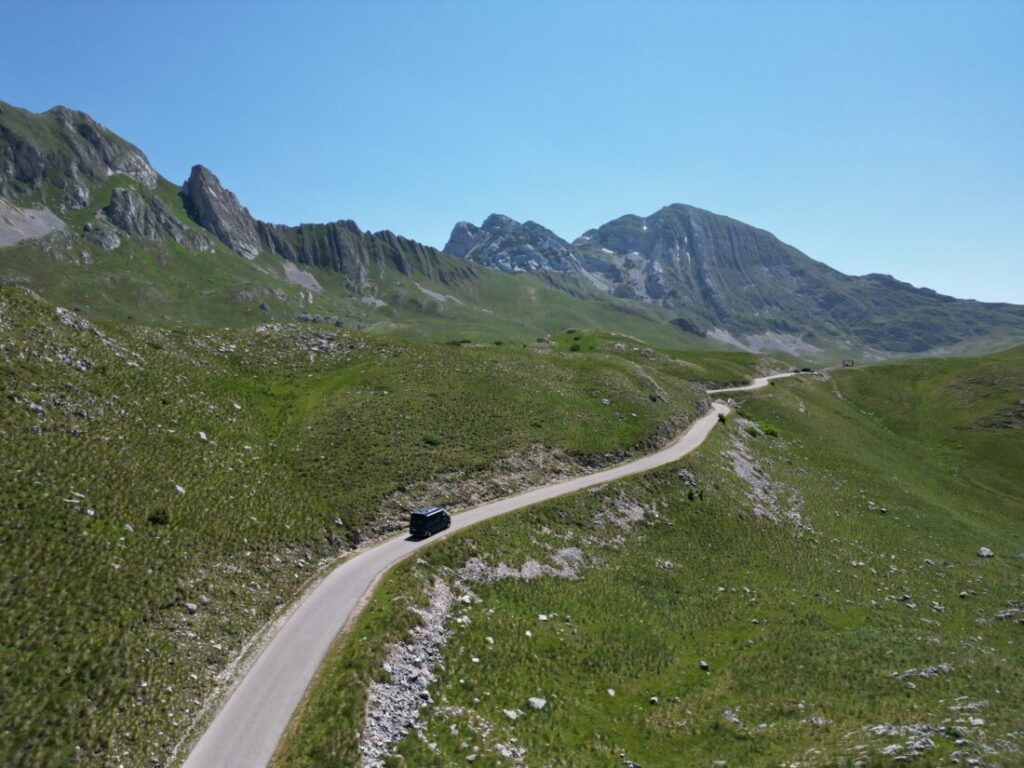
The scenic loop road that circles through the park’s core gives you a perfect overview of its many natural highlights. At times, it feels like being in the Dolomites or in Austria. A particular highlight is Lake Piva, which lies just outside the park near the unassuming town of Plužine, but shouldn’t be missed on your route.


The water of Montenegro’s largest reservoir has an insanely deep blue colour and is perfect for swimming, especially in high summer. There are also smaller lakes, like Black Lake (Crno Jezero) at the park’s heart, whose easy loop trails attract many visitors.
There’s also a genuinely spectacular viewpoint in the park, from where you can look out over Tara Gorge. You’ll have to earn the Curevac Viewpoint with a 30-minute hike across very uneven terrain. But once there, the panorama over the canyon is truly grand.
Hikers are also well catered for in Durmitor National Park. Numerous well-marked trails lead up to the many peaks, offering magnificent panoramic views of the landscape.
More info here: Durmitor National Park | All You Need To Know Before You Go
Tara River & Tara Gorge
At 140km, the Tara is Montenegro’s longest and arguably most impressive river. The most spectacular stretch of Tara Gorge lies within the famous Durmitor National Park. The Tara starts in the north of the country and flows through an ever-deeper canyon until it reaches the Bosnian border in the northeast, where it even forms the border between the two countries for many kilometres.
The gorge the river has carved into the landscape over long stretches is up to 1,300 metres deep, making it the deepest canyon in Europe and one of the largest in the world. Direct access to the gorge or the river itself is only possible at a few spots, since the Tara mostly runs through a part of the national park that isn’t accessible by car.


The best view of the gorge is from the river’s best-known landmark, the Đurđevića Tara Bridge. Completed in 1940, the bridge spans the Tara at a height of 150 metres and is a visual highlight of the region. Several zipline operators offer their services here, and of course, the river is also great for whitewater rafting.
If you drive south along the river from the Tara Bridge, you’ll not only be right beneath the steep cliff faces, but you’ll also have direct access to the wild river at several points.


Meandri Ćehotine Viewpoint
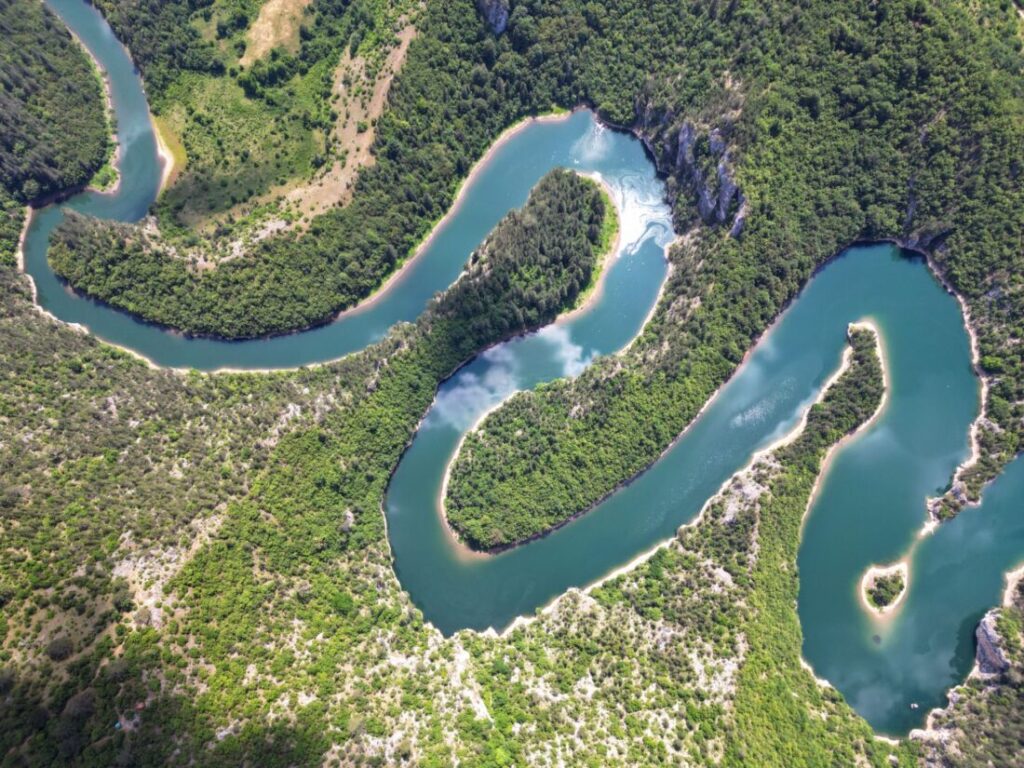
In the north of Montenegro, off the usual tourist routes, lies a small but lovely viewpoint. At the end of a roughly 2km-long gravel track sits a small car park, from where you can walk about 5 minutes to the viewpoint. From here, you get a beautiful view of the meanders of the Ćehotina River, winding its way through the landscape.
This unique shape is the result of erosion and sedimentation processes over the last few millennia, during which the river’s course has constantly shifted. That’s how you get to enjoy this unique landscape today.
We wouldn’t say it’s worth a special detour, but if you’re in the area anyway, it’s well worth a stop at this free viewpoint.
Biogradska Gora National Park
Biogradska Gora National Park is not only the smallest but also the oldest national park in Montenegro. Parts of the area were already placed under protection by King Nikola in 1878 – just 6 years after Yellowstone National Park in the US (1872), the oldest nature reserve in the world. However, Biogradska Gora only received official national park status in 1952.
The most visited and easiest-to-reach part is Lake Biogradsko, where the park’s visitor centre is also located. An entry fee of €4 per person is charged at the park entrance. At the visitor centre you’ll find an adventurous car park in the middle of the forest and a small playground.
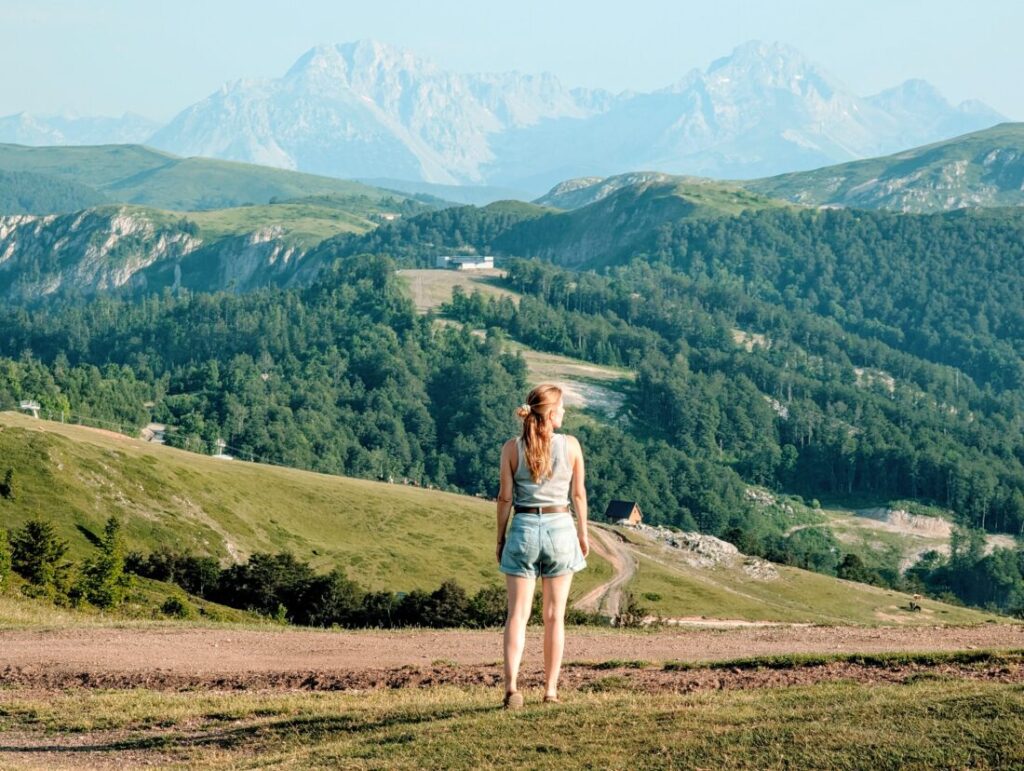
From here starts the popular (and very easy) trail around the lake, leading through one of the last primeval forests in Europe. You’ll walk partly on wooden boardwalks through the pristine forest, so as not to trample the sensitive vegetation, with wonderful views of centuries-old beeches, elms and firs.
In roughly 1-2 hours you’ll have walked around the lake and can enjoy one last view of the stunning scenery from the boat jetty.


If you want to go higher, numerous well-marked trails start at the visitor centre, taking you several hours up to the surrounding peaks. The most rewarding for a great view over the lake is the hike to Bendovac Viewpoint. Plan for about 4-5 hours to climb the 700 metres of elevation and make it back to the visitor car park.
Mrtvica Canyon
One of Montenegro’s most beautiful hikes lies in the breathtaking Morača Canyon. Since you’ll likely pass through here anyway along Panoramic Road 1 on your Montenegro road trip, you should make a stop for the hike through Mrtvica Canyon.
The full hike takes about 5 hours over 14km. But you can also do a shortened version, covering what we think is the most beautiful part of the gorge, leading to the Danilov Most bridge and back. Along the way you’ll walk mostly right beside the wild river, with near-constant spectacular views of the landscape.


The water is crystal clear, turquoise, and of course ice-cold. You can still swim here, since you’re almost at sea level and summer temperatures easily climb above 30°C.
If you hike all the way to the end, you’ll reach a special highlight: decades ago, Yugoslav soldiers blasted a nearly 200-metre-long tunnel, open on one side, into the rock face – it reminded us a little of the Ruta del Cares hike in northern Spain.


Right near the trailhead there are two lovely campsites, well suited as a place to stay before or after the hike.
Skadar Lake with the Crnojević River [Our Insider Tip]
One of Montenegro’s biggest highlights is Skadar Lake, also known as Lake Skutari. It’s the largest lake on the Balkan Peninsula and also the largest in all of southern Europe. Skadar Lake is 48km long and up to 14km wide, and lies in almost equal parts within Montenegro and Albania. The border runs almost right through the middle of the lake. Water levels fluctuate by up to 5 metres over the course of the year – at its peak in spring, the lake is only slightly smaller (around 505 km²) than Lake Constance.
The Montenegrin part of the lake belongs to the national park of the same name and is therefore under special protection. The lake is only 7 metres deep on average and crisscrossed by karst springs up to 40 metres deep, which often feed ice-cold water into the river.
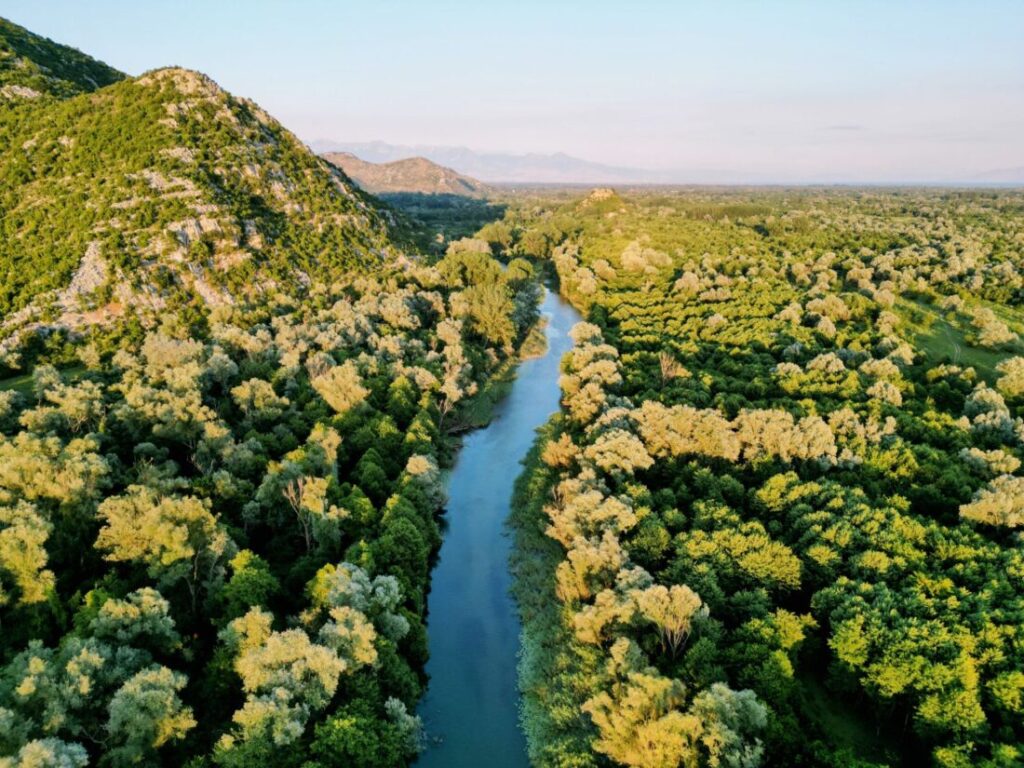
The northeastern part of the lake, with its flooded wetlands, is especially worth seeing and still something of a hidden gem on this huge lake. Here you’ll find the river branches of the Crnojević, with water covered in picturesque water lilies in many spots, and large and small waterbirds everywhere.
Particularly impressive are the many pelicans (specifically Dalmatian pelicans) you can spot here.
The river landscape of the Crnojević flows almost seamlessly into the huge Skadar Lake and is perfect to explore by boat. You can rent your own boat, though that means moving fairly slowly.


Or you can join a private or group boat tour and see a lot more. Two-hour boat tours cost around €50-60 per person and depart from either the pretty small town of Rijeka Crnojevića in the north of the river landscape, or from the larger town of Virpazar in the west.
Travel Tips for Montenegro
Entering Montenegro
Montenegro is not an EU country, but borders the EU country Croatia and is therefore an external EU border. Nevertheless, you only need an identity card and not a passport to enter Montenegro. If you are entering with your own car or camper, you must present the vehicle registration document and theoretically also the so-called green insurance card (which is not green at all). However, the border guard didn't want to see our insurance card. However, always have it with you, as it can also be relevant in the event of an accident.Montenegro with a dog
Entering Montenegro with a dog is difficult on paper, but very easy in practice. In theory, you need a chipped and rabies-vaccinated dog with an EU pet passport to enter the country. In practice, however, very few customs officials at the border are interested in this. However, leaving Montenegro or entering Croatia (external EU border) can be more complicated. In addition to the documents already required for entry, you will also need a titer test (rabies antibody test) and a health certificate that is no more than 10 days old to enter Croatia. In practice, however, the border guards are not really interested in your dog, so in our experience you can do without a health test, which would have to be done in Montenegro.Roaming in Montenegro
As Montenegro is not part of the EU, you unfortunately cannot benefit from free EU roaming here. However, you can buy SIM cards in every city that give you tens of gigabytes of data volume for 10-20 euros. We highly recommend the provider ONE, which offers very good reception almost everywhere. We found MTEL less recommendable, as we often had connection problems with them. It is even easier with eSIMs, which you can already buy in Germany. The cost here is around €2 per gigabyte. We recommend Red Bull Mobile here. There you can install the eSIM via an intuitive app and also buy data volume.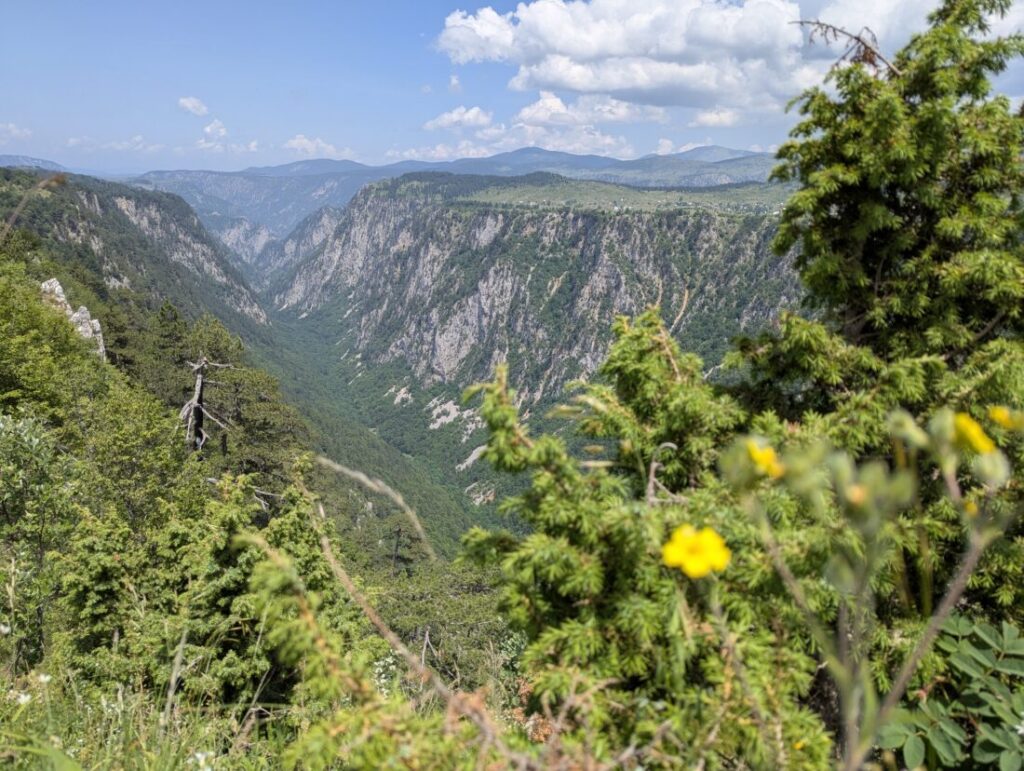
Currency and payment in Montenegro
Even though Montenegro is not in the EU, the official currency is still the euro. This means you don't have to exchange money and you won't pay a foreign currency fee when paying by credit card. Nevertheless, you should take enough cash with you on your trip. Although you can pay by card almost everywhere (supermarkets, petrol stations, etc.), it is not uncommon, for example at campsites or on tours, that only cash payment is possible.Drones in Montenegro
In theory, it is very difficult or almost impossible to import a drone into Montenegro. You need an official import permit, which you can only apply for from Montenegro. An almost impossible task. In practice, however, nobody is interested in your drone when you enter the country. At least when entering the country by car, no one will ask about your drone at the border, nor will your car be searched. Flying a drone in Montenegro is also absolutely problem-free. There are no specially marked no-drone zones or other problems on site. You should of course adhere to the normal rules that apply in the EU.How long should I stay in Montenegro?
Although Montenegro is a small country compared to its neighbors, there is an incredible amount to discover here. We recommend that you plan at least 2 weeks for your road trip. But 3-4 weeks should also be no problem, especially if you are traveling with your camper or motorhome. A road trip through Montenegro can also be perfectly combined with neighboring Albania. The Albanian Alps in particular, which lie directly on the Montenegrin border, are a popular destination for Balkan vacationers.Camping & wild camping in Montenegro
Montenegro is a real dream, especially with a campervan or motorhome. There are an incredible number of well-equipped campsites here, most of which cost just €15-20 per night. The region around the tourist stronghold of Kotor is an exception. Here you can easily pay €40 and more per night. But you don't even have to stay at campsites if you prefer to be out in nature. Although wild camping is officially prohibited in Montenegro, it is tolerated almost everywhere. It is even possible (and officially so) to spend the night in nature with your camper in the national parks. Here, as in Durmitor National Park, for example, a small additional fee is payable to be allowed to spend the night in the middle of beautiful nature.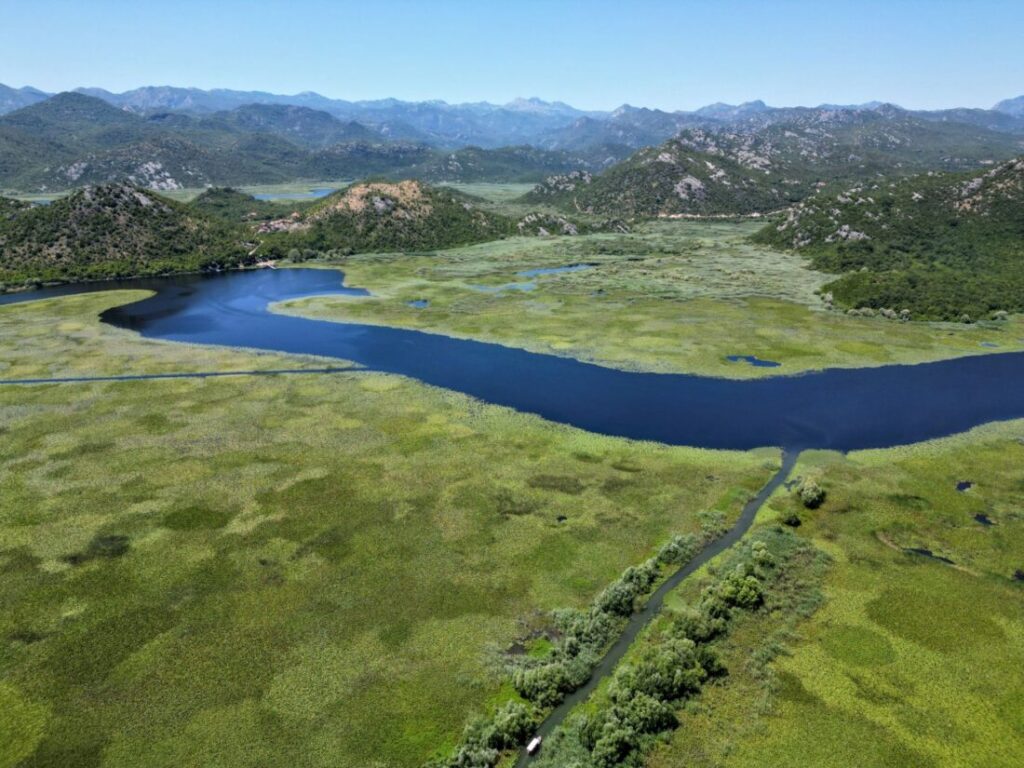
Is Montenegro touristy?
Even if Montenegro is not really on the tourist map of most Germans, the country is very popular with most Eastern Europeans. And so you will meet comparatively few Germans or other Western Europeans here, but all the more Slovaks, Russians and Serbs. The small Balkan country has been very popular with the surrounding countries for decades. This is most noticeable on the coast, which is unfortunately completely paved over with bed castles and ugly hotels. However, you won't notice much of this inland, so you can easily experience the wonderful nature (e.g. in Durmitor) without having to avoid the crowds.Annual pass for the national parks in Montenegro
There are only 5 national parks in Montenegro, but all of them charge an entrance fee every day. Especially if you are traveling with a motorhome or camper and staying overnight in a national park, a national park annual pass is worthwhile. This costs only €13.50 per person (instead of the €5 per day ticket) and is therefore worthwhile if you want to spend 3 days or more in the national parks. Unfortunately, you can't buy the annual pass at most entrances to the national parks, only day passes are sold there. The only exception is the Black Lake in Durmitor National Park. Alternatively, you can also buy the annual pass from home. Use the following website for this: https://buy.prestopay.me/p/PYB4LGFrequently Asked Questions About Things to Do in Montenegro
What are the must-see things in Montenegro?
The Bay of Kotor with its old town, Durmitor National Park with Black Lake, Tara Gorge and Skadar Lake are among the essential highlights – if you have more time, add Budva, Sveti Stefan and Perast on the coast.
What is Montenegro known for?
Montenegro is known for the Bay of Kotor (often called Europe’s southernmost fjord), Europe’s deepest canyon (Tara Gorge), and its pristine mountain scenery in Durmitor National Park.
How many days do you need for the highlights of Montenegro?
Plan at least 7 days for the main highlights; for a more relaxed road trip combining the coast and the mountains, we recommend 10-14 days.
Is Montenegro expensive?
Compared to Croatia or Italy, Montenegro is still quite affordable, although coastal towns like Kotor and Budva get noticeably pricier than the interior during high season.