


Porto-Vecchio sits on Corsica’s southeast coast and, with around 11,000 residents, is the island’s third-largest town. It is split into two levels: the big marina down below and, about 70 meters (230 ft) higher up, the old town with its citadel.
Some of the most beautiful beaches in Corsica are also close by, so there is plenty to do. Here’s why it’s worth a visit and what you shouldn’t miss. We visited in October 2026, so the tips below come straight from our own trip. To see how Porto-Vecchio fits into a full island route, check out our 2-week Corsica itinerary.
Last updated: October 2026.
Things to Do in Porto-Vecchio: Our Highlights
Porto-Vecchio Old Town
The old town of Porto-Vecchio is much bigger and more winding than we expected, which makes it perfect for wandering through the lanes without a set plan. Narrow alleys with colorful facades and plenty of beautiful old buildings lead to Place de la République, the central square of the upper town.


The square is the heart of the old town, and there’s always something going on. The church of Saint-Jean-Baptiste stands right on the square. It was built in the second half of the 18th century on the foundations of an earlier church and is dedicated to the town’s patron saint.
We were there on a Sunday and were surprised by how many shops were open. The town felt pleasantly lively rather than deserted. With its small boutiques and cafés, you can easily spend a few hours here.
Tip: If you’d rather skip the steep climb between the citadel and the harbor, a little tourist train (petit train) runs in the summer months.
The Citadel: A Wall Instead of a Castle
Unlike in many other Corsican towns, you won’t find a classic castle in Porto-Vecchio, just the surviving citadel walls. That goes back to how the town was built: from 1539 the Genoese laid it out not as a single fortress but as a completely walled settlement with five bastions and a Genoese gate as its entrance.
Between 1540 and 1589, pirate raids destroyed the young settlement several times, and malaria repeatedly drove away much of the population, so the town had to be rebuilt each time.

Few of the original buildings inside the walls have survived. What remains are mainly the walls themselves and the Bastion de France, the town’s former sea bastion. For €2 you can climb up to the bastion’s terrace (official tourist office page), which gives you a lovely view over the old town and the Gulf of Porto-Vecchio. The small exhibition on the town’s history on the ground floor is free.
Tip: Come to the terrace of the Bastion de France at sunset. It is one of the best viewpoints for looking out over the bay.
Quai Pascal Paoli Harbor Promenade
A walk along the harbor promenade at Quai Pascal Paoli, below the old town, is also worth your time. From here it is only about a 25-minute drive to our other Corsican highlight, Bonifacio, perched on its cliffs.
With around 500 berths, the marina is one of the largest in Corsica. Bars and restaurants line the promenade, and it gets properly lively here in the evening.
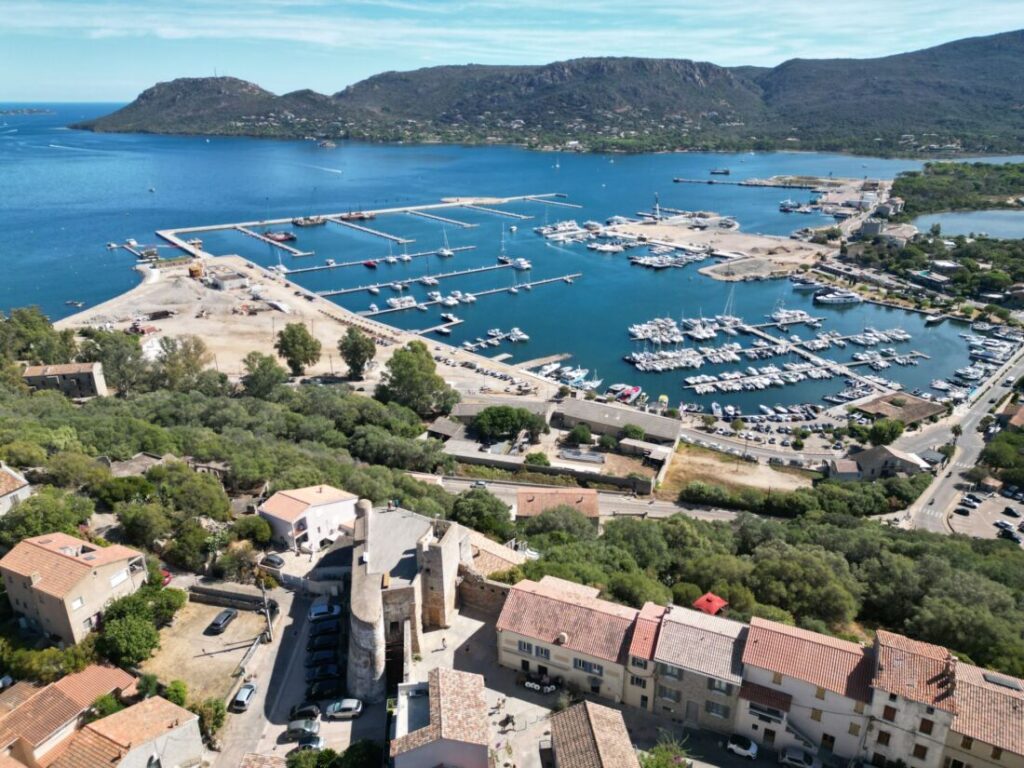
Tip: Start your tour in the old town in the late afternoon, then walk down to the harbor for an aperitif.
The Best Beaches near Porto-Vecchio
Many visitors come to Porto-Vecchio for the beaches nearby, and they’re fantastic.
Palombaggia Beach (Plage de Palombaggia): One of the most popular beaches on the island. Fine, dazzling white sand, crystal-clear turquoise water and the characteristic red granite rocks, framed by shady pines. The beach is extremely popular, so parking is very difficult. In summer, get there before 9:30 a.m. There are a handful of free spots right at the beach, and the rest of the parking costs around €10.
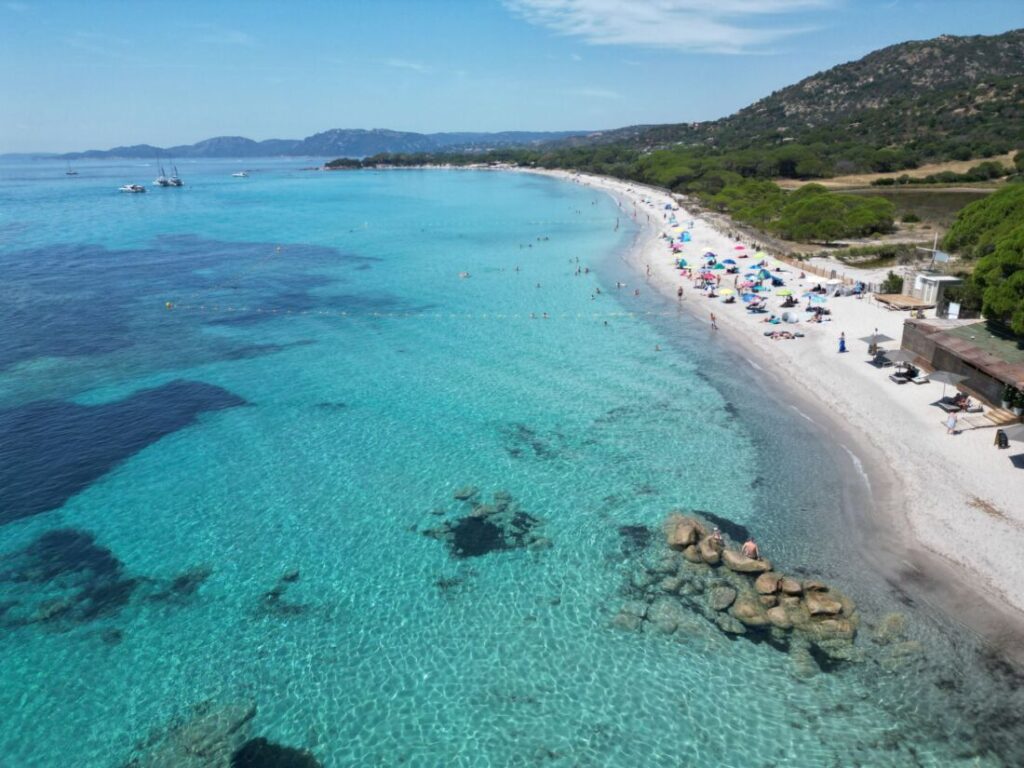
Santa Giulia Beach (Plage de Santa Giulia): We haven’t been here ourselves, but the wide, horseshoe-shaped bay is known for looking like a huge, shallow lagoon. The water gets deep very gradually, which makes it popular with families with children and for water sports (stand-up paddling, jet skis, sailing).
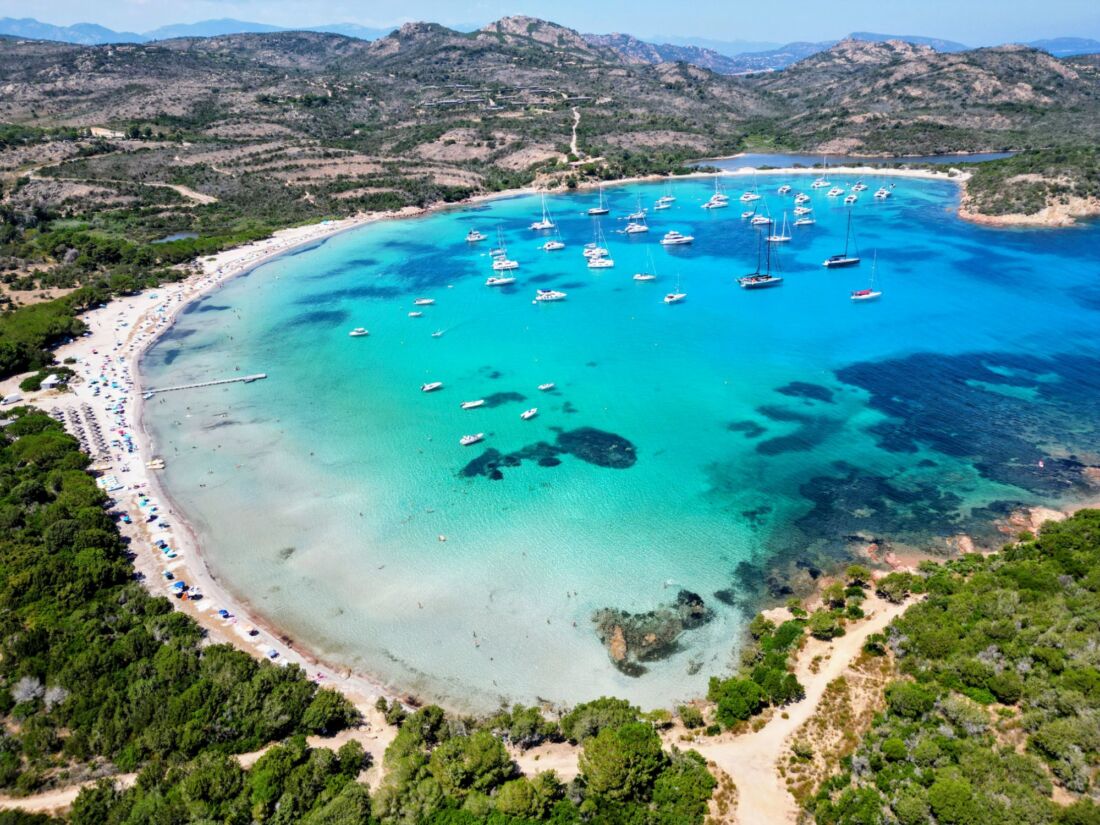
Rondinara Beach (Plage de Rondinara): Between Porto-Vecchio and Bonifacio lies the almost perfectly round bay of Rondinara, regularly counted among the most beautiful beaches in Europe. After our visit, we can only agree. Fine white sand, calm shallow water and a sheltered location make it ideal for swimming. It is just as popular as Palombaggia, so the paid parking lot is often full by midday. In high season, plan to arrive by 9:30 a.m. at both beaches. More beach tips are in our guide to the best places to visit in Corsica.
Porto-Vecchio or Bonifacio: Which One Should You Choose?
If you only have time for one of the two, it depends on what you want. Bonifacio is the more spectacular of the two: its houses perch on white limestone cliffs up to 80 meters (260 ft) above the sea, and the view from the citadel is among the most impressive on the island. Porto-Vecchio feels more laid-back, with a lively harbor in the evenings, and it is the better base for the beaches of Palombaggia, Santa Giulia and Rondinara.
The two towns are only about 25 minutes apart by car, so you can easily combine them. Our tip: stay near Porto-Vecchio, spend a day at the beach, and visit Bonifacio on a separate day trip. Both stops are part of our Corsica road trip route.
Practical Tips for Visiting Porto-Vecchio
Where can you park in Porto-Vecchio?
The easiest way into the old town is the parking lot at the Auchan supermarket at the foot of the town (Google Maps), which we were able to use completely free of charge. From there it is a steep walk of about 15 minutes up to the old town. It’s a bit of a workout, but worth it. In high season, the tourist office also recommends parking on the edge of the historic center and using the free Citadina shuttle (getting around Porto-Vecchio).
Tip: Take something to drink with you on hot days. The climb is in full sun and steeper than it looks from below.
How do you get to Porto-Vecchio?
Porto-Vecchio is on the southeast coast, roughly 20 to 25 km from Figari–Sud Corse Airport. If you are traveling around the island by car or campervan, it fits neatly between Bonifacio in the south and the Solenzara valley and Bavella Pass further north. A car is the easiest way to get around, because the beaches are spread out along the coast.
When is the best time to visit Porto-Vecchio?
May, June and September are the best months: pleasantly warm, but not yet (or no longer) overcrowded. In August, the beaches, roads and parking lots are packed because of the French summer holidays. We visited in October, when many shops were still open and the old town felt lively.
How long should you spend in Porto-Vecchio?
If you only want to see the old town, half a day to a full day is enough. If you also want to enjoy the beaches in the area, you can easily spend several days here.
Frequently Asked Questions About Porto-Vecchio
How much does it cost to visit the citadel in Porto-Vecchio Corsica?
The historical exhibition in the Bastion de France is free, and access to the viewing terrace costs €2 per person.
Why is only a wall left of the Porto-Vecchio citadel?
From 1539 the Genoese built the town as a walled fortress settlement from the start rather than as a single castle. Pirate raids also destroyed the settlement several times between 1540 and 1589, and it had to be rebuilt each time. Today, mainly the ring walls and the Bastion de France remain.


What is the church in Porto-Vecchio’s old town called?
The church in the old town of Porto-Vecchio is called Saint-Jean-Baptiste and stands on Place de la République. It was built in the second half of the 18th century.
Is Porto-Vecchio worth visiting on a Sunday?
Yes. When we visited on a Sunday (in the off-season), plenty of shops were still open and the old town felt lively rather than sleepy.
Is Porto-Vecchio worth visiting?
Yes. The old town is compact but charming, the viewpoint at the Bastion de France is lovely at sunset, and some of the best beaches in Corsica are just a short drive away. For a pure sightseeing stop, half a day is enough, but the beaches make it worth staying longer.
Which is better, Bonifacio or Porto-Vecchio?
Bonifacio is more dramatic thanks to its cliff-top old town, while Porto-Vecchio is the better base for beach days. Since they are only about 25 minutes apart, we recommend seeing both.