


What are the best things to do in Medellin, Colombia? What are the must-sees of the city? And is it even safe to travel there? These are exactly the questions we had before our trip – and we are glad we went anyway.
Medellin was the first stop on our backpacking trip through Colombia and turned out to be the most beautiful big city we encountered on our entire journey through Central and South America. That surprised us. We are not city people. Too noisy, too crowded, too dirty – that is usually our verdict on big cities. But Medellin is different. Somehow more walkable, more human, and more alive than we expected.
We spent four days here and left wishing we had more time. In this guide we share our 15 favorite things to do in Medellin – from the famous Comuna 13 and the cable car rides over the city rooftops, to a few experiences that most travel blogs don’t bother mentioning. We also cover where to stay, how the metro works, and whether Medellin is actually safe to visit. Everything you need to plan your trip.
Last updated: July 2026
The Best Things to do in Medellin
We have summarized our top 15 Medellin must dos in our travel report. Of course there are many more, but these 15 impressed us the most.
The 15 Best Things to Do in Medellin – At a Glance
- Strolling through El Centro – Medellin is made for walking. Squares, colonial buildings, pedestrian zones and a great souvenir market at Parque San Antonio.
- Parque Arví – A nature reserve above the city, reached by a spectacular cable car ride over the treetops. Plan at least half a day.
- Comuna 13 – Once the most dangerous neighborhood in Colombia, now one of the most visited. The murals, the escalators, and the story behind it all make this a must.
- Riding the Cable Car – Even without a fixed destination, the cable car ride over the city rooftops is an experience in itself.
- Day Trip to Guatapé – Two hours from Medellin, the rock El Peñol and the surrounding lake landscape are among the best sights in all of Colombia.
- Plaza Botero & Museo de Antioquia – 23 oversized bronze sculptures by Fernando Botero, free to visit, right in the city center.
- Paragliding over Medellin – For the best possible view of the city and the surrounding valley. Tandem flights available about 45 minutes from the center.
- Jardín Botánico – A free botanical garden near the Universidad metro station. The best place to slow down for an hour.
- Coffee Farm Tour – Colombia grows some of the world’s best coffee. Visiting a farm just outside the city is one of the most worthwhile half-days you can spend here.
- El Poblado – We don’t recommend staying here, but for an evening out – dinner, drinks, warm air – it is hard to beat.
- Nightlife & Pub Crawl – Medellin’s nightlife is better than most people expect. El Poblado and Laureles are the main areas.
- Casa de la Memoria Museum – A free museum about the Colombian conflict and its impact on Medellin. Not a fun afternoon, but an important one.
- Pueblito Paisa – A hilltop viewpoint with a replica traditional village. A bit kitschy, but the view over the valley is genuinely good.
- Play Tejo – Colombia’s national sport involves throwing metal discs at gunpowder packets while drinking beer. Exactly as good as it sounds.
- Feria de las Flores (August only) – A week-long flower festival with concerts, a classic car parade, and a city-wide bike ride. If your dates line up, don’t miss it.
Planning to visit more of Colombia? Check out our 3-week Colombia itinerary – we cover the best of the Caribbean coast, from Medellin all the way to Cartagena and the islands
#1 Strolling through the City
Sounds mundane, but it’s not at all. Medellin was the only big city in Latin America where I had fun just walking around the city for a day. Sabrina was not feeling well, so I went alone to the city center and walked around for 4-5 hours. As a rough plan, I had a map for one of the many walking tours offered in the city (you can download the map here and save it to your phone). I then simply walked the various sights in Medellin and have also discovered a lot of new and great things along the way.
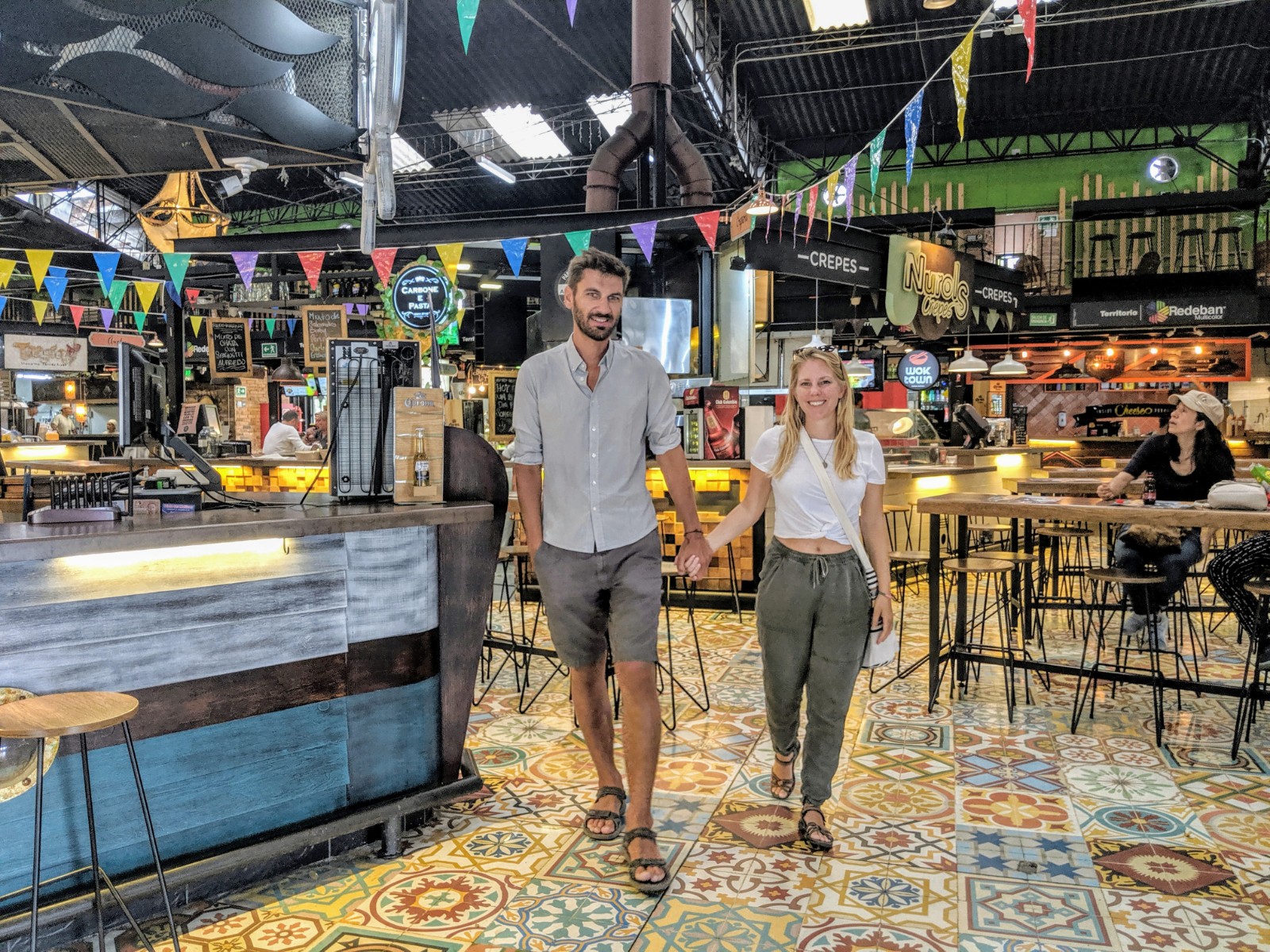
For example, the small but nice souvenir market at Parque San Antonio or the fact that Colombians seem to love shoes and socks. Because everywhere in downtown Medellin there are stores that sell sneakers and the socks that go with them. Really funny! Medellin has a lot to offer in its city center (El Centro) and beyond: large squares, old churches, colonial buildings, modern museums, historic cafes and great architecture.
But the best thing, in my opinion, is that most of it can be explored by foot and Medellin really seems to be made for that. This is not only evidenced by the many walking tours offered here. Medellin also has many pedestrian zones, squares and areas where you can walk around.


The city seems to be really designed for people and not for cars. We found that really great! If you don’t dare to walk alone or if you want to have additional information while walking through the city, you can join one of the many free walking tours.
These usually start several times a day and take you from sight to sight. They also tell you a lot about the history of the city. The only payment expected is a tip for the guide. A good provider is Real City Tours: Free Walking Tours at RealCityTours
#2 Parque Arví
Our second Medellin must see is Parque Arví. We would have never thought that in the middle of Medellin there is such a fierce nature. Alright, it’s not in the middle of Medellin of course, you’ll have to take a pretty long cable car ride. But the way is in any case the goal.
How do you get to Parque Arví?
To get from downtown Medellin to Parque Arví, you have to take line A north towards Niquia and get off at Acavedo. There you change to the cable car to Santa Domingo and use the same ticket. When you arrive at the terminus, you have to change the cable car again, but this time you have to buy a new ticket (13,700 COP).
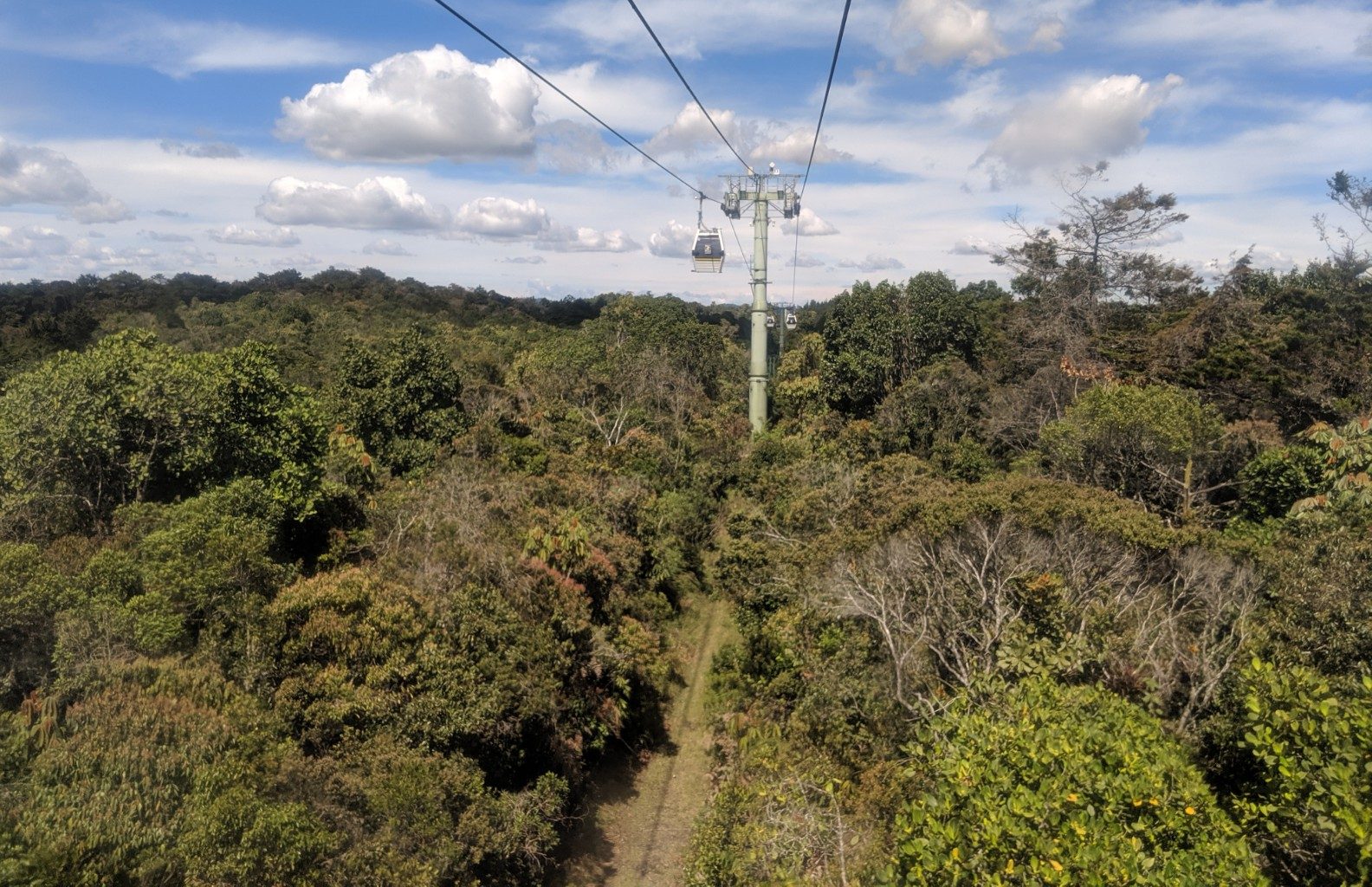
This last ride with the cable car takes almost 20 minutes and you float endlessly over the Arví National Park and have a wonderful view over the treetops, which you have nowhere else. Simply phenomenal. Just for this hovering over the forest, the ticket and the relatively long journey is worth it. At the top, a small farmers’ market awaits you and after a few hundred meters, the first hiking trail.
Since Sabrina was unfortunately still sick, we could not try any of the trails, but we would have loved to do that. Because also the climate was much cooler and more pleasant up there than in Medellin itself.
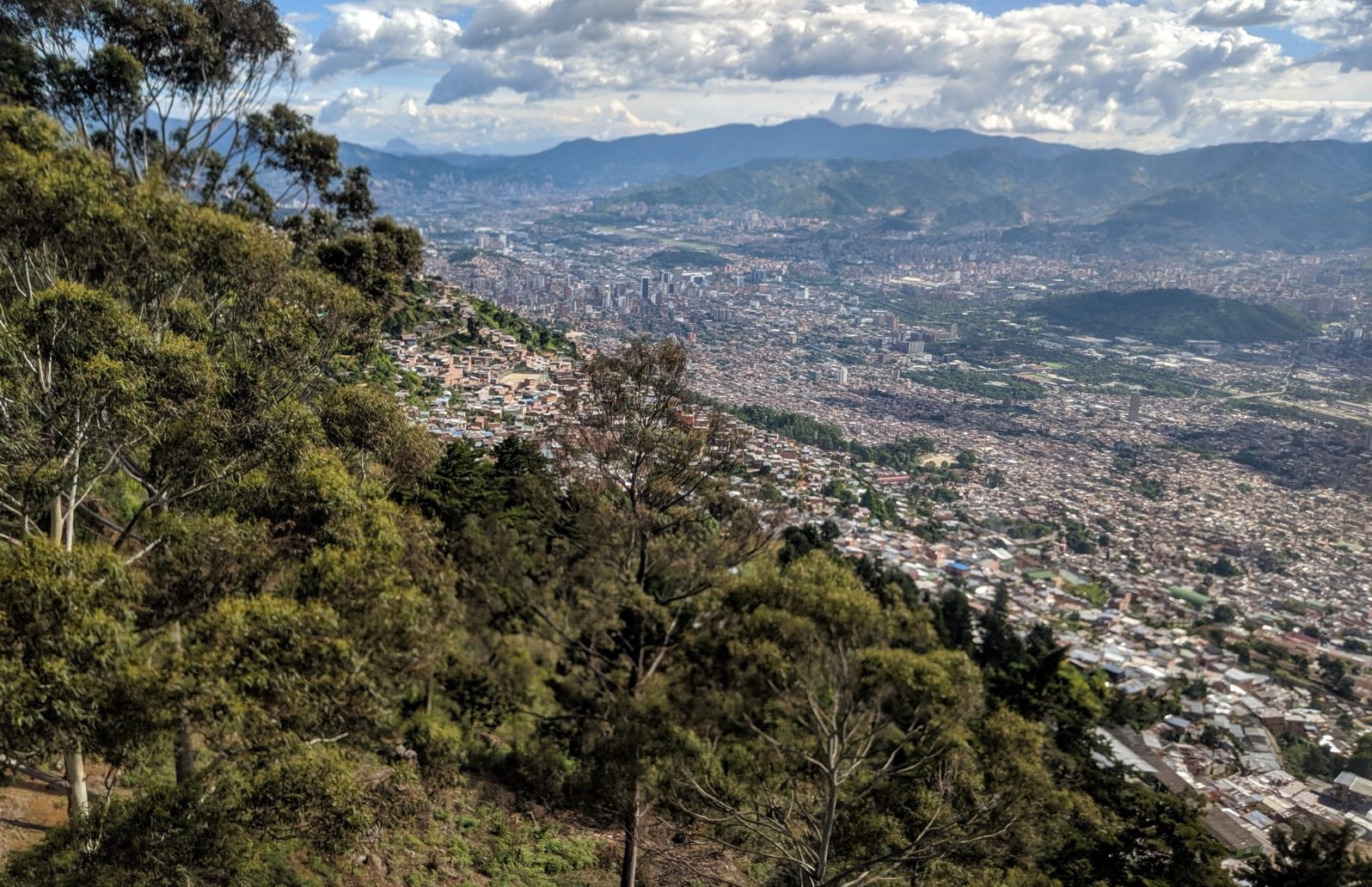
By the way, at the park you can also rent mountain bikes or join a tour to explore the park. We would recommend that you plan at least half a day to a full day at Parque Arví during your visit to Medellin!
#3 Comuna 13
Comuna 13 was the most dangerous place in Medellin, if not all of Colombia, just 20 years ago. There were daily murders and the inhabitants could not be sure of their lives. Strolling through this neighborhood as a tourist was out of the question. And today? Masses of tourists in flip-flops and sunglasses roam Comuna 13 and take photos of the numerous graffiti scattered throughout the neighborhood. What a change of times.
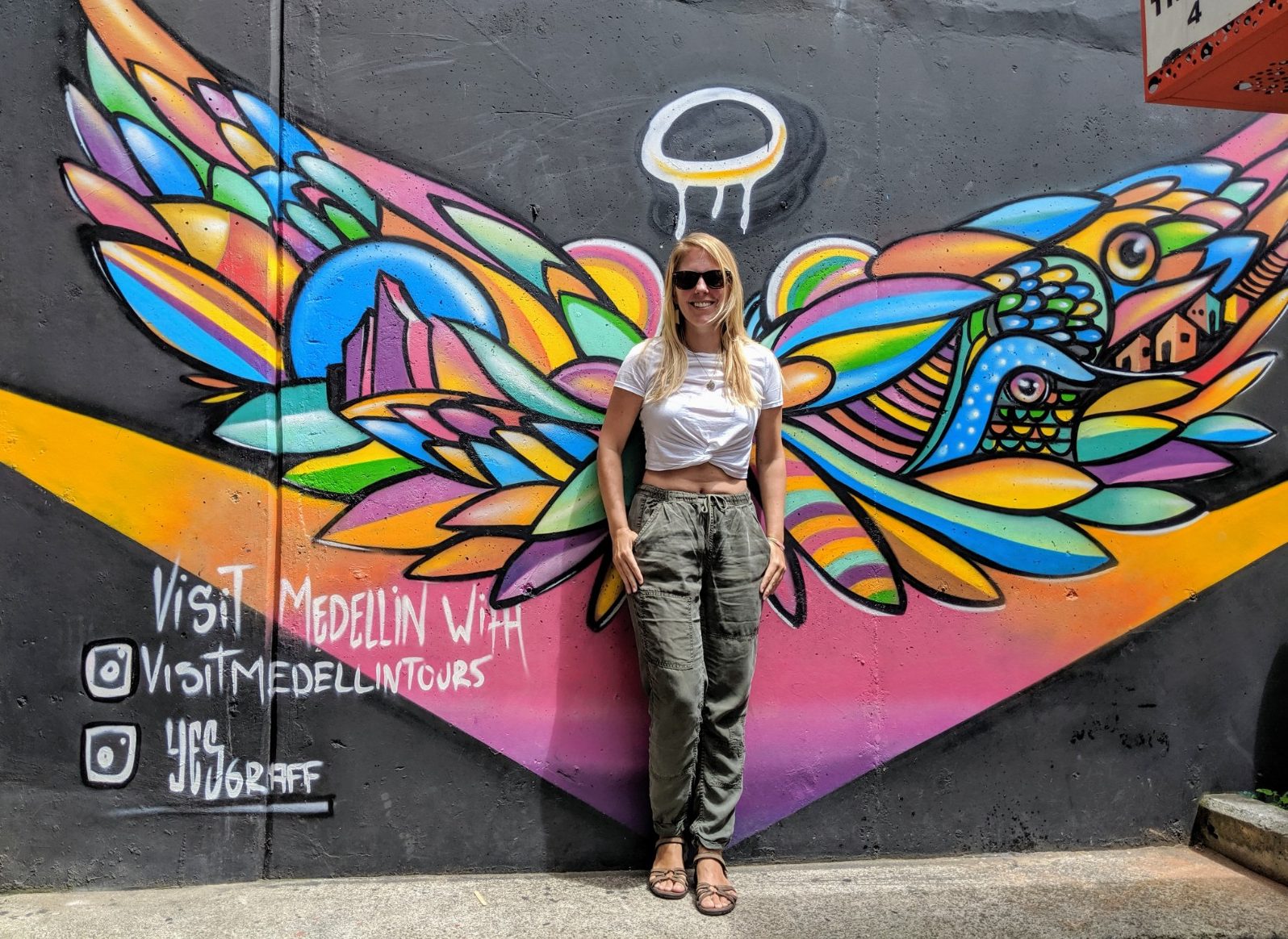
For us, Comuna 13 (pronounced trece) was one of the best things to do in Medellin. The colorful houses, the corrugated iron roofs, the narrow streets. And the confidence in the faces of the people that, despite the bad past, a better future lies ahead of them.
Medellin Must Do: What can you do in Comuna 13?
The Comuna 13 impressed us a lot and is a Medellin must do. But what is so special about this once most dangerous neighborhood of Medellin? It is, of course, the transformation that this district has undergone. With this history in mind, it is impossible to walk through the streets of this neighborhood unimpressed.
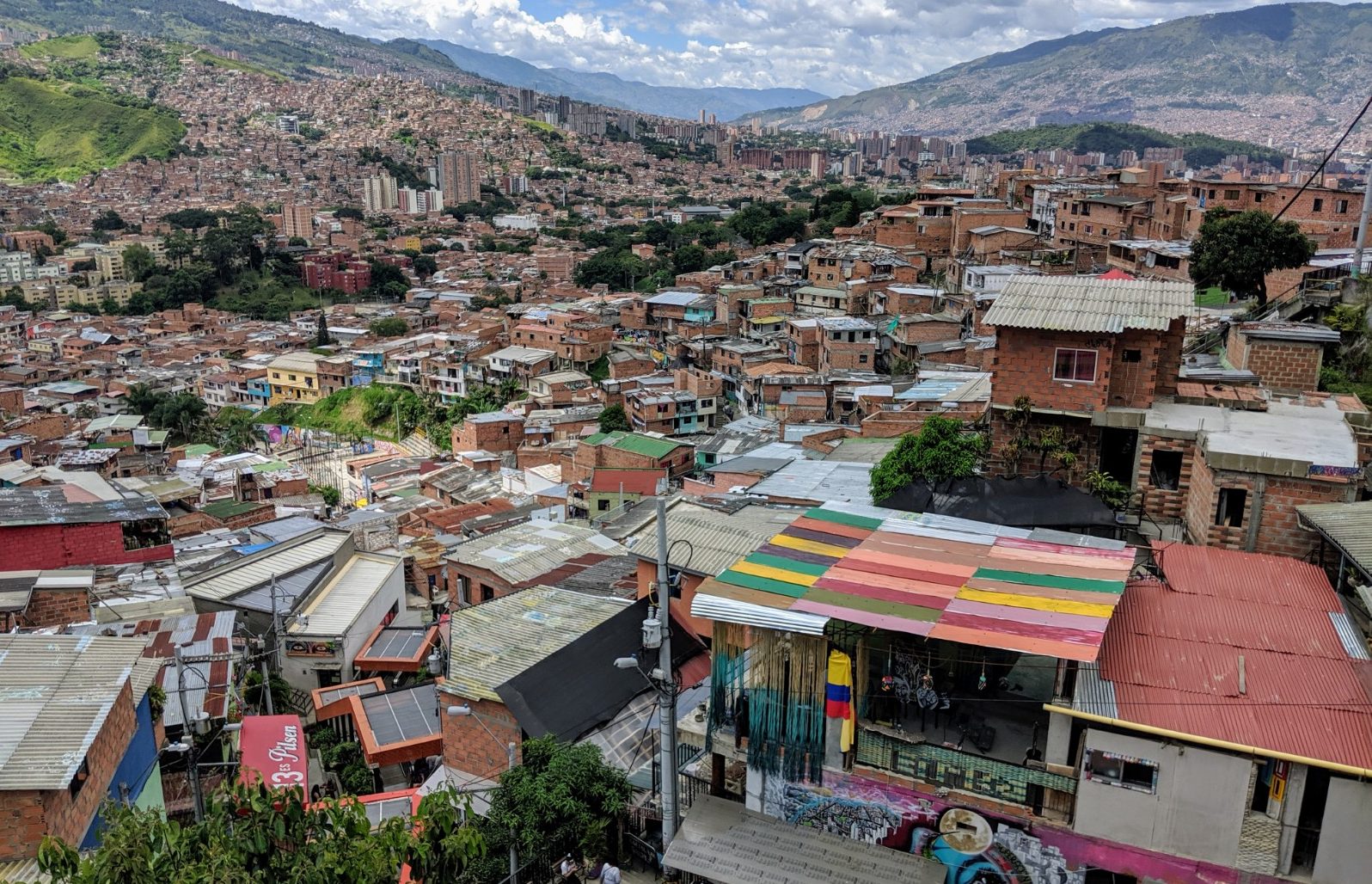
Secondly, there are the many artistic graffiti that can be seen everywhere and in front of which the many tourists are only too happy to be photographed. Thirdly, it is the escalator built in 2011, which, if you add up all the sections, is supposed to be the longest escalator in the world. Of course, it’s not quite as impressive, since the almost 160 meters are not reached in one piece. Nevertheless, a special highlight in this quarter. But the escalator was not built for Instagram-crazy tourists, of course, but for the residents.


It’s just totally interesting to climb the individual sections of the escalator, exploring each “floor” and enjoying some homemade lemonade along the way. On the top step of the escalator, the tourist area is particularly large and you have a fantastic view of the whole neighborhood and Medellin.
If you are also interested in Commune 13 you can book a tour with a local guide* here.
Graffiti Tour at Comuna 13 | Check Prices*
Do you want to know if you can stroll through Comuna 13 on your own and how to get to Comuna 13 if you are not on a tour?
Then read our separate travel report on the Comuna 13 in Medellin:

Comuna 13 Medellin | All You Need To Know
Comuna 13 was the most dangerous place in Medellin, if not in all of Colombia, 20 years ago (see the history section below). There were daily murders and the inhabitants could not be [...]
read moreJul
#4 Riding the Cable Car
Sounds weird again, but just like that you get great views of the city as you pass by when riding the elevated train (metro), it’s the same with the cable car. Only even more blatant. I have only seen something like this in La Paz in Bolivia, where there is also a comparable cable car above the city.
You fly with the cable car over the roofs of the city and have especially in the less affluent regions of the city views of colorful houses with corrugated iron huts and see the metropolis from an angle that you can have nowhere else.
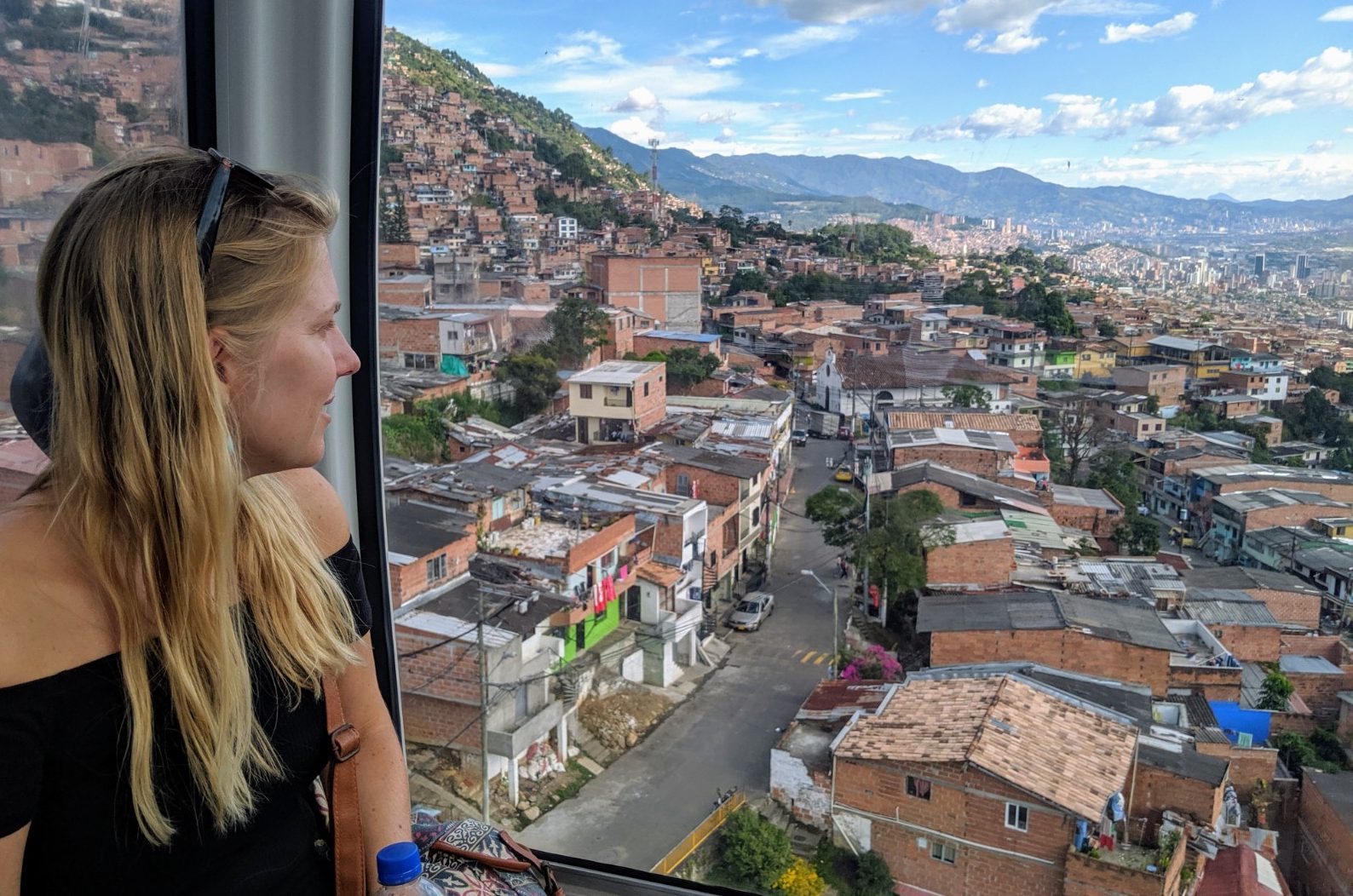
You should take the cable car even if you don’t have a fixed destination. It is simply beautiful and you feel like you are on a skiing vacation, only without snow. This is especially true for the cable car that takes you to Parque Arví. But you have already read enough about this in point 2 above.
#5 Day Trip to Guatapé
If you are in Medellin, you should not miss this highlight. You can also do an overnight stay instead of just a day trip, because the drive is just about 2 hours each way, which makes it worthwhile for a day trip. When we saw the fantastic panorama of El Peñol, we were very annoyed that we had to drive back to Medellin on the same day.
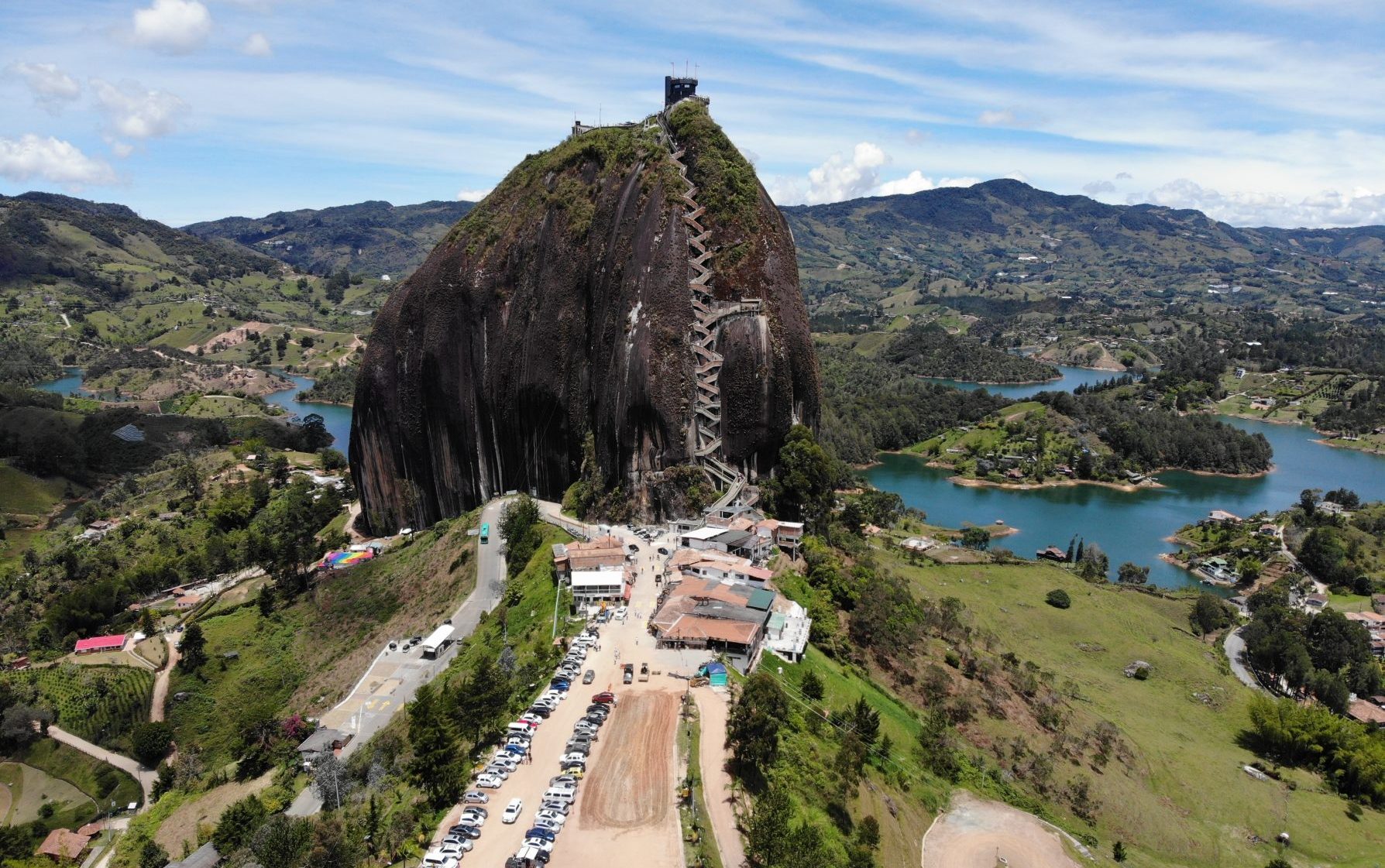
Guatapé offers you three highlights: Once the village itself, which is quite touristy and therefore wasn’t that great in our opinion. Then, of course, there is the famous rock El Peñol in the immediate vicinity of the village. And last but not least, the incredibly beautiful lake landscape that connects both places. This reservoir looks especially impressive from the rock El Peñol and would have been for us also the reason why we would have liked to hang in the area an overnight stay.
Daytrip to Guatapé | Check Prices*
Want more details on Guatapé? Read our full Guatapé guide →
#6 Plaza Botero & Museo de Antioquia
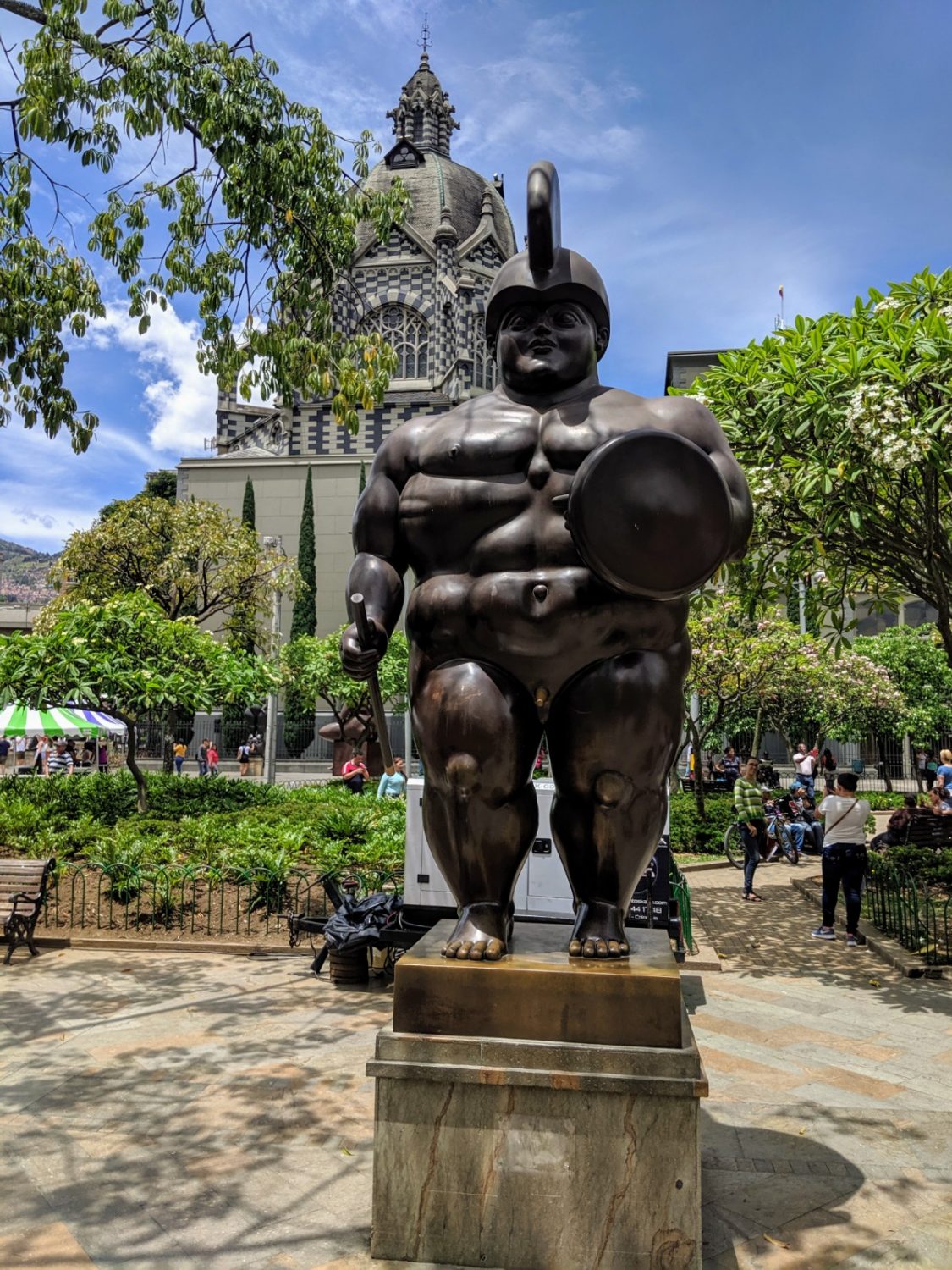 We have already told you to spend a day strolling through the city center. If you do, you absolutely cannot miss Plaza Botero. The square is home to 23 oversized bronze sculptures donated to the city by Colombia’s most famous artist, Fernando Botero. His signature style is hard to miss: every figure is dramatically rounded and plump. Botero himself always insisted that he didn’t paint his subjects fat, but rather with “increased volume.” You can decide for yourself.
The plaza is completely free to visit and makes for a great photo stop. Right next to the square is the Museo de Antioquia, which houses even more of Botero’s paintings alongside works by other Colombian artists. Admission is around 30,000 COP. If you enjoyed the sculptures outside, it’s worth going in.
#7 Paragliding over Medellin
Yes, you can go paragliding in Medellin. And yes, it is as spectacular as it sounds. Around 45 minutes outside the city center, tandem paragliding flights take off from the hills above the Aburrá Valley. From up there, you get a perspective of Medellin that you simply cannot get from the cable car or any viewpoint. The city spreads out below you, surrounded by green mountains on every side.
We haven’t done it ourselves, but we spoke to several travelers who said it was one of the highlights of their entire Colombia trip. Most tours include pickup from El Poblado, the flight itself, and a video so you have proof it actually happened. Prices are typically around 150,000–180,000 COP. Not cheap, but for a once-in-a-lifetime view, probably worth it.
#8 Jardín Botánico
Sometimes you just need a break from the city. The Jardín Botánico is a surprisingly large botanical garden right in the heart of Medellin, just a short walk from the metro station Universidad. Entry is free, which makes it one of the best value things to do in the city.
What makes it special is the contrast. You walk through the gate and suddenly the noise of the city fades away. There are tropical plants, walking paths, a lake, and a large butterfly house. On weekday mornings it is almost empty. On weekends, local families come here to relax and picnic on the grass. It is a great place to slow down for an hour or two, especially if you have been doing a lot of sightseeing.
#9 Coffee Farm Tour
Colombia is one of the best coffee-producing countries in the world, and Medellin is the perfect base for a coffee farm visit. Several farms offer half-day tours just outside the city, where you can walk through the plantation, learn how coffee is grown and processed from the cherry to the cup, and of course taste the result.
We can recommend looking into D’arrieros Coffee Farm, which is about an hour from the city and offers guided tours including transportation, a full farm walkthrough, tastings, and lunch from around 195,000 COP. After drinking mediocre hostel coffee for days, tasting proper single-origin Colombian coffee directly at the source feels like a completely different experience. For any coffee lover, this is a must.
#10 El Poblado – For the Evening, Not the Night
We already told you that we don’t recommend staying in El Poblado, and we stand by that. The neighborhood is far from the city center and frankly a bit of a tourist bubble. But we have to be honest: for an evening out, El Poblado is hard to beat.
The streets around Parque El Poblado and Calle 10 are lined with restaurants, bars, and outdoor terraces. The atmosphere on a warm evening is genuinely great. Go for dinner, have a few drinks, and then decide if you want to stay out or head back. Just don’t build your whole trip around this one neighborhood. Medellin has a lot more to offer than what El Poblado shows you.
#11 Nightlife and Pub Crawl
We mentioned pub crawls briefly in an earlier section, but they deserve more than a passing comment. Medellin’s nightlife is surprisingly good for a city that gets relatively little attention compared to Bogotá or Cartagena. The main areas are El Poblado and Laureles, both of which have bars and clubs open until late.
If you don’t know where to start, joining a pub crawl is a genuinely good option. Not because you need someone to hold your hand, but because a good guide will take you to bars you would never find on your own and you will inevitably end up meeting other travelers. Several companies run them nightly from El Poblado. Just read the reviews before you book, because quality varies a lot.
#12 Casa de la Memoria Museum
After reading about the history of Medellin in the sections above, you might want to go deeper. The Casa de la Memoria is a free museum near the city center dedicated to the Colombian conflict and its impact on the city and its people. It is not a fun afternoon, but it is an important one.
The museum does not glorify violence. Instead, it focuses on the people who lived through it – testimonies, photographs, and personal stories that bring the history to life in a way that a Wikipedia article never could. We found it genuinely moving. It is closed on Mondays, so plan accordingly.
Beim Klick wird Youtube.com aufgerufen (Datenschutzerklärung) | By clicking, Youtube.com opens (Privacy)
#13 Pueblito Paisa
Pueblito Paisa is a replica of a traditional Antioquian village built on top of Cerro Nutibara, one of the hills inside the city. It sounds a bit kitschy and, to be honest, it kind of is. But the view from the top is genuinely good and the walk up is easy.
From the viewpoint you can see the entire valley, the metro line running through the city, and the hills rising around it. The pueblo itself has a small church, a few souvenir stalls, and some cafes. It is free to visit and open from early morning. We would not make it the centerpiece of a day, but it works well as a first or last stop when combined with other things nearby.
#14 Play Tejo
This is our favorite addition to this list, and probably the thing most blogs fail to mention properly. Tejo is Colombia’s national sport and it is exactly as strange as it sounds: you throw a heavy metal disc across a clay field and try to hit small packets of gunpowder. When you hit one, it explodes. You drink beer between rounds. The locals are delighted when tourists give it a go.
Tejo traces its origins back to the indigenous Muisca people, and over the centuries it evolved into a game played in bars and social settings across the country. It was officially declared Colombia’s national sport in 2000. A good spot in Medellin to play is the Estadio Polideportivo Sur in Envigado, about 15–25 minutes by taxi from El Poblado. Some tour operators also offer organized Tejo evenings with transport and drinks included, which makes it easier if you don’t want to figure out the logistics yourself.
You will probably be terrible at it. That is the point. Go anyway.
#15 Feria de las Flores (August only)
If you happen to be in Medellin in early August, you are in luck. The Feria de las Flores is a week-long festival celebrating the region’s enormous flower industry, which generates over $200 million in sales every year. Alongside the flowers, there are live concerts, a classic car parade, and a city-wide bike ride.
The festival transforms the city. The streets fill up, hotels get expensive, and the whole place feels like one big celebration. If you are flexible with your travel dates and Medellin is on your itinerary, August is a great time to go.
Where to Stay in Medellin?
In most blogs you read that you should stay in Poblado. This is where are the most hotels and also the most tourists. During our visit to Poblado, we were surprised how far this neighborhood is from the city center and the nearest metro station. Also, the Poblado did not impress us as much as we have read in many other blogs. Maybe we were in the wrong neighborhood. But nevertheless, we would not recommend the Poblado for your overnight stay in Medellin, but districts that are closer to the city center.

For example, we stayed in a small hostal in the Suramericana neighborhood in a normal residential area and were within 5 minutes of the metro. Then we only had to go 2 stops to get to the center. It was great to live in a residential area so close to the center among locals and not in the tourist district with all the other tourists.
We can therefore only recommend you to look for a nice hostal near the center, so that you are quickly everywhere and are not endlessly on the metro. Our hotel wasn’t super luxurious, but it had super friendly staff and as we said, you were in the city very quickly. If you want to check it out, just click on the following link:
The Hotel Casa Natura at Booking.com*
How Does the Metro Ride Work in Medellin?
When I travel to big foreign cities, I always worry that I won’t get the hang of riding the metro. Sounds weird, but it’s like that. Many different lines, complicated ticketing systems and which train goes where anyway? In Medellin, however, it’s all very simple.
There are only 2 metro lines (but they are overground trains and not underground subways), one of which runs east-west and the other north-south. Reading the metro map is therefore quite easy. The station for the city center is called San Antonio and is easily accessible with both lines, as it is the transfer station between the lines.
How to Buy Tickets for the Metro in Medellin
This is also very easy. One ride costs 3,900 COP (around €0.85) if you buy a card at the station. If you pick up a personalized Cívica card (free of charge, available at major stations), the price drops to 3,430 COP per trip (prices as of early 2026 – always check current fares before your visit). It doesn’t matter how far you want to go. You are allowed to change the metro or to take a cable car, but you are not allowed to leave the stations. Then you have to buy a new ticket.


You buy the tickets in the small sales counters that are in every station. You just say how many rides you want and the employee saves them on a small plastic card. You then hold this card in front of the reader at the entrance gates and you are inside. It is important to know that the card must be inserted into the small slot in front of the reader when you redeem the last ride. The next time you have to get a new card.
By the way, you can download the Metro map as a PDF here: Medellin Metro Map
As already mentioned, your ticket is also valid for the cable car, if you change directly from the metro to it. This is valid for all cable cars except the last one, which goes up to Parque Arví. This has to be paid separately and costs 13,700 pesos (approx. €3) per ride and person. If you want to know more about the metro in Medellin then we can recommend the following website: Medellinguru.com
Is Medellin Safe for Tourists? (2026)
Yes, Medellin is generally safe for tourists today, including in the neighborhoods covered in this guide – but normal big-city precautions still apply, and the areas you should skip are well known. To understand why, it helps to look at how far the city has come.
Many people think of drugs, cocaine, Pablo Escobar and kidnapping when they think of Colombia. So did our parents when we told them about our travel plans. And it’s true of course, just a few years ago Colombia was dominated by gang warfare and murders were commonplace, especially in Medellin.
The History of the City
Especially in Comuna 13, there was statistically almost one murder per day in the 90s. Medellin was reportedly the city with the highest murder rate in the world as late as 1991, with a total of 7,000 murders. Medellin, and especially Comuna 13, was completely in the hands of the Medellin Cartel. Constant deadly clashes between drug gangs, paramilitaries and security forces, social tensions and high unemployment brought the city to an extremely desolate state.


Even after the death of Pablo Escobar in 1993 and the resulting dissolution of the Medellin cartel, crime did not decrease. The unemployed hit men now engaged in bloody battles with the communist urban guerrillas. Even years after the end of the cartel, Medellin was still the city with the highest murder rate in the world.
The Situation Today
Only gradually did the situation in the city calm down, and the murder rate dropped significantly after the turn of the millennium. With a new mayor, a lot was invested in the city and things slowly started to look up. Proverbially also in Comuna 13, because in 2011 the famous escalator was inaugurated there. Since then, the living conditions of the people living there have improved enormously. It used to take forever to get from Comuna 13 to the city center, and it was also dangerous.
The many cable cars that have been hovering over the city’s rooftops since 2007 have also made life better and safer for residents. Areas that were previously very remote have been quickly and safely connected to the city. Gradually Colombia, and especially Medellin due to the Narcos hype, became a tourist destination very interesting not only for backpackers, but also for families with children from the U.S. and Europe. The city today is a great combination for sightseeing, getting to know the history and also enjoying some nightlife by e.g. joining a pub crawl in Medellin.
How Dangerous Is Medellin?
Nevertheless, Colombia today is still more unsafe than many other countries in South America. For many regions (especially the border region with Panama) there are still travel warnings. We recommend checking the current travel advisory from your home country’s foreign office before your trip. These should always be studied before a trip to Colombia. We never felt unsafe on our round trip through Colombia and there were no dangerous situations. But especially in Medellin, we heard in advance that you should not show your valuables (such as cell phone and camera) in public, because this would provoke thefts.
One day, when I was playing around with my cell phone and taking lots of pictures at a square (Plaza Cisneros) in downtown Medellin, a young woman suddenly approached me. She spoke to me directly in English that I should not show my cell phone here so publicly, this would not be a safe place. Of course, I immediately put the phone away.
If already the locals warn you about thefts, then this illustrates quite clearly that you should take care of your things. But this is actually true for many big cities in the world. However, when you consider the past that the city and the entire country came from, the leap that Colombia has made is definitely remarkable. Twenty years ago, the inhabitants of Comuna 13 had to fear for their lives and lived in constant fear. Today, they sell Coca-Cola to tourists. What a huge change.
FAQ: Things to Do in Medellin
How many days do you need in Medellin?
We spent 4 days and wished we had more. 3-4 days covers the city highlights (El Centro, Comuna 13, cable car, Plaza Botero), while 5-6 days lets you add a day trip to Guatapé and a coffee farm tour without rushing.
Is Medellin safe for tourists in 2026?
Yes, for the areas covered in this guide, including Comuna 13, El Poblado, El Centro and the cable car routes. Keep valuables out of sight in crowded areas, avoid flashing phones and cameras in busy squares, and check your home country’s current travel advisory before you go.
What is the best neighborhood to stay in?
Most guides recommend El Poblado, but we preferred staying closer to the center (we stayed in Suramericana) for quicker access to the metro and the main sights. El Poblado is still worth visiting for an evening out.
Do you need cash or can you pay by card in Medellin?
Cards are widely accepted in restaurants, hotels and larger shops, but carry some cash (COP) for the metro, small vendors, tips and the cable car to Parque Arví, which requires a separately purchased ticket.
What is the best time of year to visit Medellin?
Medellin has a mild climate year-round thanks to its altitude, so there’s no bad time to visit. If your dates are flexible, early August is worth aiming for to catch the Feria de las Flores.
Medellin surprised us more than almost any other city on our trip through South America. Four days wasn’t enough. If you have more time, take it. And if you’ve been to Medellin yourself – let us know in the comments what we missed.
Medellin is just the beginning. If you’re continuing through Colombia, here are our other travel guides:
- Cartagena – All You Need to Know
- How to Get from Cartagena to Minca
- Palomino – Colombia’s Caribbean Village
- Providencia – Colombia’s Most Beautiful Island
- Colombia Travel Costs – What We Really Spent