


Cala Gonone sits on Sardinia’s east coast right on the Gulf of Orosei, and it’s the perfect base for coastal hikes, boat tours, and trips into the Supramonte mountains behind it — including the Gorropu Gorge. Tucked into one of Sardinia’s most popular stretches of coastline, this region is a real hotspot for day trips and sights.
We’ll walk you through everything there is to do here, which highlights you shouldn’t skip, and where to stay.
Last updated: October 2026
The Gulf of Orosei | A Stunning Stretch of Cliffs on Sardinia’s East Coast
The Golfo di Orosei is one of the most breathtaking landscapes in Sardinia. Between Orosei and Arbatax, the coastline is defined by towering cliffs, turquoise water, and nearly untouched nature. Almost the entire area falls within the sprawling Golfo di Orosei e del Gennargentu National Park, which covers not just the coast but also the mountains of the Supramonte and the Gennargentu massif.
What makes the Golfo di Orosei so special: there’s no road running along the coast. The spectacular coves are tucked between massive limestone cliffs and are usually only reachable by boat or on foot. That remoteness is exactly what gives the region its appeal, and it’s why it’s still one of Sardinia’s most unspoiled natural paradises today.

The gulf can be roughly split into two different areas. In the north, around the coastal town of Cala Gonone, you’ll find the region’s tourist center. This is where the harbor, most of the accommodation, countless boat tour operators, and many of the trailheads for hikes along the coast and into the mountains are located.
The southern part of the gulf feels much wilder and quieter. The area around Baunei and the coastal town of Santa Maria Navarrese is shaped by rugged scenery, steep cliffs, and some of Sardinia’s most beautiful beaches. One of the best-known natural attractions here is the spectacular Cala Goloritzé, widely considered one of the island’s most beautiful coves.
Towns Around the Gulf of Orosei
There aren’t many towns in the Gulf of Orosei region. We want to introduce you to the most important ones, since it helps to get a feel for the area and know what to do where, and where to base yourself.
Cala Gonone | The Best Base for Coast and Mountains
Cala Gonone used to be a small fishing village. Today it’s a tourist-friendly part of Dorgali with hotels, restaurants, and a small harbor where boat tours along the gorgeous coastline depart.
The town hugs a steep slope of the Supramonte mountains as it drops to the sea, and it’s one of the few spots along this stretch of coast you can actually reach by car. North and especially south of the town, the Supramonte’s steep cliffs run almost all the way to the water, which is why most of the sights along the coast are only reachable by boat or on foot — more on that in the highlights section below.


Cala Gonone itself is genuinely nice and has great tourist infrastructure, but it shouldn’t be the reason you come here. You come because it’s such a great base for the amazing highlights nearby. Behind Cala Gonone rises the Supramonte mountain range, home to the Gorropu Gorge, one of the deepest limestone canyons in Europe, only about a 30-minute drive away.
Along the coast, coves like Cala Luna, Cala Mariolu, Cala Sisine, and — further south — Cala Goloritzé are only reachable by boat or on foot. That makes Cala Gonone the ideal starting point for anyone who wants to combine hiking and boat trips on this stretch of the Gulf of Orosei.
Dorgali | An Authentic Town Inland from Cala Gonone
The quiet town of Dorgali, which Cala Gonone is officially part of, sits about 15 minutes up in the mountains above the coast, and it has almost nothing in common with its famous seaside neighborhood below. It’s a calm, low-key place with hardly any tourists. Some travelers use it as a more convenient base for exploring the surrounding area.
Since it’s up in the mountains, you skip the winding drive down to and from Cala Gonone. We think that trade-off is pretty negligible, though, and we feel Cala Gonone has a lot more of that vacation feel to offer.
Santa Maria Navarrese | An Unspoiled Town in the South of the Gulf
Santa Maria Navarrese sits at the southern end of the Gulf of Orosei and feels a bit quieter than Cala Gonone. Even in high season, there’s less going on here, and there’s less tourist infrastructure too. On the plus side, it’s a good base for the southern sights of the Gulf of Orosei if you’d rather skip the extra drive from Cala Gonone.
Good to know: the drive from Cala Gonone to Santa Maria Navarrese takes a solid 1.5 hours along winding roads.
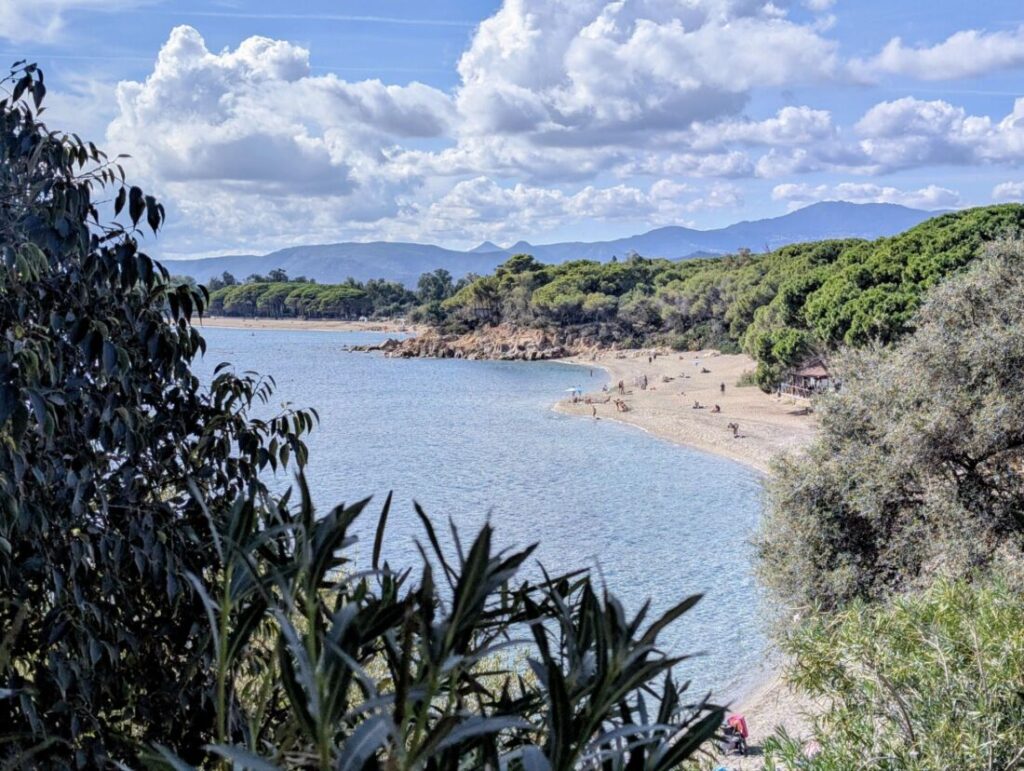
Baunei | An Authentic Mountain Village
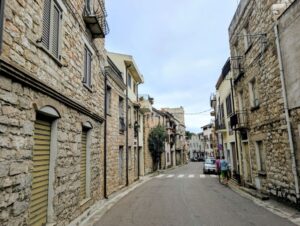 Baunei isn’t a tourist town — it’s a genuine Sardinian village, perfectly located for many of the highlights inland from the Gulf of Orosei.
It’s not really set up for tourists, but there are still a handful of hotels, a supermarket, a small playground, and plenty of Sardinian character.
You’ll pass through here anyway on your way to the trailheads for the hikes to Cala Goloritzé or Cala Mariolu. In our opinion, you should only stay overnight here if you really want total peace and quiet with hardly any other tourists around.
Essential Tips for the Gulf of Orosei
Getting There & Getting Around
Getting to the Gulf of Orosei
The Gulf of Orosei sits right in the middle of Sardinia’s east coast. Since there’s barely any public transportation on the island, we’d recommend renting a car* for your road trip. The closest airport is Olbia (OLB), which has good connections across Europe; if you’d rather bring your own car, the ferry from Livorno in Tuscany is the most convenient way to reach Sardinia.
Getting Around
- Roads in Sardinia are generally in good condition. Watch out for potholes and speed bumps, which can show up anywhere
- Larger towns have so-called ZTL zones, which are closed to outside traffic at certain times (the exact hours are usually posted on signs)
- Parking in Sardinia: white lines = free parking | yellow lines = no parking | blue lines = paid parking
- Parking lots at almost every beach charge a fee. You can usually pay for your parking ticket through the EasyPark app too — really handy
Where to Stay Around the Gulf of Orosei?
Cala Gonone
Cala Gonone is the most important base in the northern part of the gulf. It has the most extensive tourist infrastructure, with hotels, restaurants, boat rental operators, and plenty of excursion options. The northern coves and many of the inland sights are also especially easy to reach from here. And honestly, the town itself is genuinely pleasant, even with all the tourists.
Santa Maria Navarrese
Santa Maria Navarrese sits in the south of the Golfo di Orosei and is noticeably quieter than Cala Gonone. It’s a good fit for visitors who want to explore the southern coast. From here, well-known spots like Cala Goloritzé are quicker to reach, and you’ll also enjoy a more relaxed vibe and shorter drives to many of the hikes around Baunei.
Which Town Is the Better Choice?
It really comes down to what you’re planning to do. If having a wide choice of accommodation, restaurants, and boat tours matters to you, Cala Gonone is the way to go.
For travelers who prefer a quieter base and want to focus on the southern coves, Santa Maria Navarrese is usually the better choice.
Camping Around the Gulf of Orosei?
There are plenty of campsites in the region too, of course. On our trip through Sardinia, we were traveling by camper van and stayed at Camping Cala Gonone (Google Maps). It’s super centrally located, within walking distance of the beach, and has everything you could want from a big campsite.
In Santa Maria Navarrese, we weren’t really won over by the campsites right on the beach, so we wild-camped instead. We found our spot, like all our spots in Sardinia, on Park4Night. Just make sure you follow Sardinia’s strict rules on wild camping in Sardinia!
Best Time to Visit
May, June, and September through early October are the most pleasant months for Cala Gonone: mild weather and less traffic than in the height of summer. Even in the off-season in mid-October, the boat tours to the Grotta del Bue Marino and Cala Luna were still well booked during our visit — in peak season in July and August, expect much bigger crowds on the boats, at the harbor, and on the beaches.
Parking in Cala Gonone gets tight during that period too. So our advice is to avoid the absolute peak season and travel to Sardinia in the shoulder season instead.
Highlights Along the Coast
To keep things simple, we’ve listed the highlights around the Gulf of Orosei from north to south. We’ve also split them into highlights right on the coast and highlights further inland, which you’ll find further down.
Boat Tour on the Gulf of Orosei
One of the biggest highlights — and the most popular activity here — is taking a Cala Gonone boat tour, usually departing from Cala Gonone itself (less commonly from Arbatax or Santa Maria Navarrese).
You can either book an organized boat tour or go out on your own. An organized tour is the easiest option: you ride along the gorgeous coast on a larger boat and stop (depending on the tour) at the region’s most beautiful coves — see the other highlights below. Half-day tours usually only visit the Grotta del Bue Marino and Cala Luna beach.
Want to go further? Then you’ll need to book a full-day tour that takes you as far as Cala Goloritzé (note that you can only experience it from the boat, since boats aren’t allowed to land there).


You can book tours right at the harbor or at various offices around town. Prices are the same everywhere, so it doesn’t matter where you book your ticket. In peak season, though, tours fill up fast, so booking an online ticket* ahead of time is worth it.
If you want maximum flexibility, you can rent your own motorboat with up to 40 hp (no boating license required), spend a full day cruising the coast, and anchor wherever you like. Boats like that run about €150–200 per day. Just make sure to pack enough food and water, since there’s nowhere to buy anything along the way.
These boats get booked up quickly in peak season too, so booking online in advance (through GetYourGuide*) makes sense here as well.
Cala Fuili
Just south of Cala Gonone, Cala Fuili is the one cove on this stretch of coast you can reach without a boat tour at all. A hike through Mediterranean scrub, rated moderately challenging but fairly short, gets you to this quiet pebble beach tucked between steep limestone cliffs, with calm, clear water that’s good for swimming and snorkeling.
Since you don’t need a boat ticket or a full-day excursion to get here, it’s a handy option if you just want a swim without committing to a longer trip — though it’s not exactly a secret, so expect some company, especially in peak season.
Grotta del Bue Marino
This small grotto is the first stop on every boat tour heading south from Cala Gonone. Lit walkways let you walk several hundred meters into the mountain, past freshwater lakes, chambers full of stalactites and stalagmites, and fascinating caves. The grotto can only be visited as part of an organized boat tour — if you’re out on your own motorboat, you unfortunately can’t go ashore here.


During the visit, a guide takes you through the cave along with a bunch of other tourists and shares some background on its history, usually in Italian and English.
Tip: Deliberately hang back a bit during the tour — for a moment, you’ll have parts of the cave almost to yourself and can take in the rock formations and stalagmites in peace.
Cala Luna


Cala Mariolu
This beach is known for its shoreline of pale, partly white, partly pink-tinted pebbles. They formed over thousands of years of erosion from the surrounding limestone and quartzite, and they give the water its distinctive blue-green color.
The seabed slopes gently into the water. Thanks to the clear water and pebbly bottom, visibility stays excellent even when there’s some swell, since hardly any sediment gets stirred up. Definitely pack your snorkel mask.
Cala Sisine
Cala Goloritzé & Punta Salinas
Cala Goloritzé, on the Golgo plateau above Baunei, is one of Sardinia’s best-known beaches, and it’s only reachable on foot via a demanding hike. You can’t land here by boat — neither on an organized tour nor with your own motorboat — you can only admire it from a few hundred meters offshore.
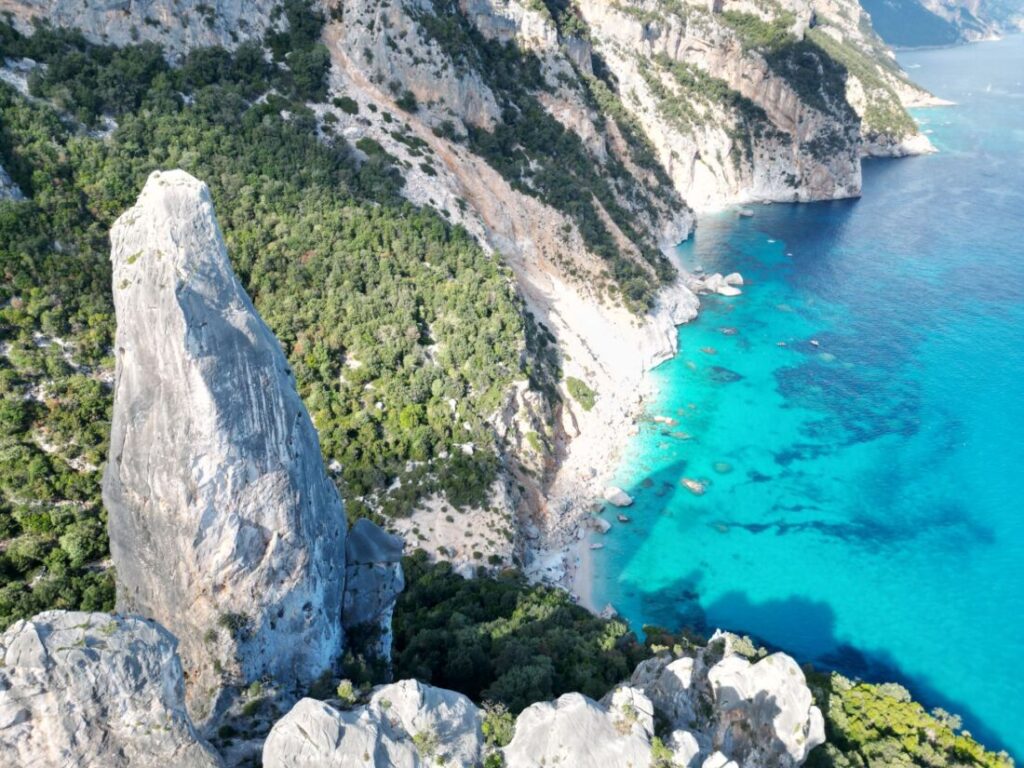
Personally, we found Cala Goloritzé impressive, but it wasn’t the most spectacular beach we saw in Sardinia — that said, the hike itself and of course the Punta Salinas viewpoint are an experience in their own right.
Cala Goloritzé isn’t a classic sand beach — it’s a pebble and gravel beach with plenty of big rocks and boulders you can lie on or scramble around on. We go into detail on how to reach the beach on this demanding hike, and which spectacular viewpoint you should add along the way, in our full write-up on Cala Goloritzé.
Selvaggio Blu Trail
A spectacular coastal trail — more than 40 km in total — starts in Santa Maria Navarrese and runs along the southern Supramonte mountains. Your best bet is hiking the first stage, from Santa Maria Navarrese to the rock spire of Pedra Longa. You’ll have incredible views of the coast and the Supramonte mountains for almost the entire hike.


You can start from Santa Maria (trailhead & parking on Google Maps) or from the Pedra Longa rock (parking on Google Maps). The trail is mostly flat, so it also works with kids or dogs. Even though it’s fairly unknown, we found it absolutely fascinating — if you’re lucky, you’ll spot wild goats along the way.
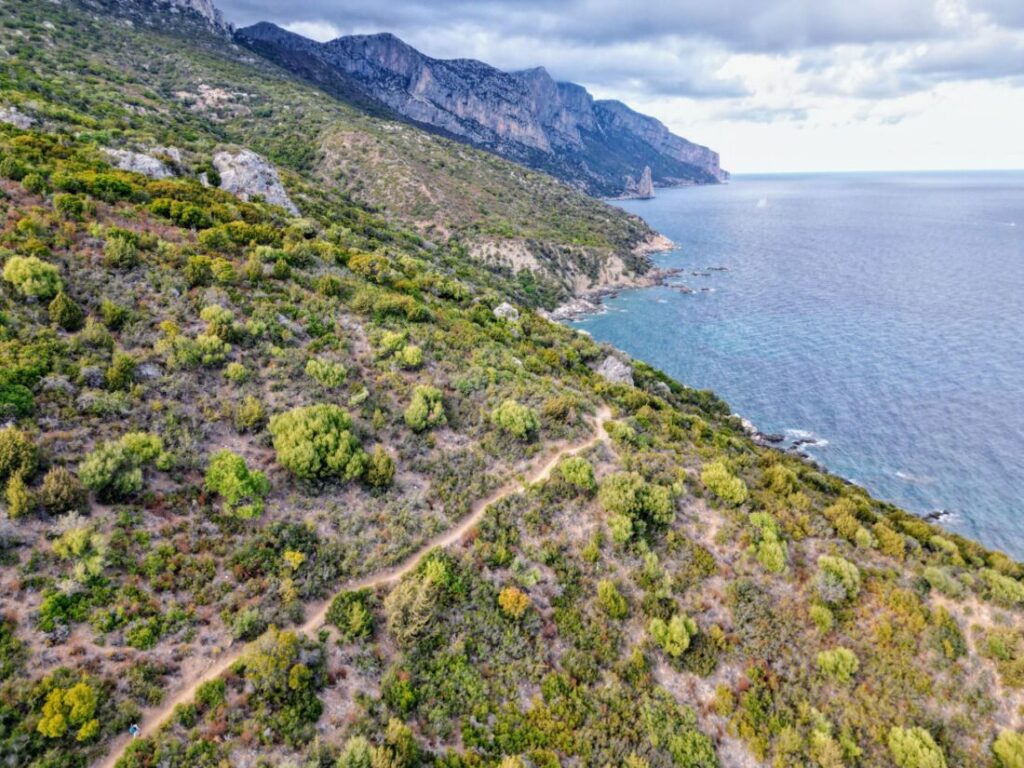
From Pedra Longa, you can of course keep hiking further north. If you only do the stretch between Pedra Longa and Santa Maria (round trip), plan on about 3–4 hours and 10 kilometers. You’ll find the exact route on AllTrails here.
Highlights Inland
There’s plenty to see inland from the Gulf of Orosei too. We’ve put together what we think are the best inland highlights, again listed from north to south.
Grotta di Ispinigoli
The Grotta di Ispinigoli is one of the most impressive cave systems in Sardinia. Its centerpiece is an extraordinary column, around 38 meters tall, formed over thousands of years where a stalactite and stalagmite grew together — it’s often cited as one of the tallest stalagmites in the world, though that claim dates back decades and may no longer hold up.
Since the main chamber is mostly dry today, the limestone formations have barely changed over a very long time.
The Gorropu Gorge
The hike through the Gorropu Gorge in Sardinia’s Supramonte mountains is one of the biggest hiking highlights around the Gulf of Orosei, and it’s only about a 30-minute drive from Cala Gonone. The walk through the gorge itself isn’t very long, but getting there takes several hours.


At its most dramatic point, the walls rise up to 500 meters high, while further in, the gorge narrows down to just a few meters wide. That makes the Gorropu Gorge one of the absolute highlights of the Gulf of Orosei.
This is a Sardinia highlight you shouldn’t skip on your road trip. That said, the Gorropu Gorge is by no means easy to reach — you’ll need to hike for at least 1-2 hours just to get to the entrance of this spectacular canyon. For exactly how to get there and what to watch out for, check out our detailed guide to the gorge.
The Supramonte Mountains
The Supramonte is a vast mountain range in central-eastern Sardinia, just west of the Gulf of Orosei. The landscape is shaped by deep gorges, steep cliffs, sprawling cave systems, and wide-open plateaus. One of its best-known natural highlights is the Gorropu Gorge.
Large parts of the mountains are hard to access and barely populated. That’s let the region hold on to its original character and extraordinary landscape diversity right up to today.


If you drive through the mountains, with a bit of luck you’ll run into free-roaming pigs, goats, or donkeys — some of which will even let you feed or pet them. This region feels so much more like raw, original Sardinian nature than the popular coastal area.
Monte Corrasi
If you’re up for something active and want to experience the Supramonte on foot, we’ve got a great hike to recommend.
Monte Corrasi is the highest peak on the Supramonte’s vast, rugged plateau, and it’s one of the most popular hikes in the region.
Hike info
Length: approx. 12 km
Elevation gain: approx. 823 m
Duration: approx. 5–6 hrs
Difficulty: hard
More info: AllTrails route
SS125 Panoramic Route
The SS125 runs along Sardinia’s entire east coast, from Cagliari all the way up the island. The truly spectacular part is the roughly 50-kilometer stretch between Dorgali and Baunei through the Supramonte mountains. The road winds through the wildest part of the plateau and mountains, past deep gorges, rugged limestone cliffs, and dense pine forests.
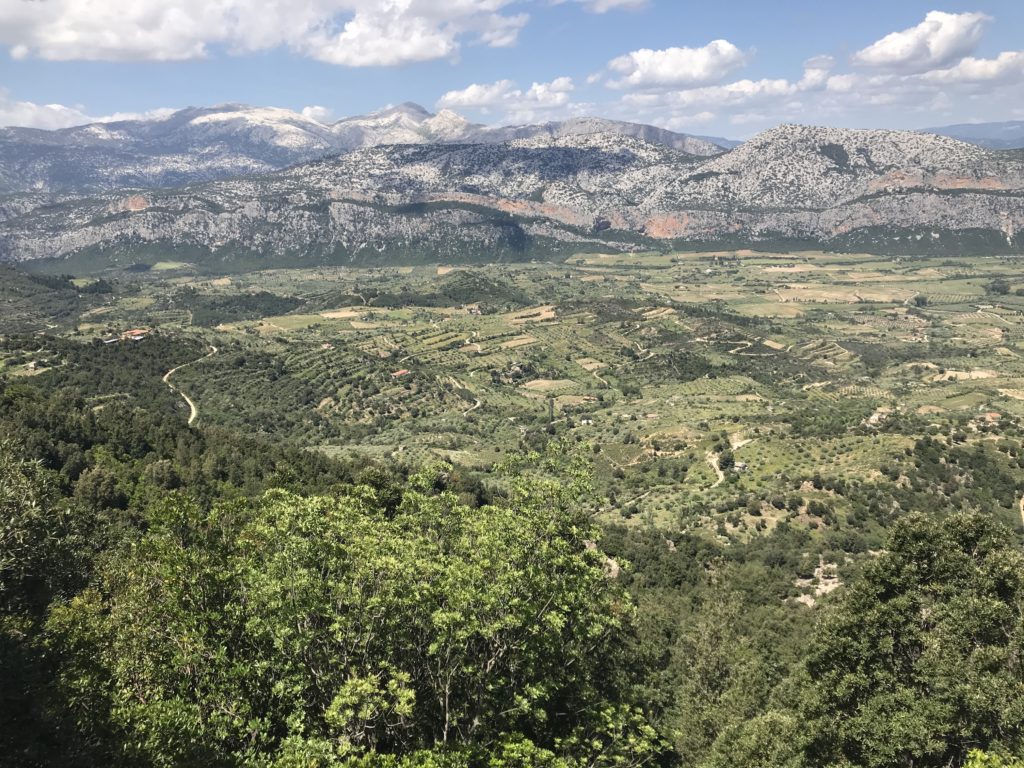
The highest point along the way is the Passo di Genna Silana at 1,020 meters, which is also where one of the two trailheads for the hike to the Gorropu Gorge starts. Enjoy the drive on this stretch, and pull over whenever the scenery really grabs you, or if you want to pet some free-roaming donkeys or pigs.
Drive carefully along here, not least because of all the curves and the fast motorcyclists who love this winding road just as much as you will.
We’ve marked the especially scenic part of the route for you on Google Maps here.


Frequently Asked Questions About Cala Gonone Sardinia & the Gulf of Orosei
Can I reach Cala Goloritzé by boat?
No, that’s not possible. Boats — whether excursion boats or private motorboats — aren’t allowed to approach the beach.
How do you get to the Grotta del Bue Marino?
Only by boat from the harbor in Cala Gonone. On foot, you can only see the cave entrance from outside, and it’s usually closed — the actual tour happens only as part of a guided boat trip.
Can you swim at Cala Luna?
It depends on the conditions: when the sea is calm, the water is clear and great for swimming; when it’s rough — like during our visit — we’d advise against it. The beach is also more of a pebble beach than a sand beach.
How far is the Gorropu Gorge from Cala Gonone Sardinia?
The gorge’s parking lot is about a 30-minute drive from Cala Gonone, up in the Supramonte mountains. You’ll find all the details on the hike itself — including both trailheads, costs, and opening hours — in our full guide to the Gorropu Gorge.
Is Cala Gonone crowded even in the off-season?
Less than in peak season, but the boat tours were still fairly full when we visited in mid-October. Expect much bigger crowds in July and August.
Is renting your own boat worth it instead of an organized tour?
Not for the Grotta del Bue Marino, since visiting the cave is only possible as part of the official boat tours. For a simple trip to Cala Luna, there are also boat transfers available without the cave visit.
Planning more than just a day on the east coast? In our 7-day Sardinia road trip, we show you how to fit Cala Gonone into a bigger tour of the island.